For partnership and business-related enquiries, please get in touch.
About the History of Fiji
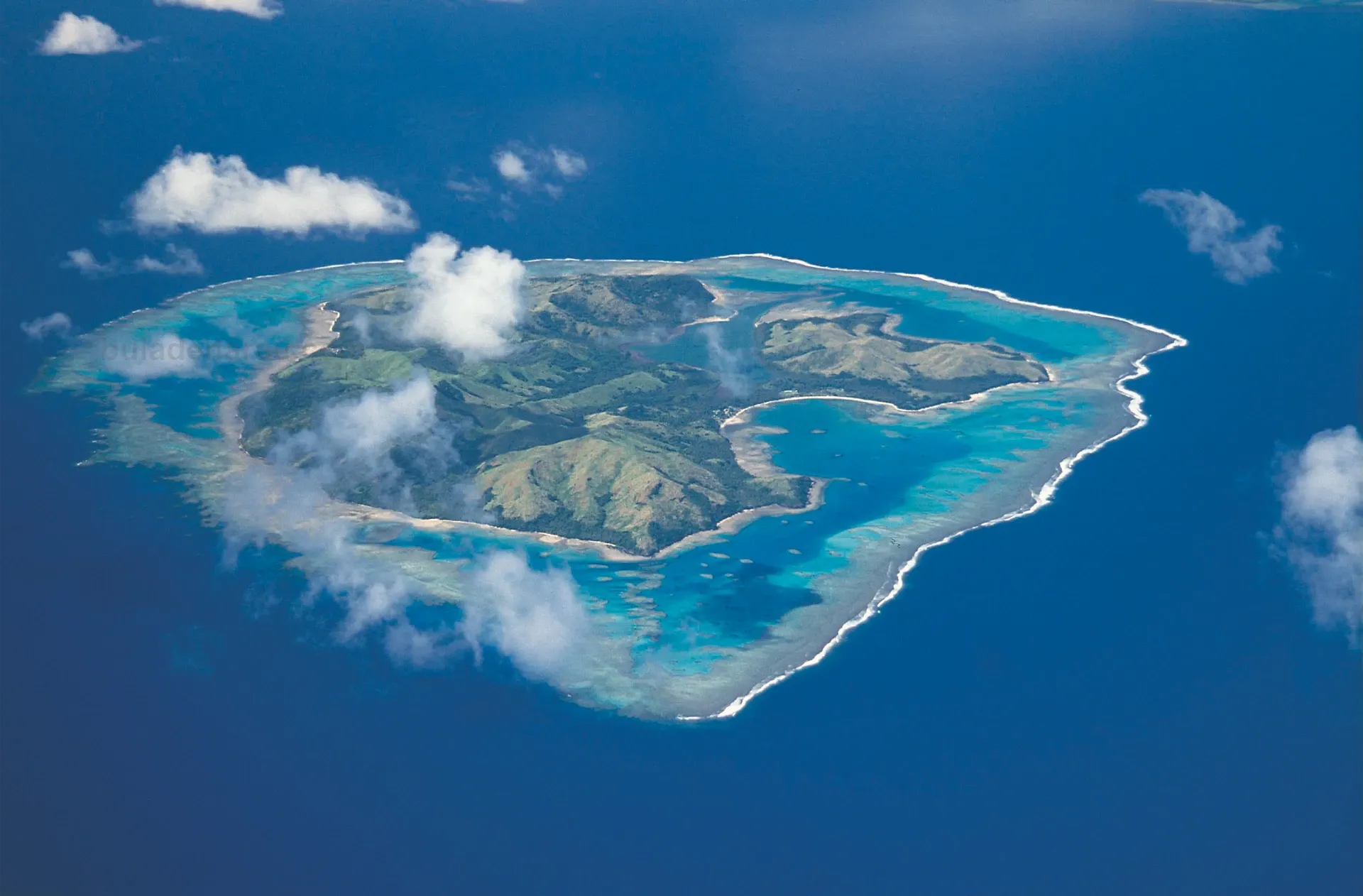
Human occupation of Fiji began approximately 3000 years ago – an unbelievably early horizon when taking into account the distance to the nearest land mass of Vanuatu more than 600 miles west of the Fiji Islands. It was the Lapita Peoples who did this amidst their explosive and relatively short lived period of expansion, exploration and existence.

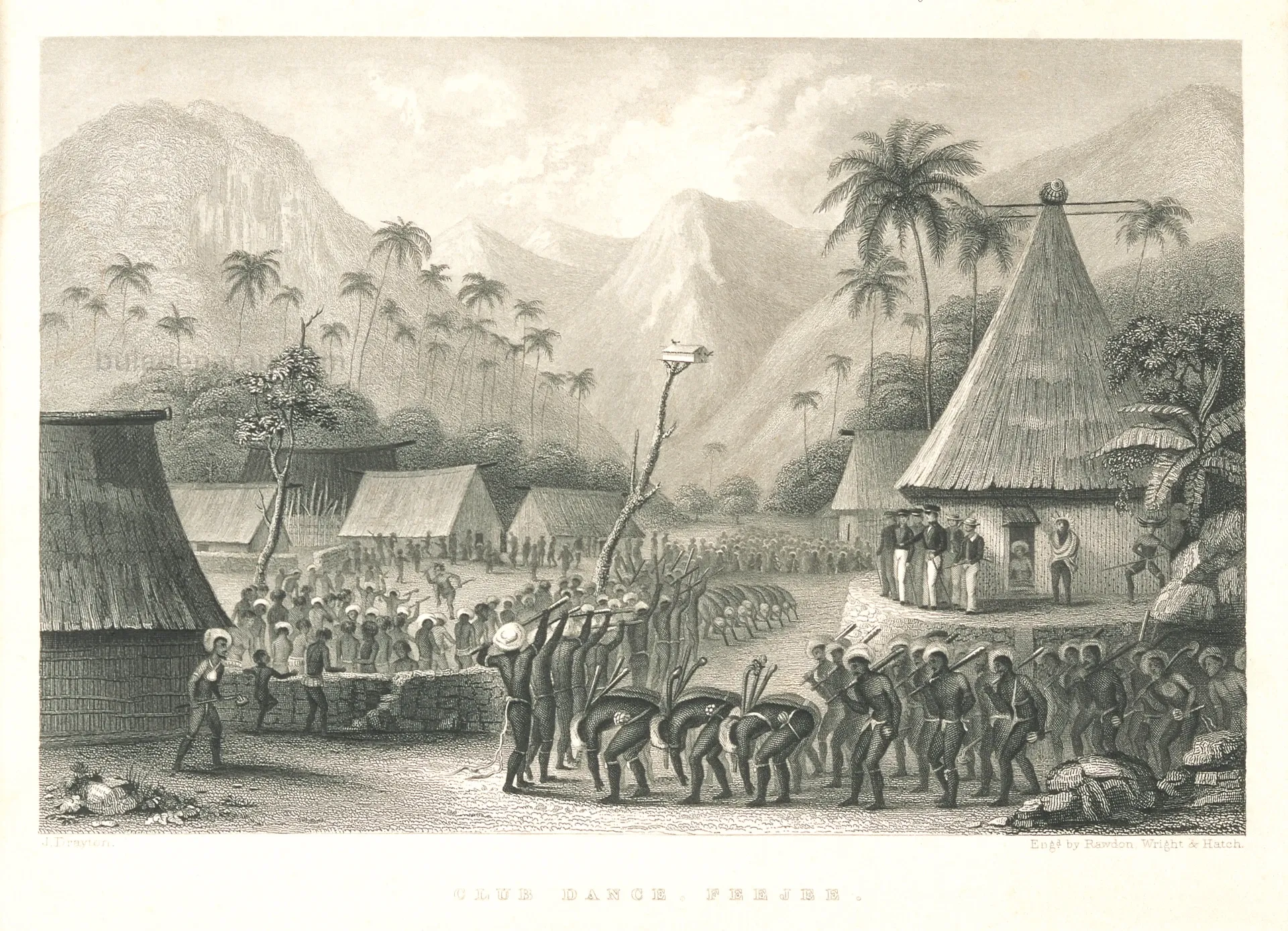
The Island of Bau hosting a yaqona or kava ceremony for French Officers in 1827. Zoom in on the bottom left hand side and have a look at the size of the tanoa! – the big bowl used for mixing the yaqona in.
European discovery occurred in 1643 when Able Tasman sighted the north-eastern island of Taveuni. He made no landfall. In 1774 Captain James Cook sighted and landed on Vatoa Island in Southern Lau.
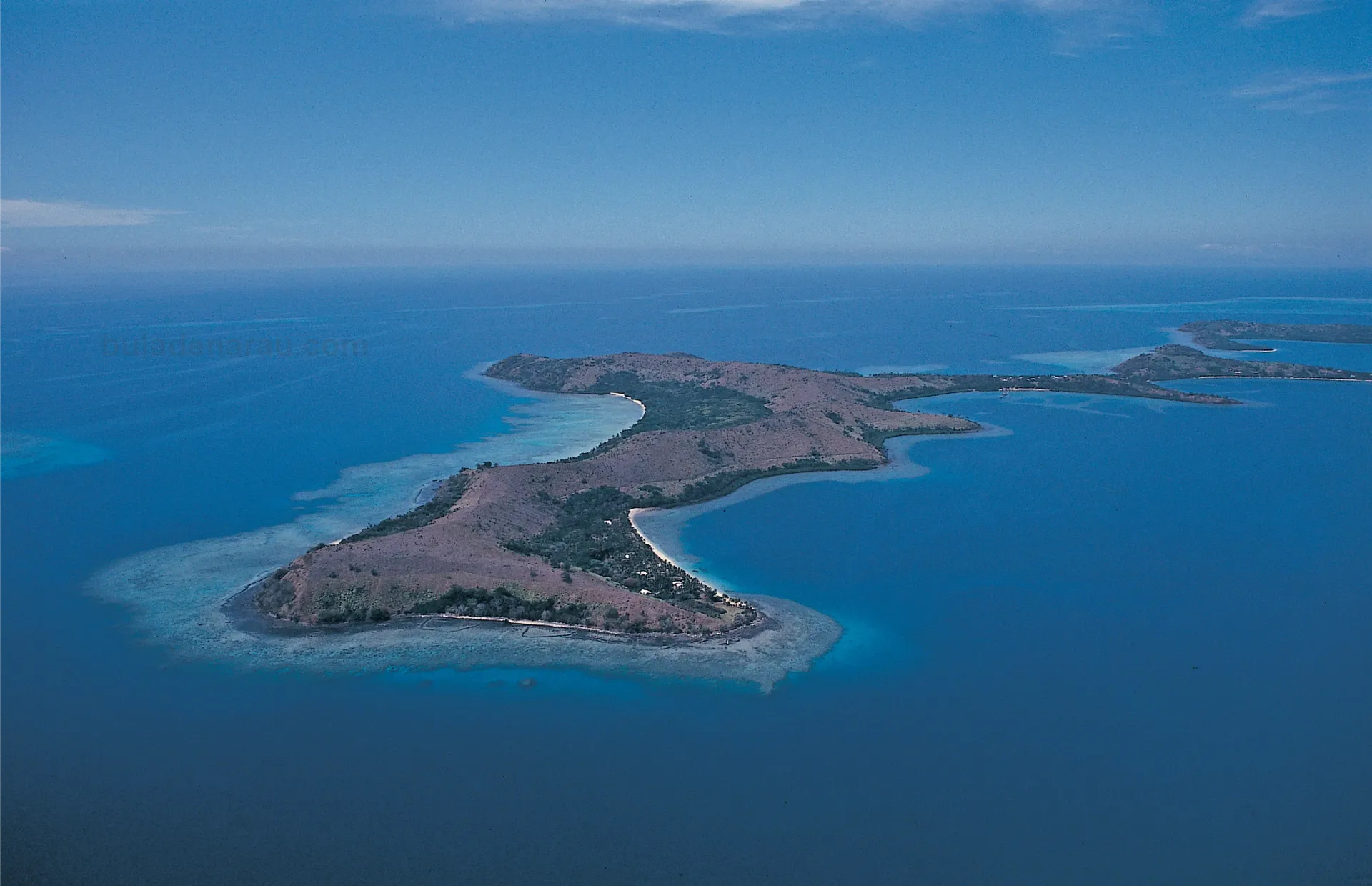
The extent of the Fijian archipelago was first discovered by Captain William Bligh in 1789 following the mutiny on the Bounty. He sailed through the group and between the two major islands of Viti Levu and Vanua Levu in an open boat in one of the most remarkable voyages recorded in human history.
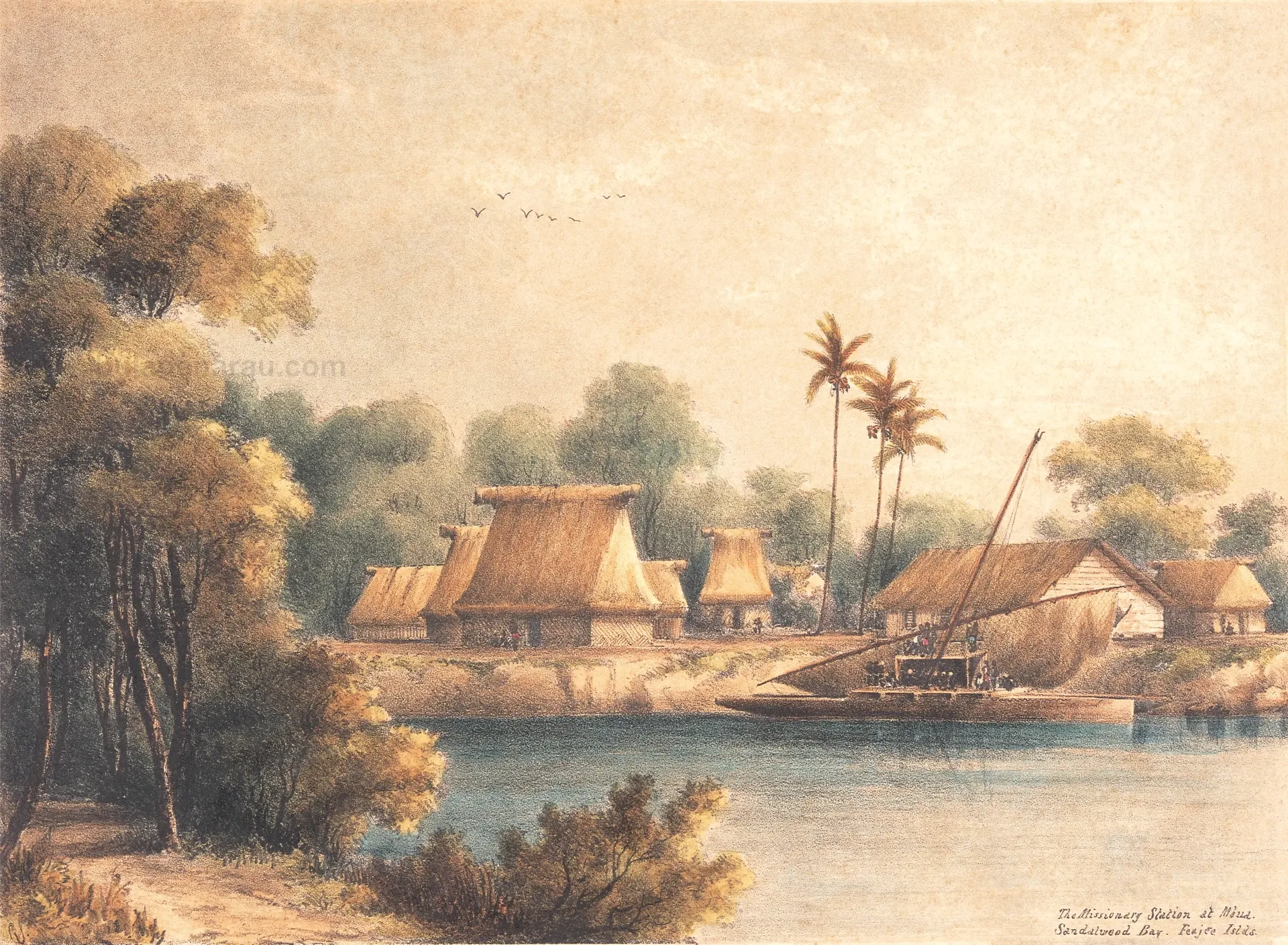
Extensive uncharted reefs and the reputation of Fijians as fierce cannibals deterred further exploration until sandalwood was discovered in 1804. This brought about the first major European – Fijian contact which continued after Sandalwood was exhausted in 1814 and a new trade began in sea slugs known as beche de mer.
Escaped convicts from Sydney and shipwrecked pirates, the most notorious of whom was a Swede known as Charlie Savage, joined in local wars which assumed a new and deadly character with the introduction of firearms. Savage and his cohorts helped the small island of Bau to pre-eminence over large areas of eastern Viti Levu.
A young chief, Seru Cakobau, restored his father as Vunivalu of Bau Island in 1837 and became the dominant figure in Fijian politics, eventually claiming the title Tui Viti (the King of Fiji). Two attempts by Cakobau to form a government failed. In 1874 Cakobau led the principal chiefs to voluntarily cede Fiji to Great Britain. He also lotued’ or converted to Christianity and renounced cannibalism. His actions and influence ushered in immense change in Fiji.
The American Civil War in the 1860s disrupted cotton production in the Southern States of America and led to cultivation in Fiji, where it provoked an economic boom. Prices failed in 1870 as the United States again became a major producer.
After two failed attempts, Wesleyan missionaries established the first Christian mission in Lakeba, Lau, in 1835. Lakeba also became the focus of Tongan mercenaries who were consolidated into a Tongan spearhead with the arrival in 1840 of a high chief Enele Ma’afu. From that time until cession to Britain in 1874 Ma’afu and his Tongans exerted an ever-stronger grip on eastern Fiji with the intention of seizing control of the entire group. He was Cakobau’s greatest threat and one of the main reasons for cession of Fiji to Great Britain. Without cession Ma’afu would have stood a good chance of taking control of the whole of Fiji.
Fiji became a British Crown Colony in 1874 at Navosa, Levuka, on the island of Ovalau with the signing of the Deed of Cession by the principal Chiefs. The first resident Governor, Sir Arthur Gordan, determined to prevent interference with the native population and their lands, enacted a policy which earned him the extreme enmity of the colonists who arrived in ever greater numbers after Cession.
Gordon established a commission that inquired into pre-Cession land sales and disallowed 90% of such sales. He prevented the hiring of Fijians as labour for plantations. Instead, he commenced the introduction of indentured labour from India in 1879 to work on copra (coconut), tea, coffee, and banana plantations. This policy was against the wishes of the colonists, who objected to the cost, and the objections of Fijian chiefs who were concerned with its social implications.
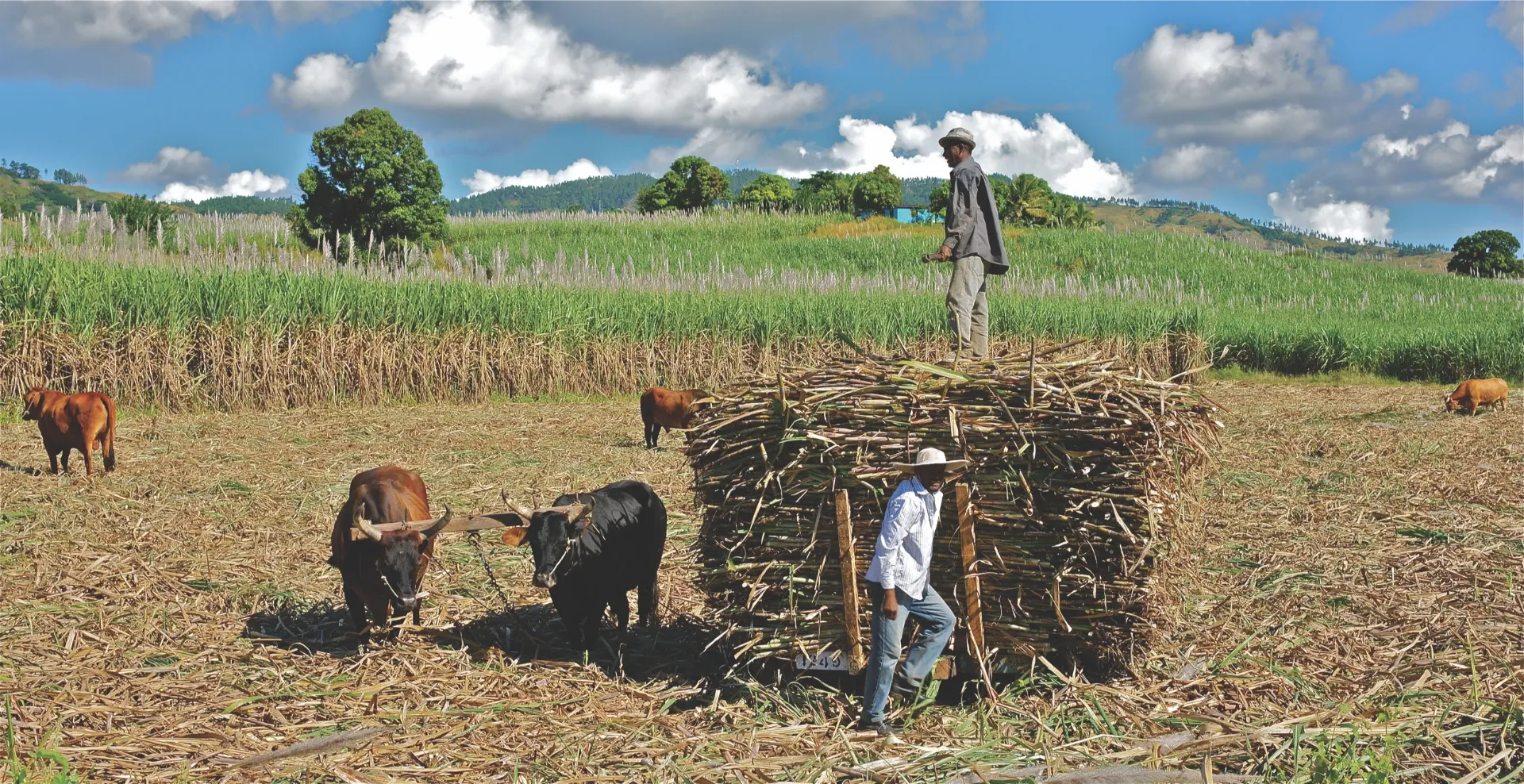
In 1862, David Whippy successfully crystallized sugar on Wakaya Island. Until that time, it was thought that indigenous sugarcane in Fiji could not be used to produce sugar. From the 1880s, indentured labour was mainly employed in the growing and processing of sugarcane. Sugar quickly became the principal hard currency earner and remained thus until 1994, when it was surpassed by tourism.
The Indenture system was discontinued 1916 with the majority of the former labourers electing to remain in Fiji. To this day people of Indian origin form a substantial portion of the population.
Fiji sent troops to Europe during the great war, where one of its high chiefs, Ratu Sir Lala Sukuna, had already proved his valour by winning the Medaille Millaire while serving with the French foreign Legion. Fijian soldiers earned the highest respect of their foes and allies during the Pacific war against Japan, serving with distinction in the Solomon Islands and again in the campaign in 1952 against communist insurgents in Malaya.
The post world war II period saw greater Fijian participation in the administration of Fiji, leading to eventual independence in 1970. Fiji’s post independence political growth has been a touch awkward. Four coups have marred what has otherwise been a successful adaption to a new world for Fiji. The loss of guaranteed access to and prices from European markets for sugar hit Fiji hard. And perhaps contributed to the demographic changes Fiji now sees of an aging sugarcane farmer base without an adequate replacement generation. Yes the grandchildren and great and great great grandchildren of those who first settled here to work on farms are now moving into the professions and other industries. Many also choose to migrate themselves and there is a large and growing Fiji Indian diaspora in Australia, the USA, Canada and New Zealand.
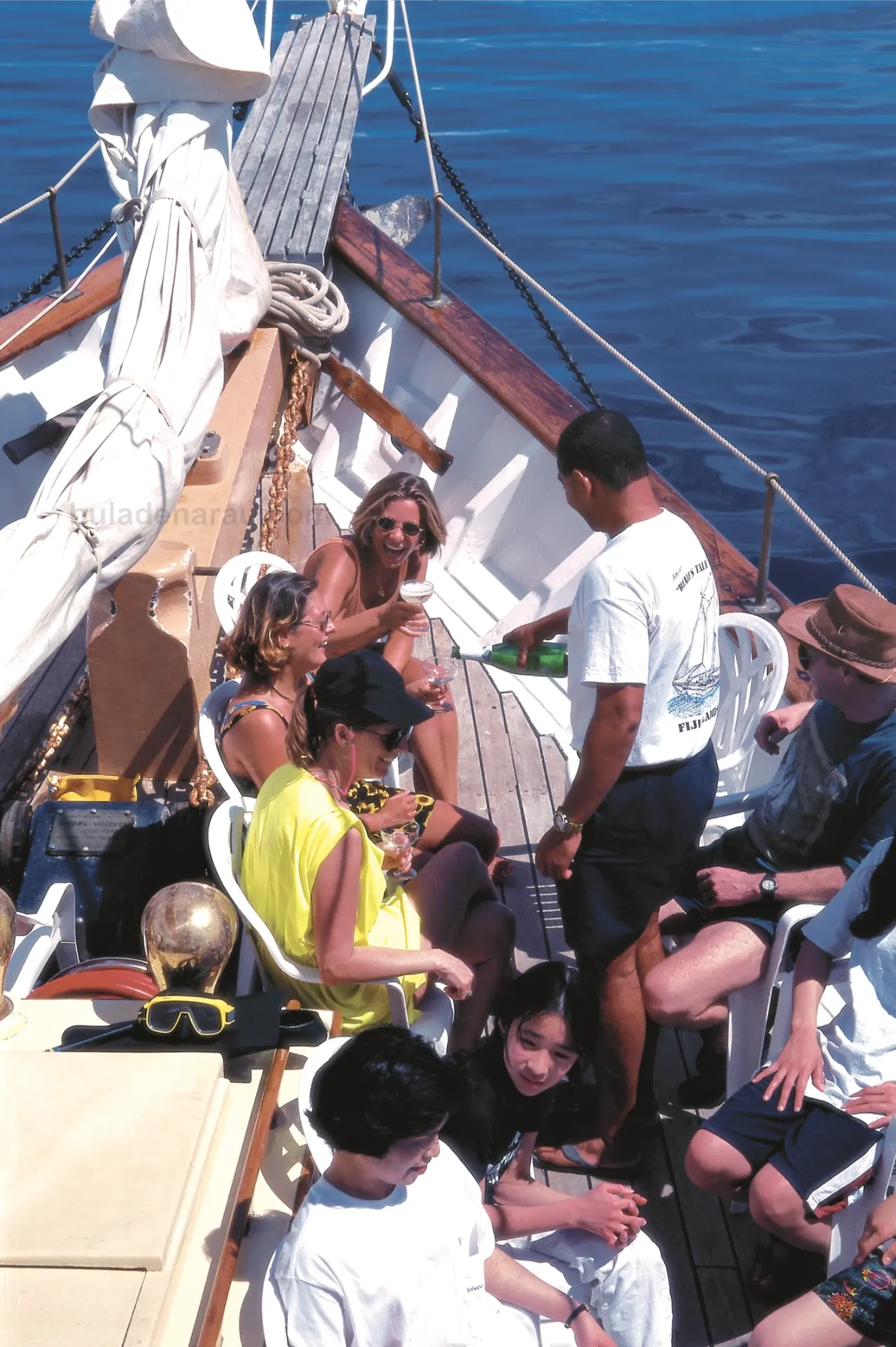
Fortunately Fiji’s natural geographic endowments, and the culture of its people have blessed it with the gift of a thriving tourism industry. What was once a small and ancillary economic activity is now driving the Fijian economy and the welfare of its people. What’s more the industry has moved through distinct developmental phases and is poised for yet another one. There was a time when really the only experience on offer was to sit by a limited number of resort pools and eat in the home resort restaurant. There is nothing wrong with that form of ‘rest and relaxation’ of course. However there is now a growing amount choice of locations and destinations and experiences on offer. The core strengths continue to grow while Fiji sees the increasing expansion and development of niche market segments such as eco-tourism and increasingly ‘real Fijian’ experiences.
To learn more about Fijian culture and history have a good look at this website. It is designed to be viewed either in snippets or as a whole. Many of the topics touched on in this story are explored in more depth throughout the site. And more content is continuously being added. Happy reading/viewing, happy exploring, happy adventuring; above all else happy holidaying!