For partnership and business-related enquiries, please get in touch.
Clubs of War
But Europeans had heard of Fiji long before this trade, and the islands held a fearsome reputation. Captain James Cook related how, while in Tonga, he was informed of the presence of Fiji just three days’ sail away, and that the inhabitants of Fiji and Tonga frequently made war upon each other. He was told:
“…for these men of Feejee are formidable on account of the dexterity with which they use their bows and slings but much more so on account of the savage practice to which they are addicted… of eating their enemies whom they kill…”*
The reputation stuck. After the mutiny on the Bounty, Captain William Bligh—in a small ship’s boat with 18 men—sailed directly through Fiji. From the eastern side he passed between the two large islands of Viti Levu and Vanua Levu, and out the other side. through what is now known as Bligh Water. He charted what he observed, and for a time, Fiji was even known as ‘Bligh’s Islands.’ Despite their terrible plight and dire need for provisions, Bligh dared not land in this super-abundant land.
Archaeological evidence indicates that warfare started amongst Fijians around 800 years ago. A whole cultural system developed around a society immersed in conflict. Religious rites and emphasis (while also dealing with issues such as rain and crops) often focused on the Gods of War. It was to these gods and their temples that the bodies of slain enemies were offered. The gods imbibed the spirit of the fallen, while the mortal victors consumed their flesh.
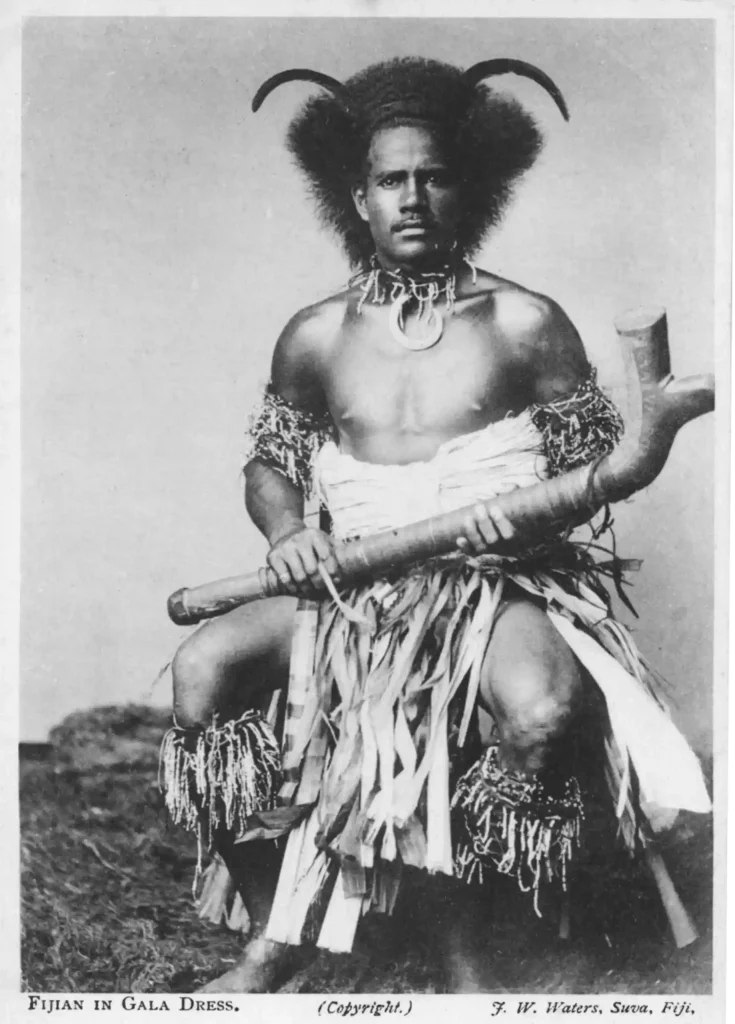
Within this system of ongoing war, the valor and skill of warriors were matched only by a refined art of weapon making. A plethora of weapons—including clubs, spears, slings, and bows—were used. Dedicated craftsmen understood the different properties of the woods they used, even shaping tree saplings as they grew so that their root systems formed the head of the finished club. These weapons, when wielded by a fortunate and skilled warrior, could assume semi-divine and mystical status, often ending their days residing in the temple (bure kalou) of the war god as talismans of future success.
Fijian warfare was a complicated affair. It ranged from large-scale expeditions involving fleets of canoes to small raiding parties, incorporating sieges, ambushes, and open battles over land and sea. In defense, people dwelling on coastal plains constructed ring-ditched fortified village compounds complete with moats, high-banked walls, palisades, and limited points of entry. The hill people prepared impregnable mountainside retreats. Often, the only way to succeed in an attack on a fortified position was by treachery from within, and Fijian history is replete with such examples. It was part of the art of war.
Because of the Fijians’ appreciation for defensive strength, some have dismissed their martial fervor. However, one fact asserts that martial bravery was the most valued trait: the honor placed upon the use of the war club, which implied close, one-on-one combat. There are stories of days when armies, facing off against each other, sent out their champions to battle—bringing to mind echoes of Homer’s Iliad, or perhaps duels with sabers at dawn.
In any event, killing with a club brought a man great glory; failure to do so brought great shame. A man who had not killed another with his club during his lifetime was labeled a coward, doomed to pound human excrement in the afterworld for all eternity.
In many parts of Fiji, a man who had killed with a club was honored with a new name and title in a ceremony lasting several days. The prefix ‘koroi’ signified his ‘club killer’ status. If he killed ten men, the prefix changed to ‘koli’; if twenty, it was ‘visa’; and thirty, ‘waqa’. The very existence of these titles indicates the frequency with which some fighting men were in action. A tally of kills was often recorded on clubs by way of notches or, in some cases, the inlaying of the teeth of victims.
In addition to the warrior receiving a title, his club was also honored, becoming a ‘gadro’ (a club that had slain a human). Some of these clubs found their way into the temples of the war gods as offerings of thanksgiving, becoming as famous and ominous as the reputations of those who wielded them.
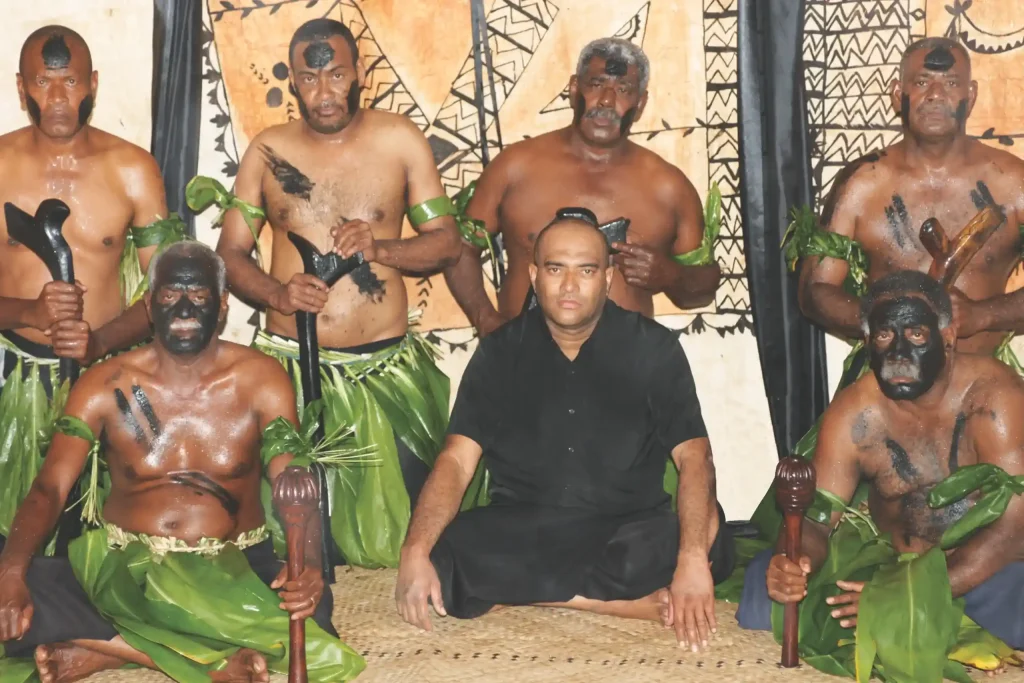
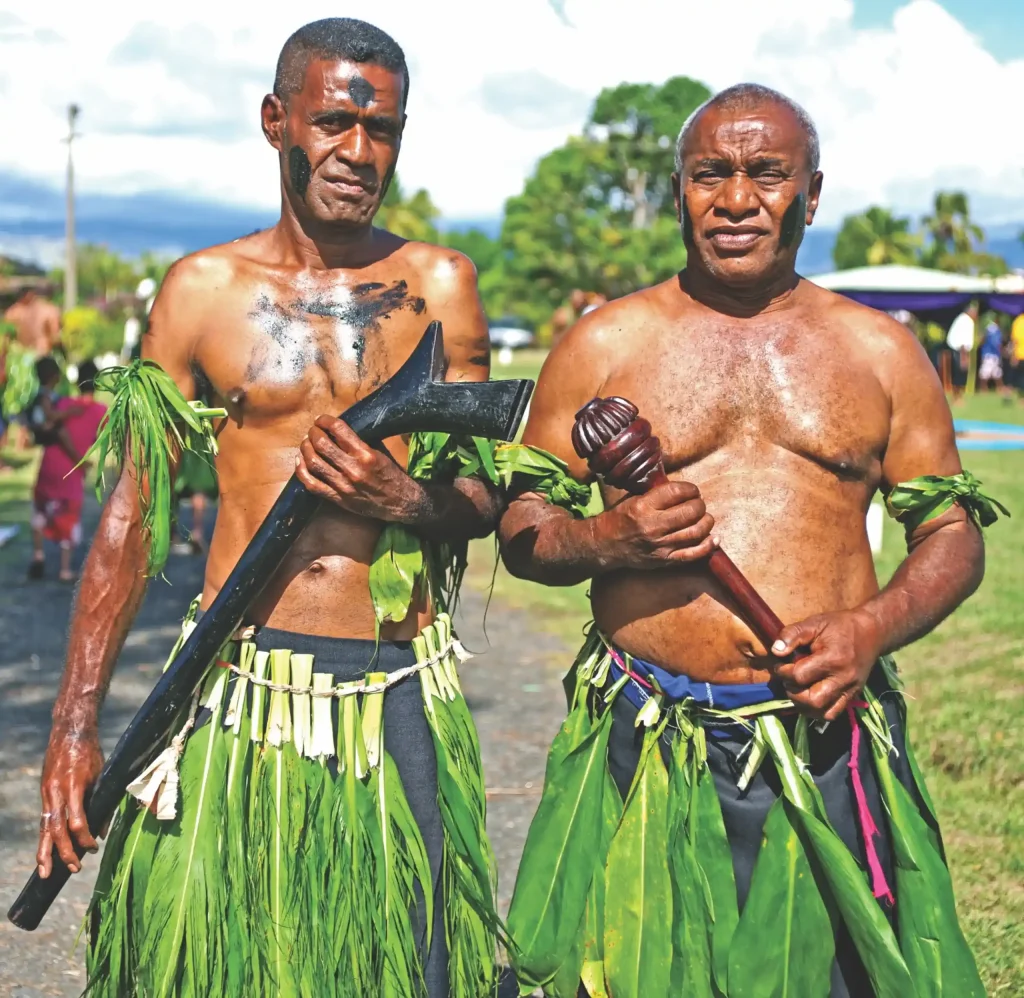
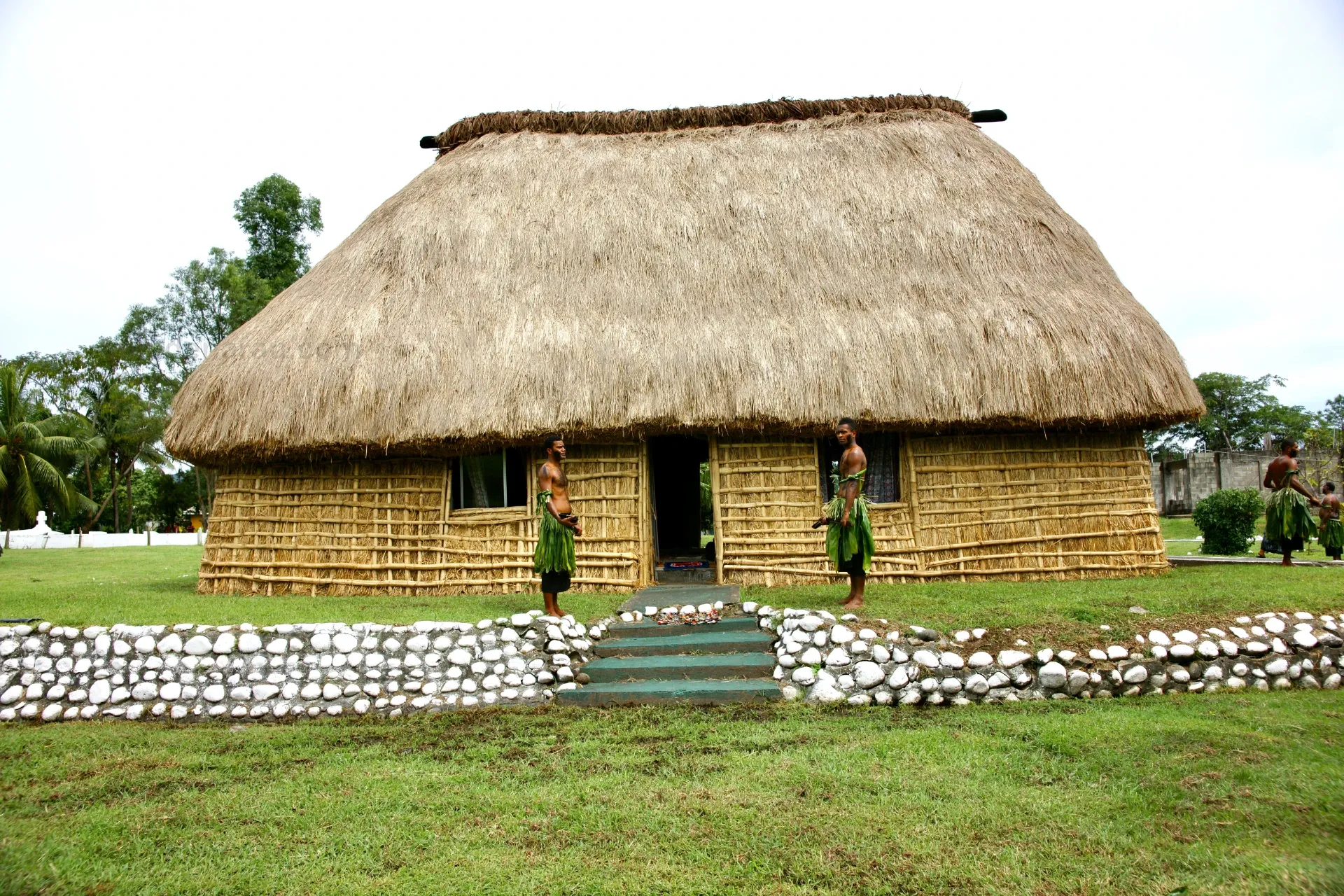
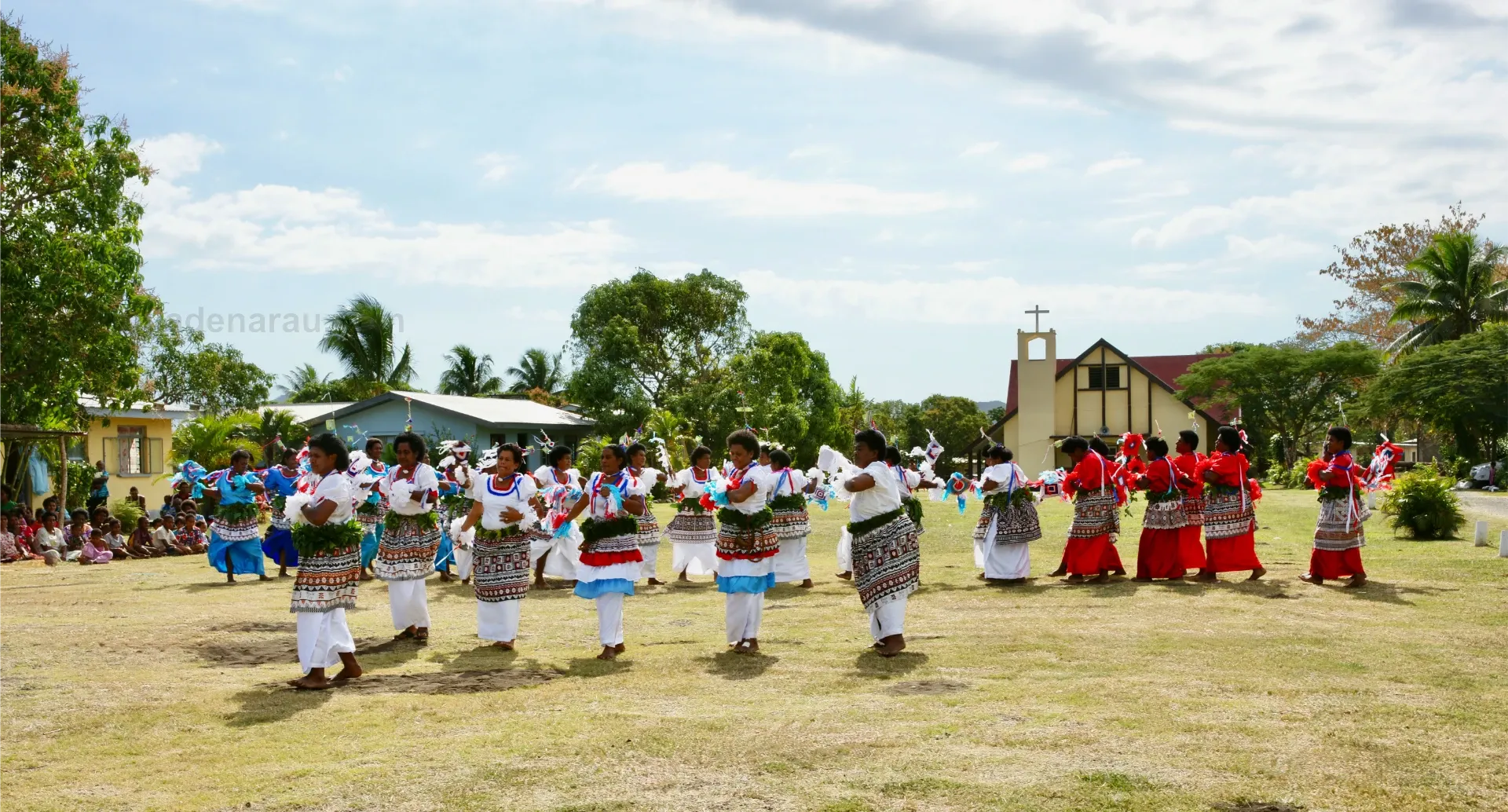
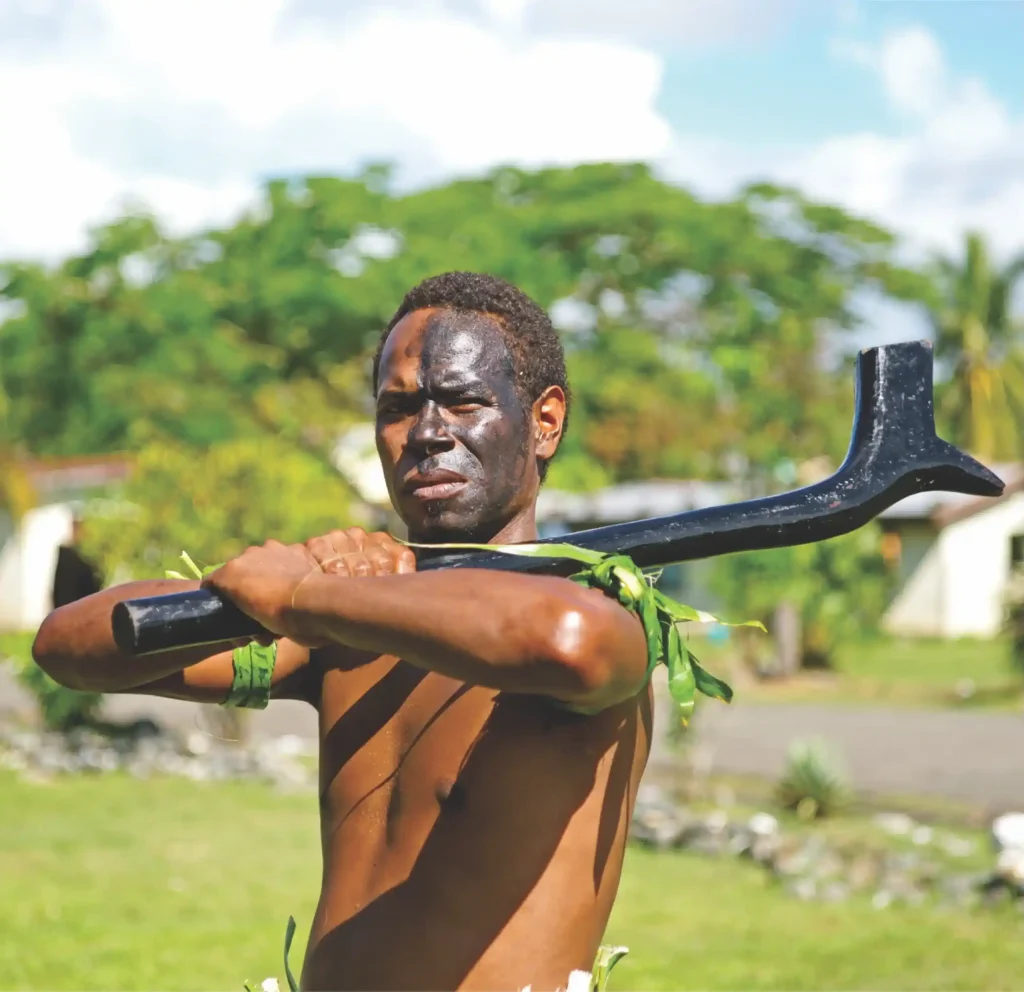
It is customary to see clubs used today in traditional Fijian ceremonies. They are usually carried by the ‘bati’—members of traditional warrior clans charged with the security of their chiefs. Most of these clubs, while genuine, are ceremonial rather than fighting clubs. Often lighter and easier to handle, they still enable the enforcement of discipline and respect while ensuring that valuable heirlooms of Fijian heritage are not damaged. But in households, museums, and private collections around the world, war clubs that have known the taste of human blood remain—grim reminders of Fiji’s fearsome former reputation.
*From page 3 of Fijian Weapons and Warfare, Fergus Clunie, Fiji Museum 2003. The author would like to acknowledge this work in the preparation of this story and highly recommend it to anyone interested in the topic.