For partnership and business-related enquiries, please get in touch.
The Settlement of Fiji
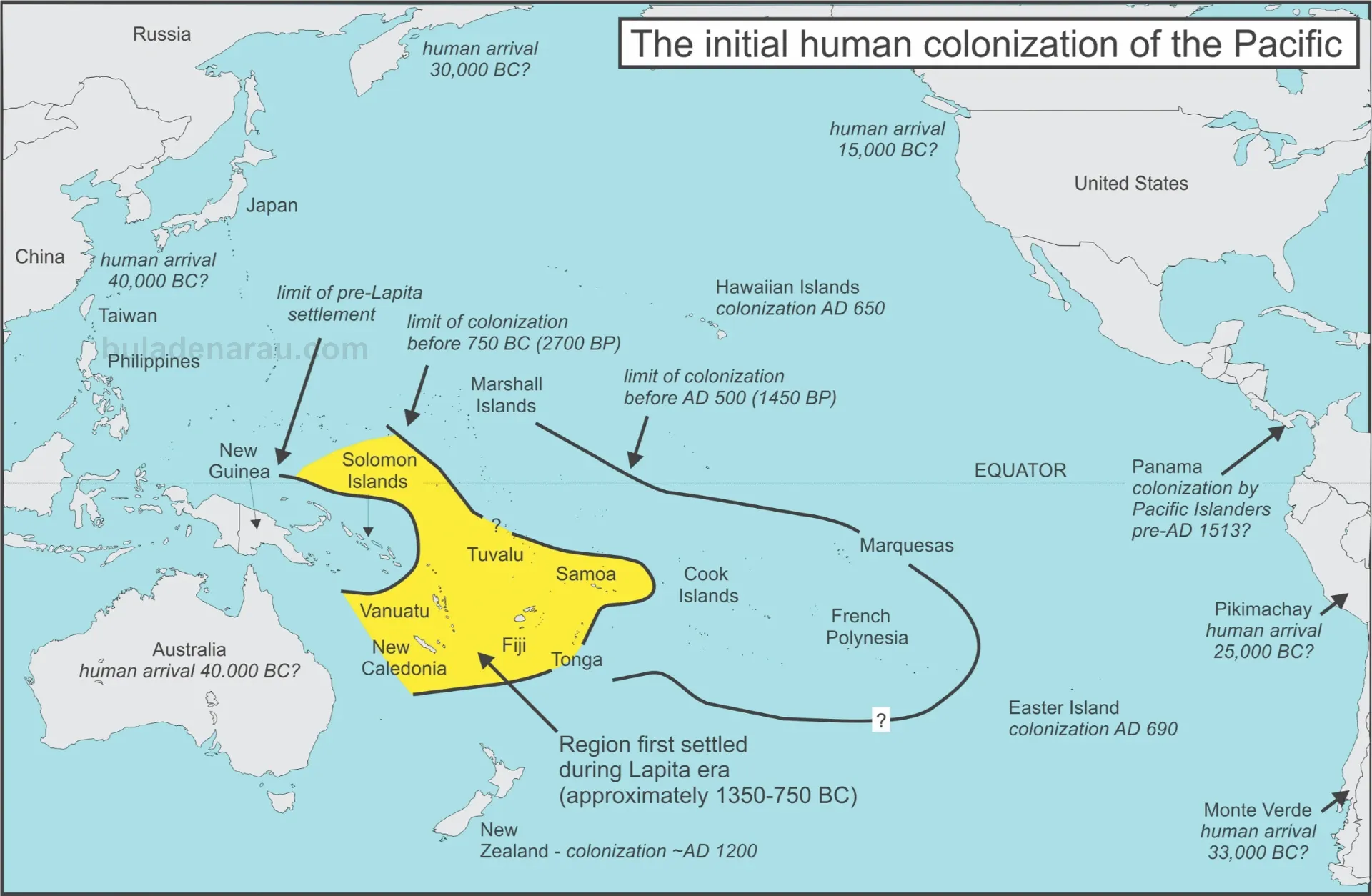
It is difficult to believe that Fiji was discovered and settled at least about 3200 years ago. Yet it’s true. Archeological evidence from Lapita sites – the culture of Fiji’s earliest settlers – especially at Bourewa, about 20 kilometres from Denarau proves it.
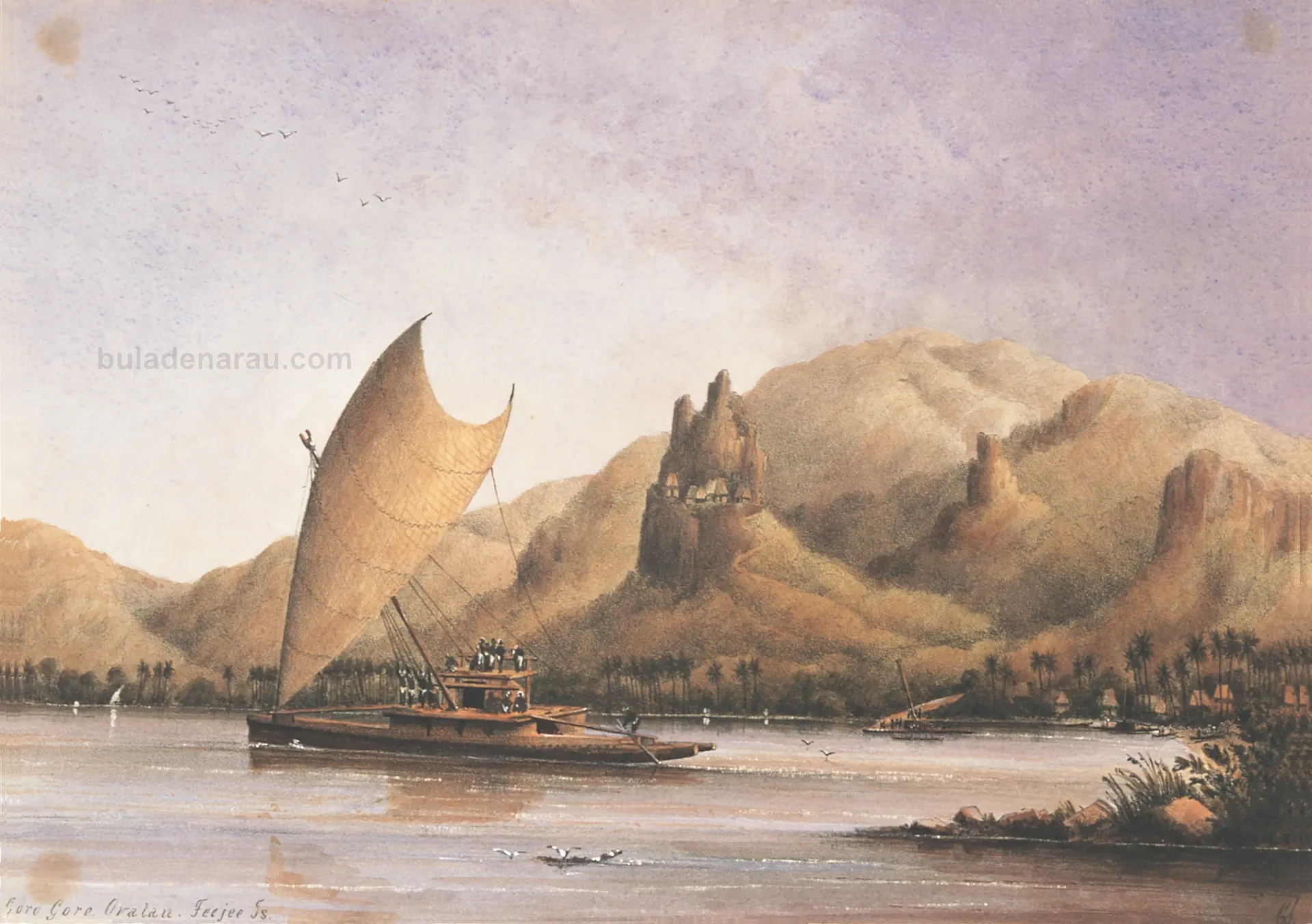
In his seminal work of 1946, R.A. Derrick’s, History of Fiji;The author described the original settlement of Fiji as having its origins in Asia where forces drove waves of migrations of peoples over hundreds of years out of their homelands and southward. He is clear that eventually from Indonesia the next step was New Guinea from where they “then burst through into the Pacific to people the numerous islands lying to the east and south-east.” As the closer islands and more nearby islands were settled, newer waves of migrants prompted future onwards migrations further onwards out into the east and southeast of the Pacific. The inference is that ultimately these migrations prompted the last step and the last stop in New Zealand.
Mr. Derrick wrote, “Thus the Pacific peoples are stratified: Papuans, Melanesians, Polynesians, Micronesians, are located in the order in which they came.”
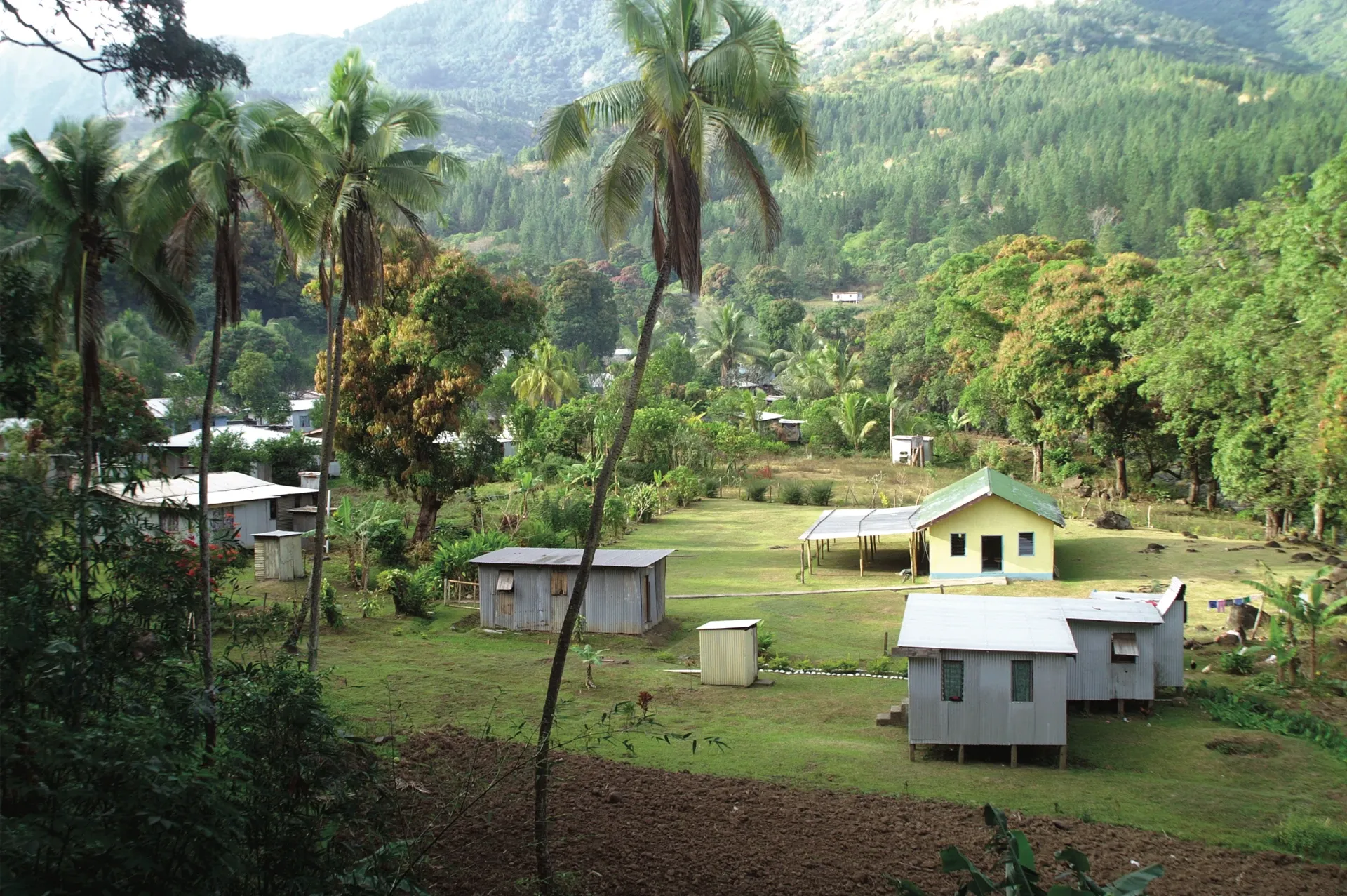
He wrote “The present population of Fiji especially that of the larger islands in the western part of the group, is predominantly Melanesian: its Melanesian elements were not, however homogeneous, and they have been further subjected to important Polynesian influences. The Oceanic people who remained in the Archipelago were changed by centuries of contact and mixtures from other peoples from the Asiatic mainland; and the longer they remained the more they changed. They became a tall, brown skinned folk with straight hair, high cheek-bones, shapely features and limbs. At length the increasing pressure of new populations drove many of them to seek new homes in the Pacific.”
Was he right? Well nothing is completely certain, and there is not a great deal we can be definitive about but in principle he most certainly seems to have been correct!
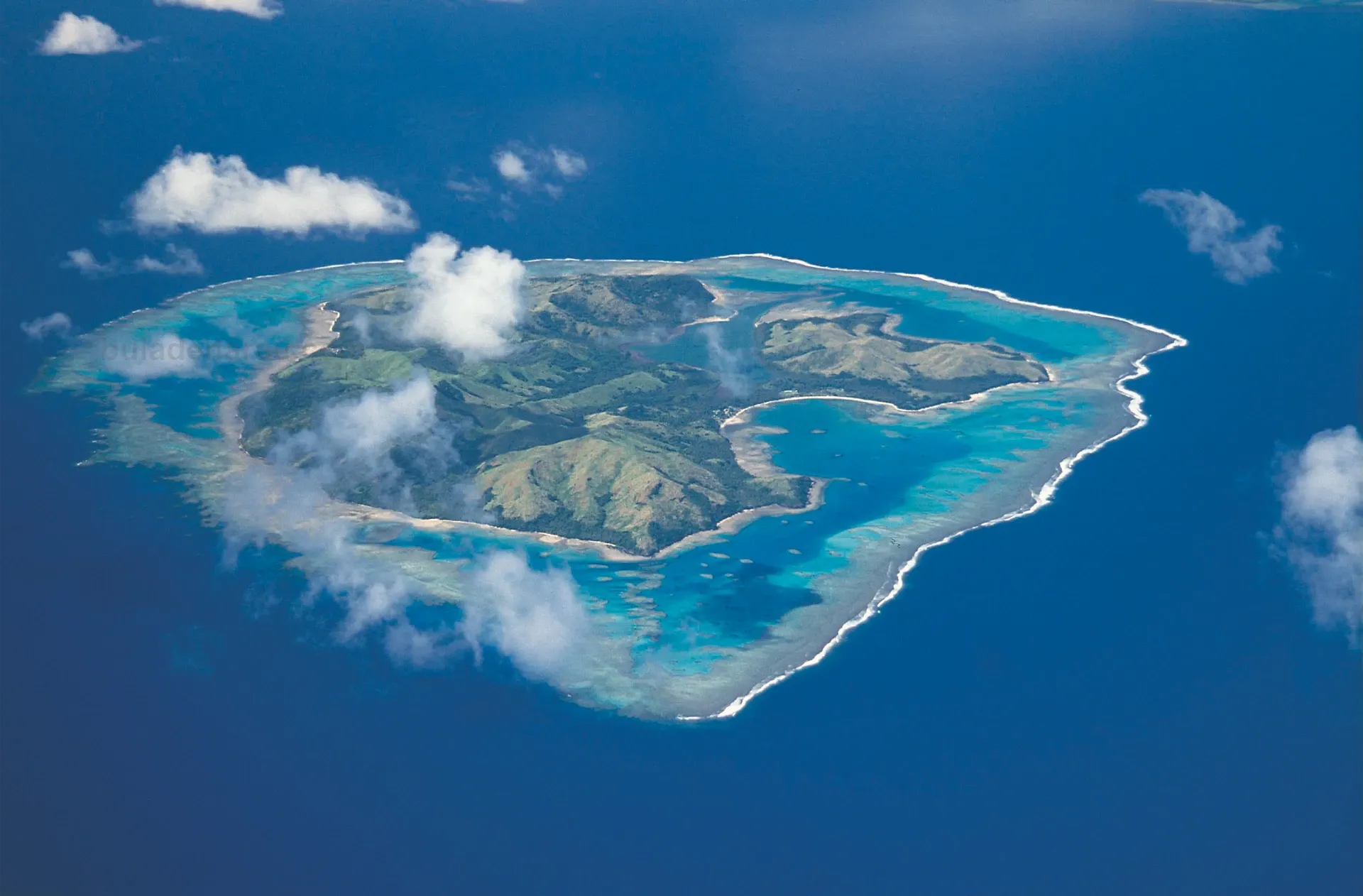
It may be difficult for some to believe but Fiji was discovered and settled about 3200 years ago.
Archaeological evidence offers irrefutable proof that an extraordinary group of consummate seafarers discovered and settled Fiji at this early “horizon.” These sailors are known as the Lapita people after a site in New Caledonia which yielded shards of highly sophisticated pottery.
Subsequently the same style of pottery was discovered in sites leading from New Guinea via the Bismarck Archipelago to the Solomon Islands and the New Hebrides (Vanuatu) and New Caledonia before making a gigantic leap of 1200 kilometers across open ocean to Fiji, and subsequently to Tonga, Samoa and to a singular discovery in the Marquesas Islands in Eastern Polynesia.
Archaeological work at a site on the Coral Coast about 20 kilometers from Denarau turned up a treasure trove of information. The site at Bourewa yielded pottery, shell jewelry, stone tools and most significantly a piece of obsidian or volcanic glass whose origin was traced back to New Guinea 5000 kilometers away. Fiji has no deposits of obsidian. The piece revealed at Bourewa was analyzed by Dr. Wal Ambrose of the Australian National University to prove its origin and thus to confirm the extraordinary migrations of the Lapita people.
The settlement site at Bourewa is believed to have been the first in Fiji or among the first in Fiji.
The other unusual discovery at Bourewa showed that the settlers built their houses on stilts over the tidal flat rather than on shore. Dr. Patrick Nunn and his team who excavated the site on seven occasions also established that for the first 1800 years from the arrival of people in Fiji there was no indication of village fortification in contrast to subsequent development of forts, fierce warfare and cannibalism.
In addition to the archeological evidence we have linguistic and DNA evidence to support the settlement model Mr. Derrick suggested seventy odd years ago. Combined with the archeological data it is indeed most compelling.
The site at Bourewa showed the Lapita people to have been vigorous and talented with multiple layers of skill in building ocean going canoes, in navigation, in house construction and in making pottery, shell jewelry and stone tools. Who were the Lapita people? Why did they seem to disappear about 550 B.C? Where was their point of origin? Are the Polynesians partly their progeny? Will we find even earlier Lapita sites in Fiji pushing the settlement window even further back in time?
The answers to these questions will hopefully reveal themselves in due course. And they no doubt are questions that Mr. Derrick would have been very much interested in hearing the answers to.
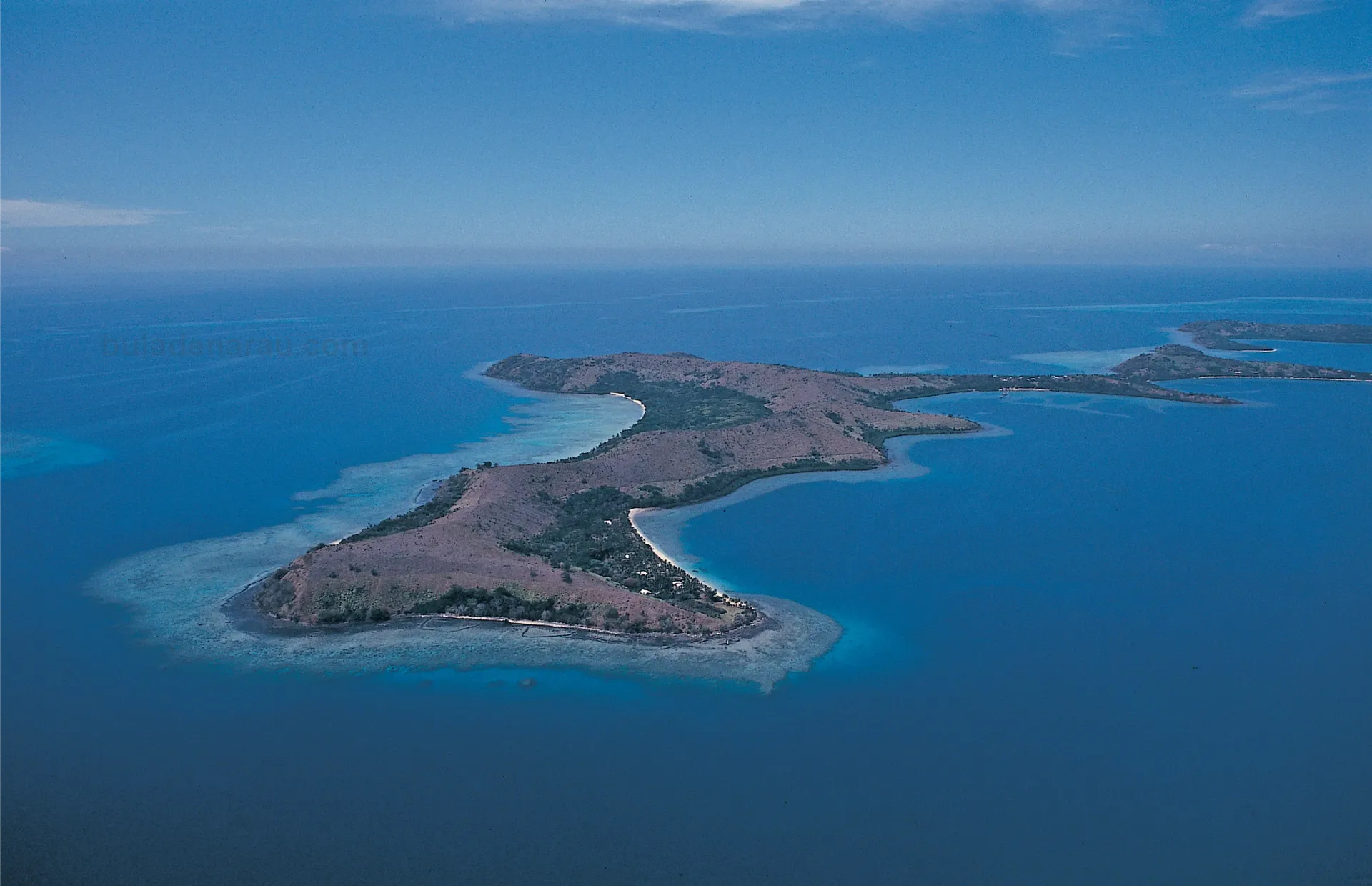
In the meantime look carefully as you walk along the beach at Denarau at low tide in the hope that you might find ancient pieces of pottery, which show Denarau Island to have been a resort for Fiji’s early settlers in the far distant past!

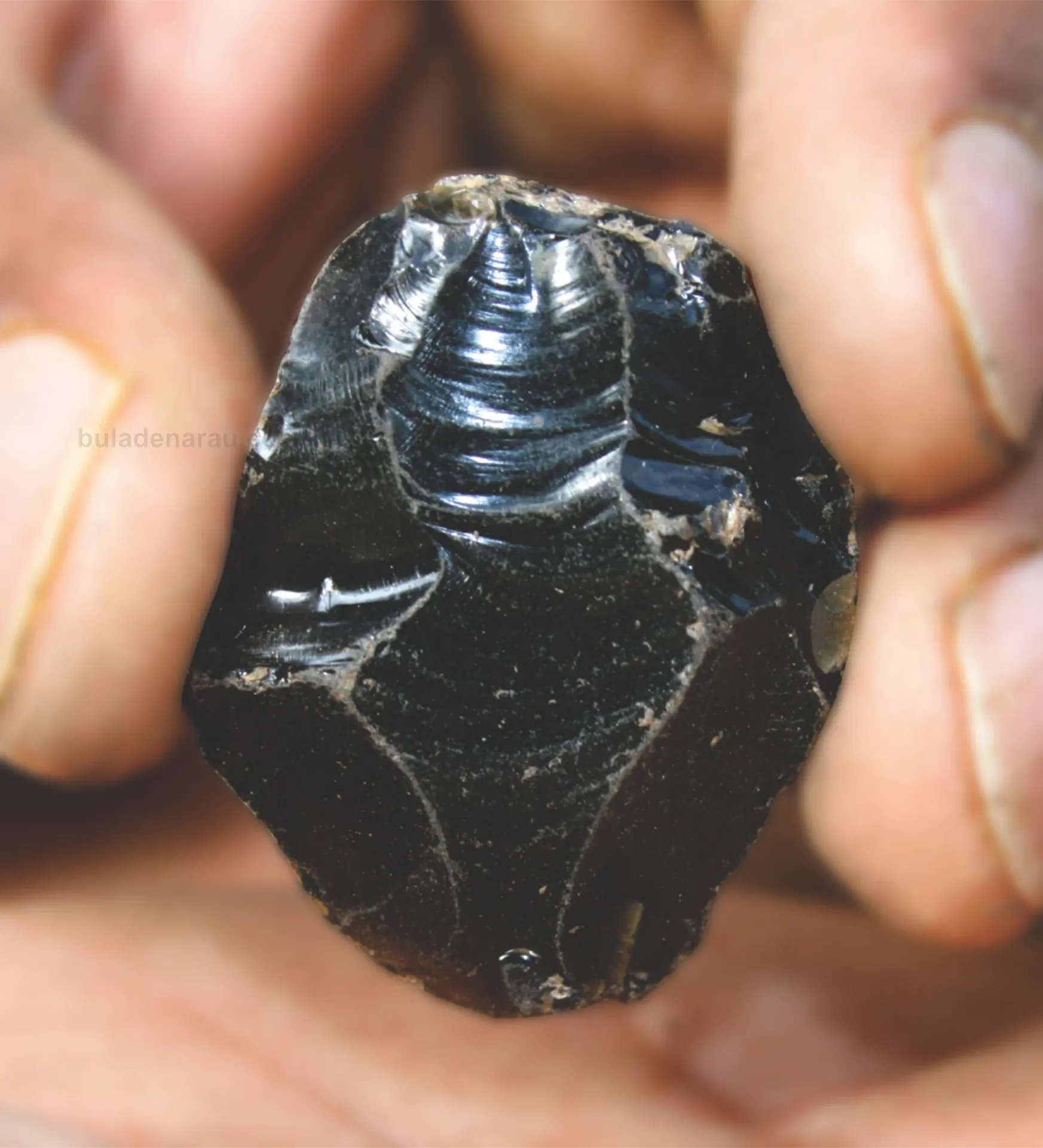 Above a piece of Obsidian, or volcanic glass that has been identified as having originated from a bay in Papua New Guinea 5000 kilometres from Fiji and dated to a Lapita site more than 3000 old in Fiji. A prized possession indeed of someone three thousand years ago and a great archeological discovery. What were the circumstances in which it was discarded, was it simply lost?