For partnership and business-related enquiries, please get in touch.
Veiqaravi Vakavanua Vakaturaga: Understanding Fiji’s Traditional Ceremony of Welcome.
Fiji’s traditional ceremony of welcome is known as the Veiqaravi Vakavanua Vakaturaga. It is accorded to High Chiefs, often called the equivalent of Kings or Queens, and special visitors of High Rank and Importance.
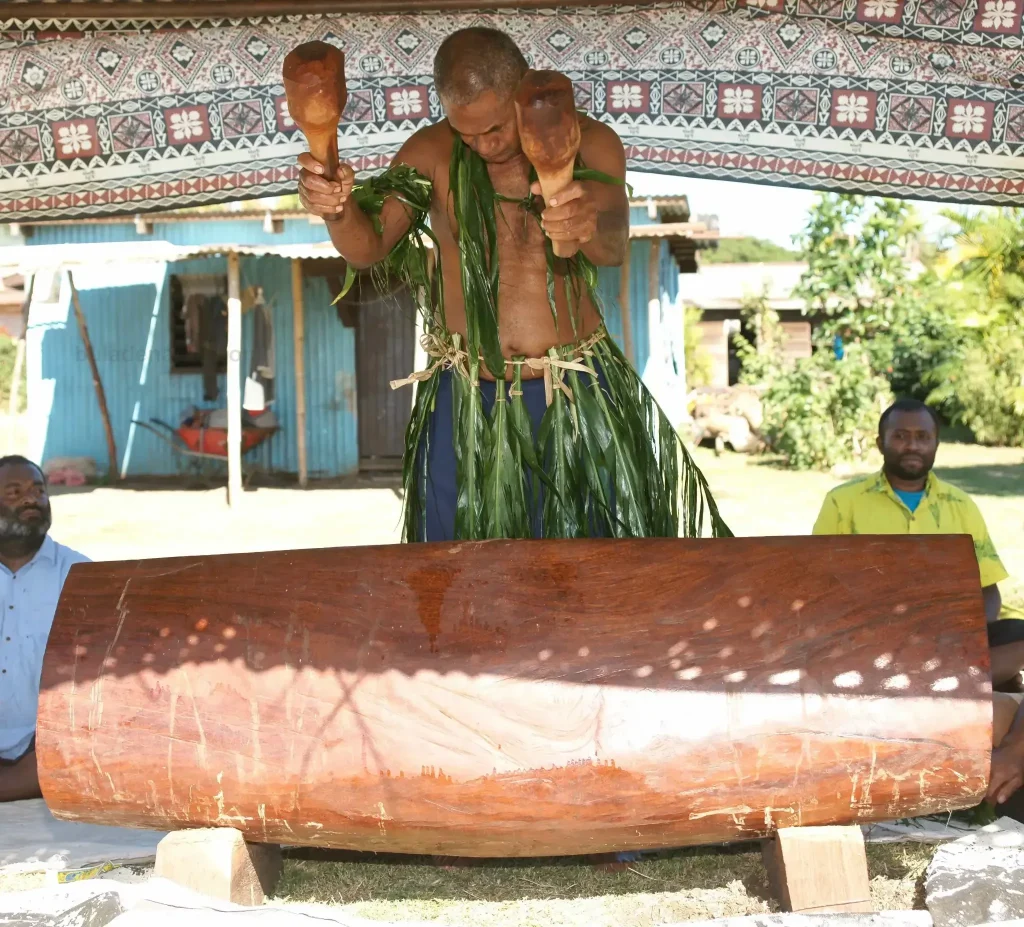
An example of the type of drum beat that is used when Major Chiefs are present at formal ceremonies can be heard here in this lali ni sogo ni vakaturaga:*
Yaqona, better known to many as kava, forms an integral part of Fijian culture. It was most likely brought to Fiji from Vanuatu, possibly by the Lapita people who voyaged here more than three millennia ago and were the first people to inhabit Fiji. If so yaqonamust have been considered an essential part of their material culture given that the room available on their craft would have been strictly limited, and only the most important items allocated space. While we will never know definitively the full story of the origins of yaqona in Fiji what we do know is that the culture and traditions of Fiji’s iTaukei, the heirs of those first settlers, inform us that yaqona plays an essential role in the social health of their societies. When you experience a traditional yaqonaceremony you are witnessing a ritual whose origins may go back as far as three thousand years in Fiji. The ceremony has been refined over time to best express respect for, and adherence to, social structures and diplomatic norms of behaviour. It disarms potential or actual protagonists by peeling off or removing differences occasioned by time, distance and space; physically, emotionally and spiritually, allowing a coming together to face mutual relations.
It is an expression of respect and of welcome and is one manifestation of the hospitality for which Fiji is so famous.
Originally the consumption of yaqona was reserved for chiefs and priests. The offering and serving of yaqona was an expression of respect towards a chief and his position, within which he or she ultimately exercised authority over and responsibility for the life and death and the welfare of their people. But the offering, serving and imbibing of yaqona was not purely secular; it also played a role in the spiritual realm. Yaqona’s mystical attributes helped enable priests to converse with gods and, in cases where such ancestry was claimed, reinforced the semi-divine nature of high chiefs. Given its gravitas within iTaukei culture it is easy to understand why the preparation and serving of yaqona was and is conducted with all the trappings of high ceremony on formal occasions.
The central or most important yaqona ceremony is that of Chiefly Yaqona, or Yaqona Vakaturaga, literally yaqona for the chief, which is conducted by the Vanua, or the people, for their high chief. It is also performed as an honour when receiving visiting chiefs of high rank, important dignitaries or special guests.
The political landscape of Fiji before cession to Britain in 1874 was made up of numerous independent kingdoms each with their own sovereign. Relationships between neighbours and other kingdoms were of the utmost importance in maintaining peace and prosperity, especially in times where war and conflict were not only common but prevalent. Within this context it is easy to understand why one of the most important occasions in the past on which high ceremonial yaqona was conducted was upon the receiving of important guests. The practice is continued today and has been adopted by Fiji as a nation. The Government accords visiting international dignitaries of high rank, such as Prime Ministers, a formal traditional ceremony of welcome on behalf of the country.
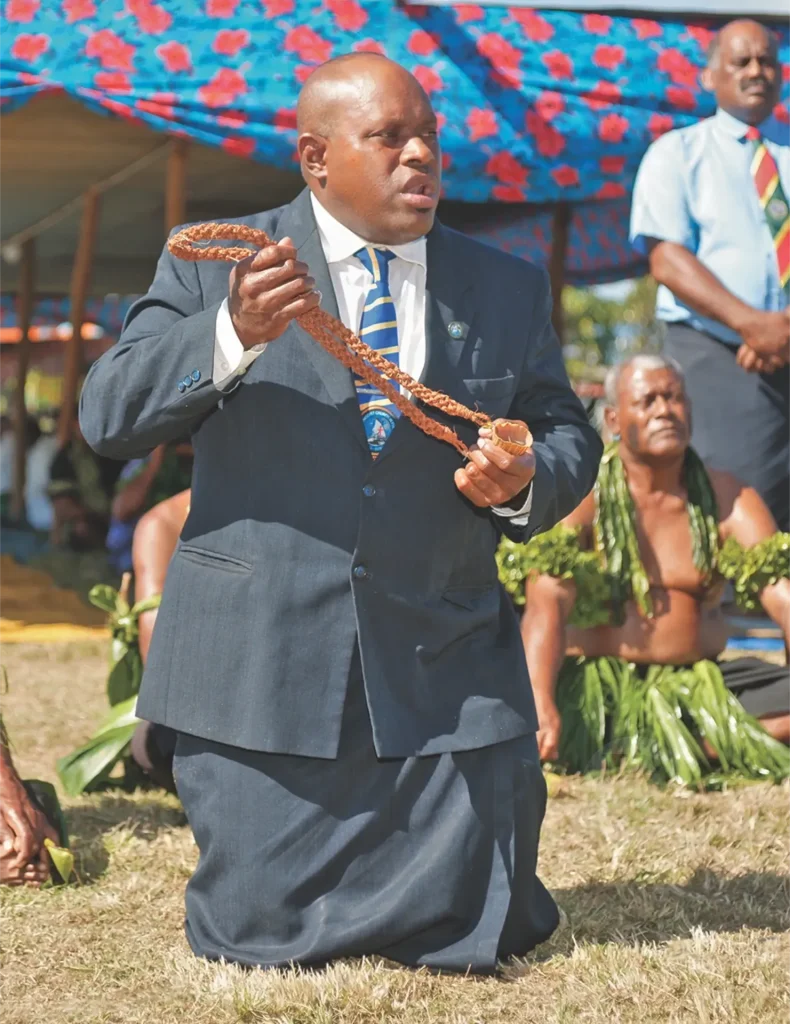
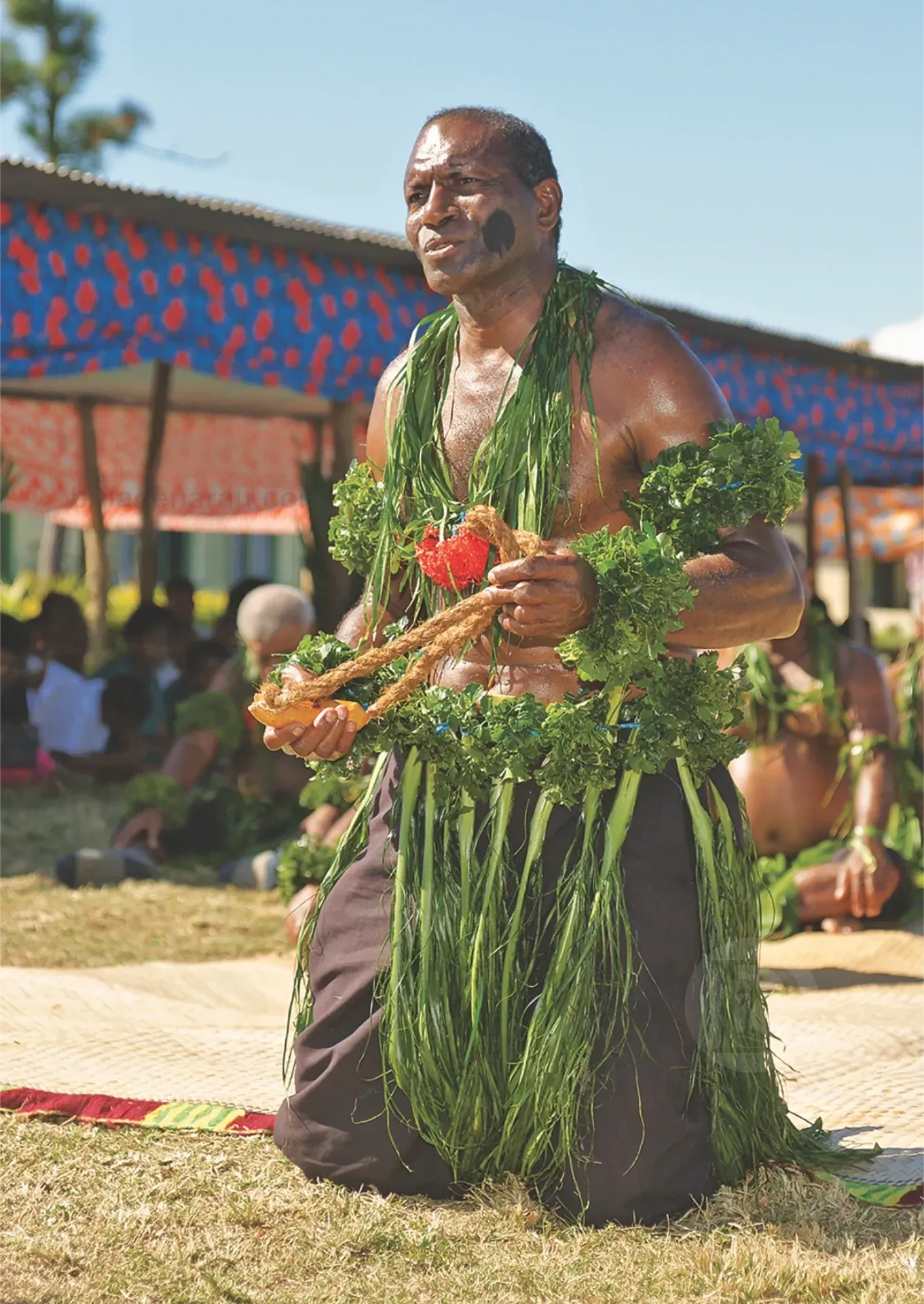
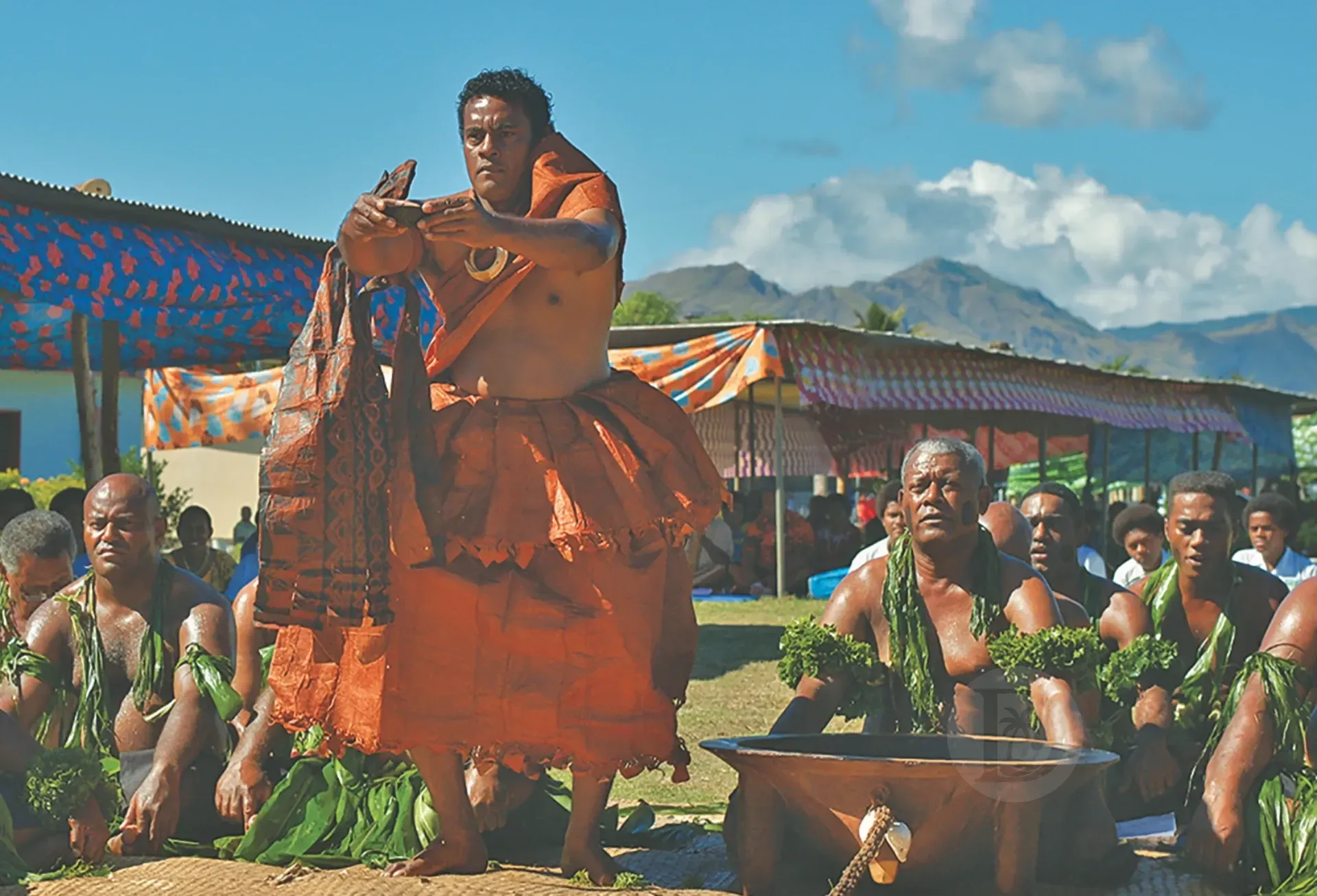
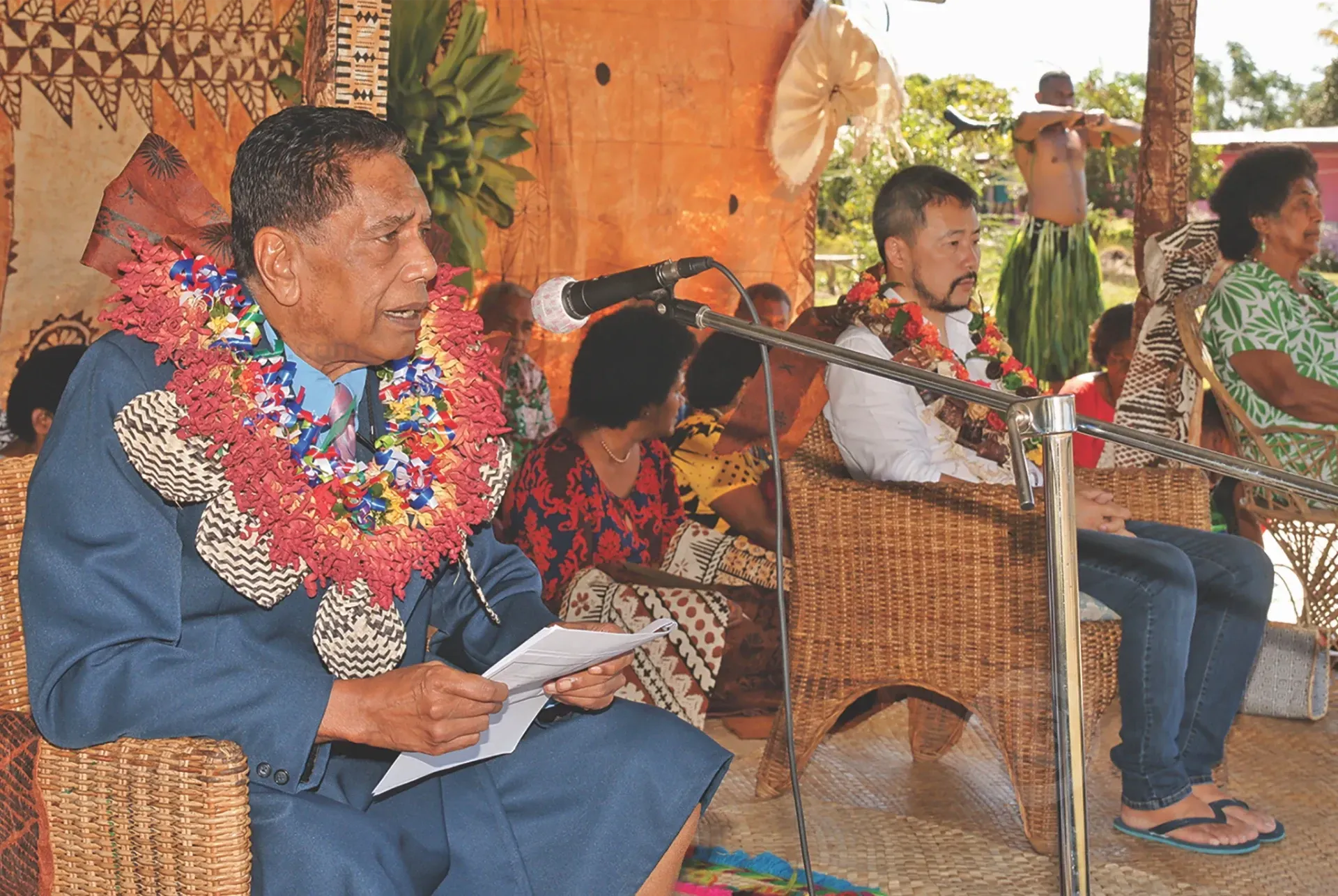
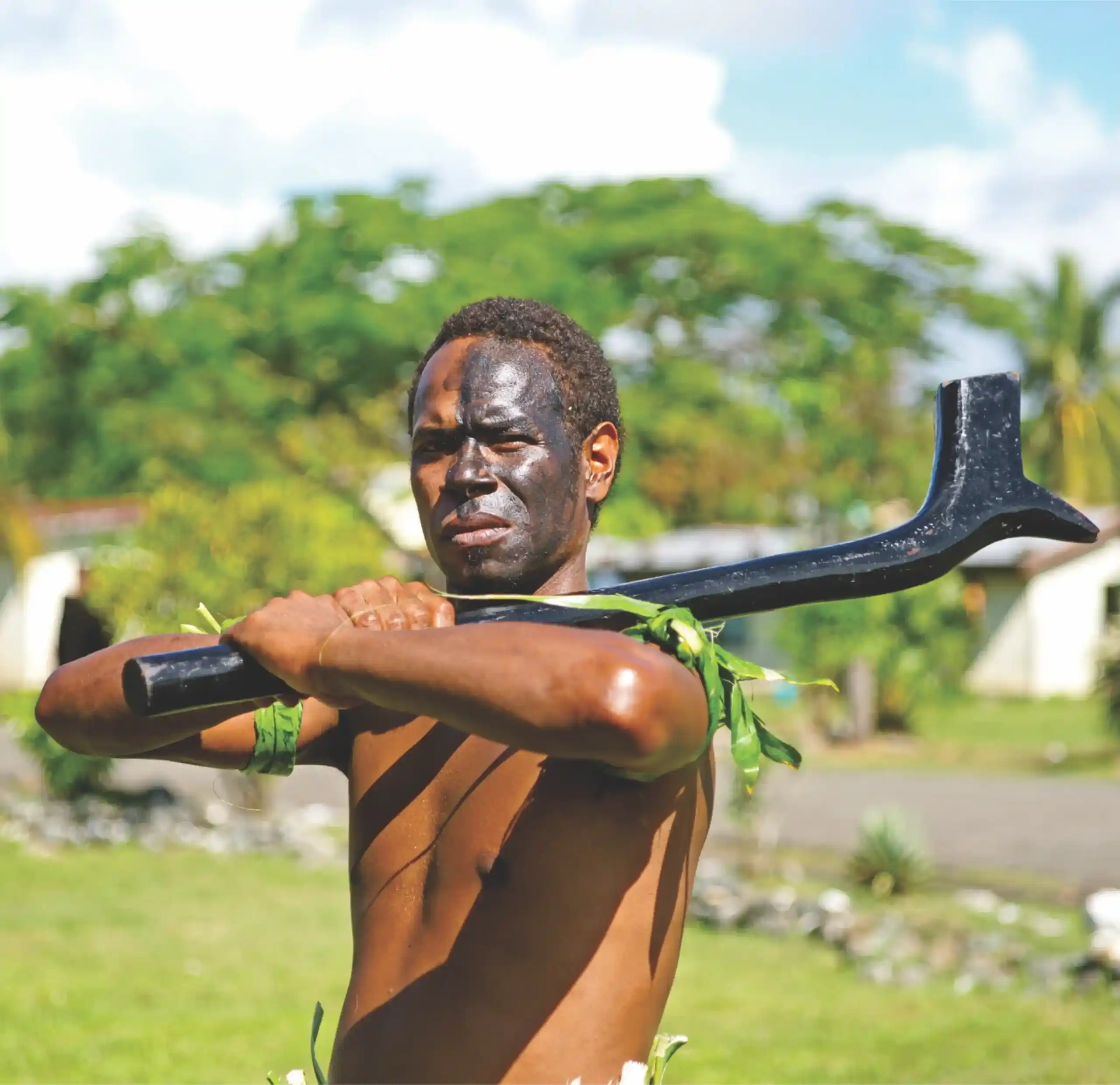
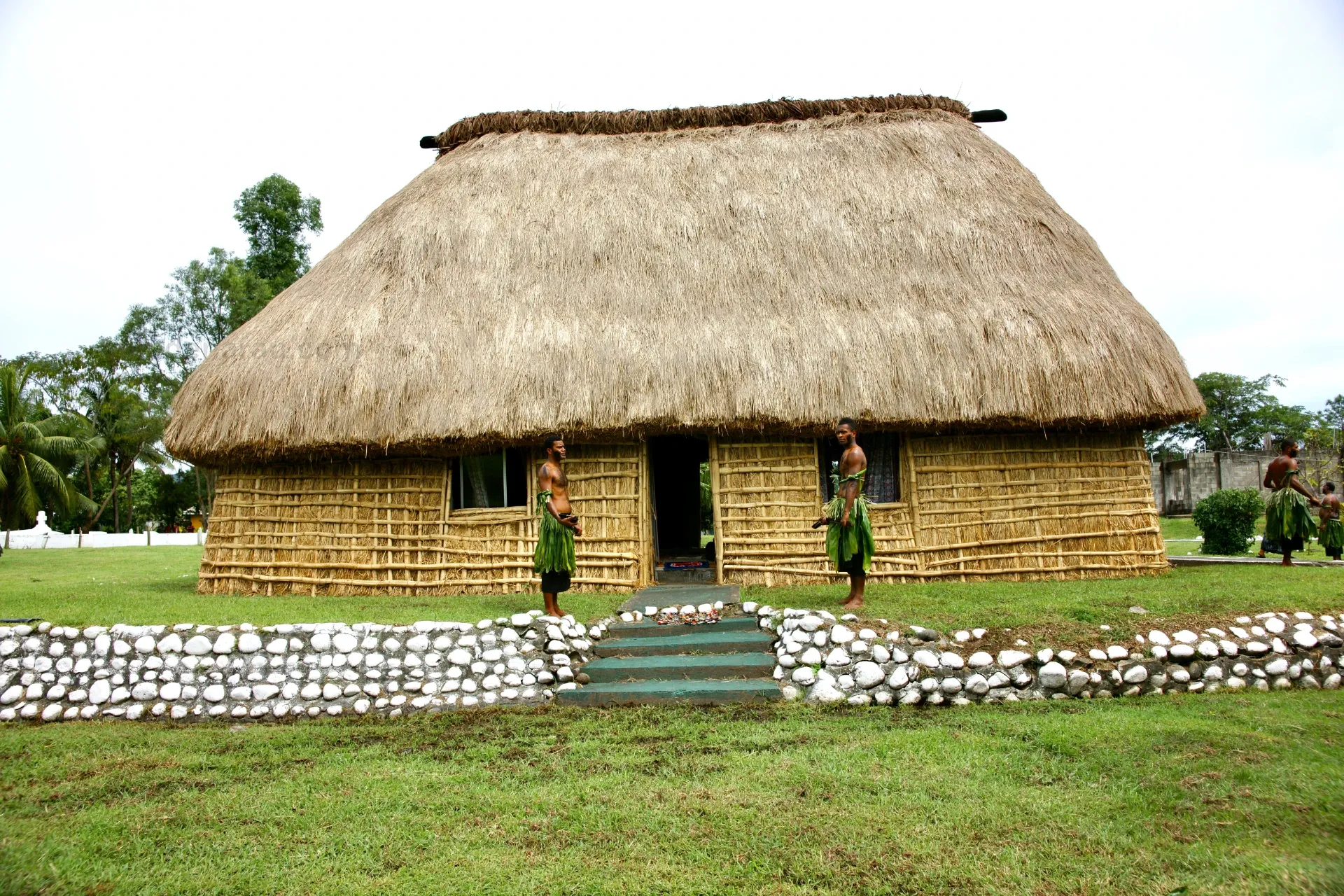
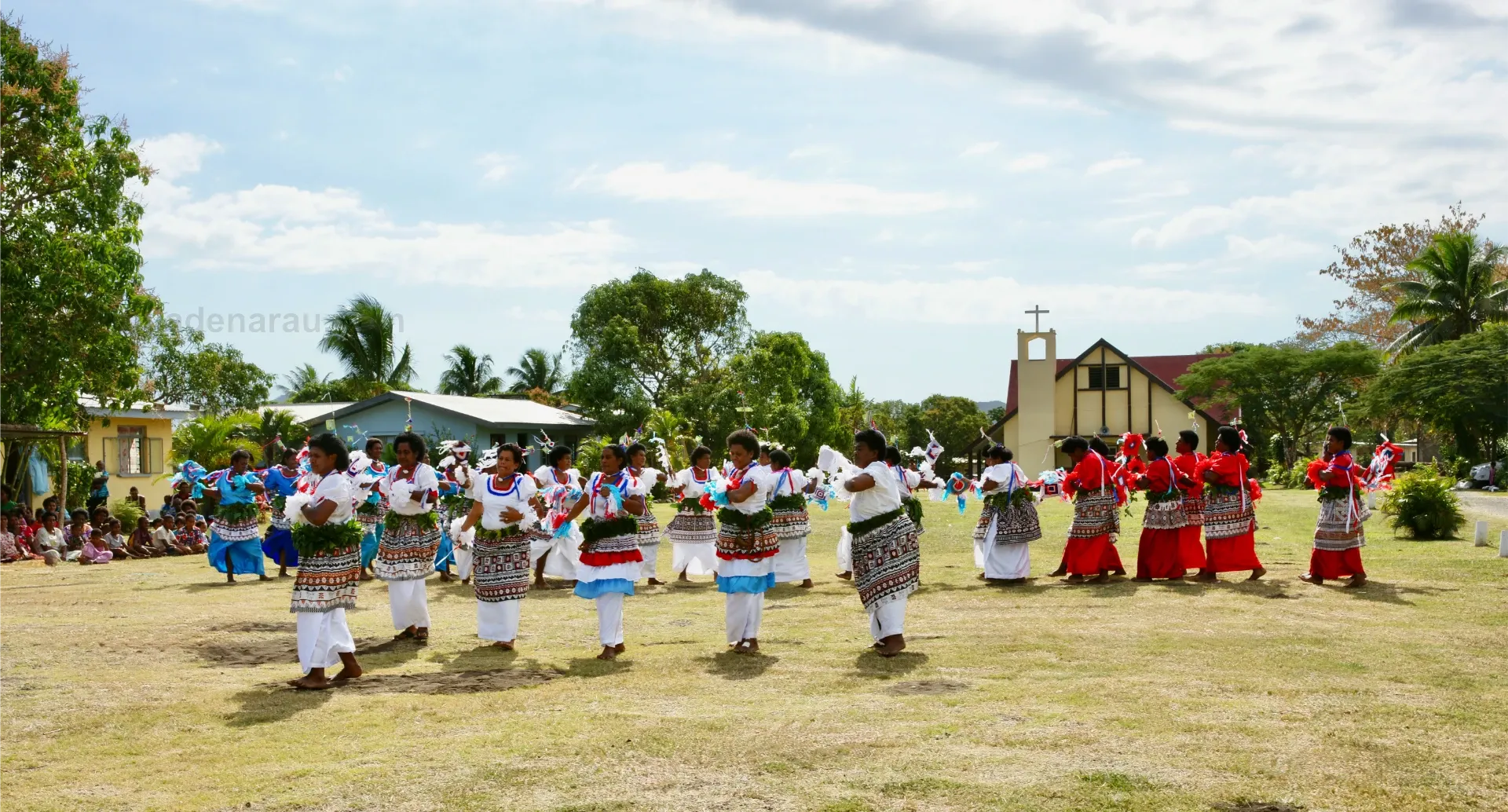
The traditional ceremony of welcome, Veiqaravi Vakavanua Vakaturaga, depicted in this story was held in Tavualevuvillage on the occasion of a church fund-raising event, called asoli, in June of 2019. The ceremony opened and closed the event held on the village rara, or village green designed for formal functions. Located at the rara is one of the village’s three lali or traditional wooden drums. Shortly before ten o’clock in the morning beats from thelaliannounced to the assembled people and the village in general that the Tui Tavua, or the king of Tavua district, had left his residence and was en route to therara. An honour guard of bati, or traditional Fijian warriors accompanied him. Upon arrival at the rara the Tui was greeted by a welcoming group and presented with a tabua in theiVakasobu. Tabua are teeth from the Sperm whale and are cultural items of inestimable value. They have a plaited cord, made from the husk of mature coconuts, attached to each end and are often stained an orange or red colour. Presentation of tabuaconveys feelings of the deepest respect, and commands the weightiest level of consideration to requests that accompany them. In the past their presentation could decide whether there would be war or peace, life or death.
The presentation of the vakasobu tabua signified a welcome on foreign soil and a request for the Tui, who had arrived by car, to disembark from his vehicle. It was received by the Tui through his Matanivanua who is his herald or spokesman. The Tui tells him what he wishes to be conveyed and the Matanivanua speaks on his behalf.
After receiving the tabua the Tui proceeded into a shade shed that had been prepared for him. He was then presented with another tabua in the Qaloqalovi. Properly speaking the Qaloqalovi is the welcoming tabua presented as a request to disembark when the guest is arriving by sea, as opposed to the vakasobu tabua when arriving by land, and in olden times was usually swum out to the guest’s vessel. It has however become somewhat common practice today for many ceremonies to feature presentation of both the Vakasobu and Qaloqalovi. The presentation of the Qaloqalovi was done when all the parties were assembled and seated. Its purpose and meaning was to reiterate the welcome to the chief and his entourage by the vanua, or people.
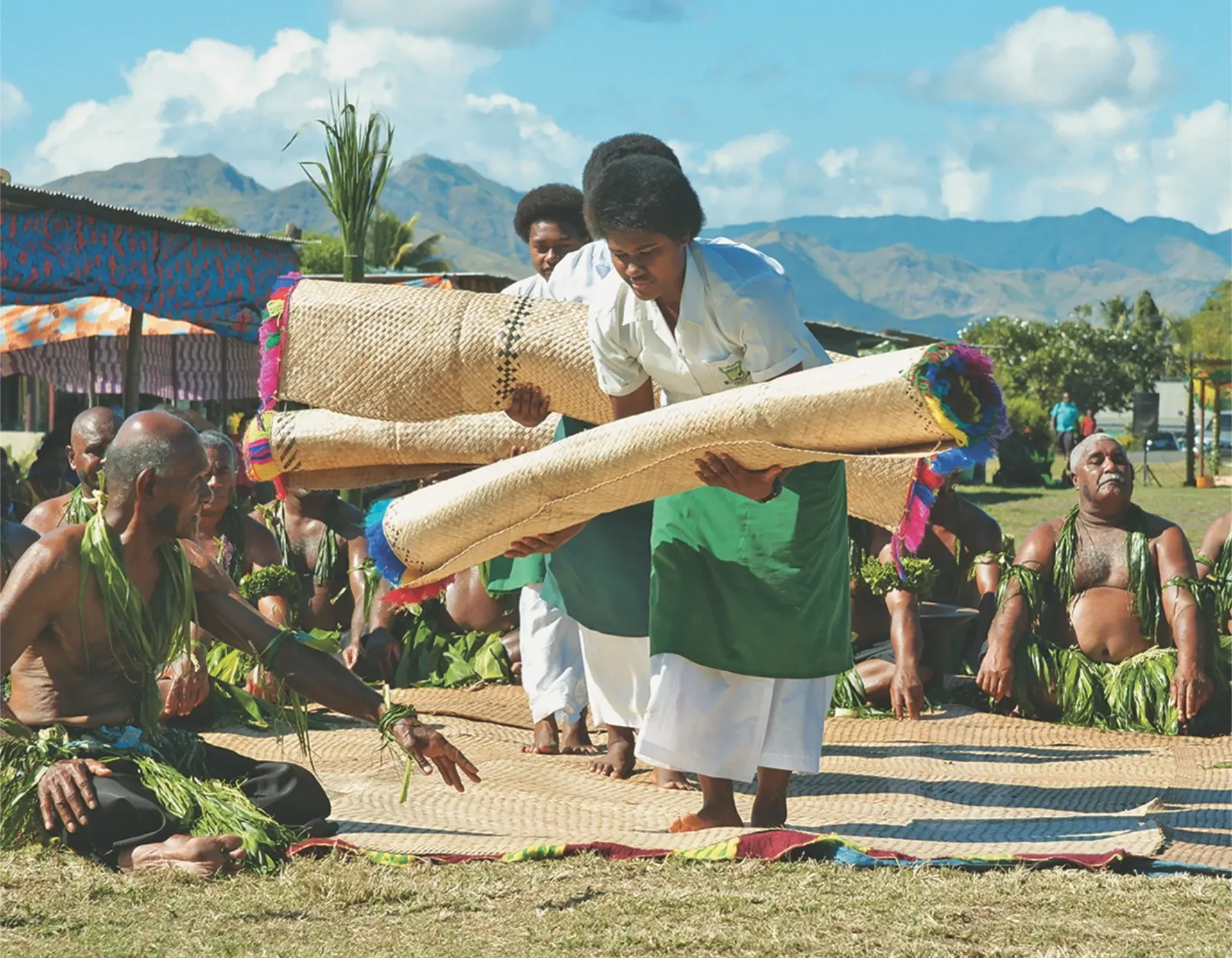
The Qaloqalovi was followed by the Vakamamaca, the presentation of hand-woven mats or ibe. The meaning of the Vakamamaca presentation was to cater for the visiting party’s household and sartorial needs after their journey, recognising that some of their items may have been lost or damaged en route.
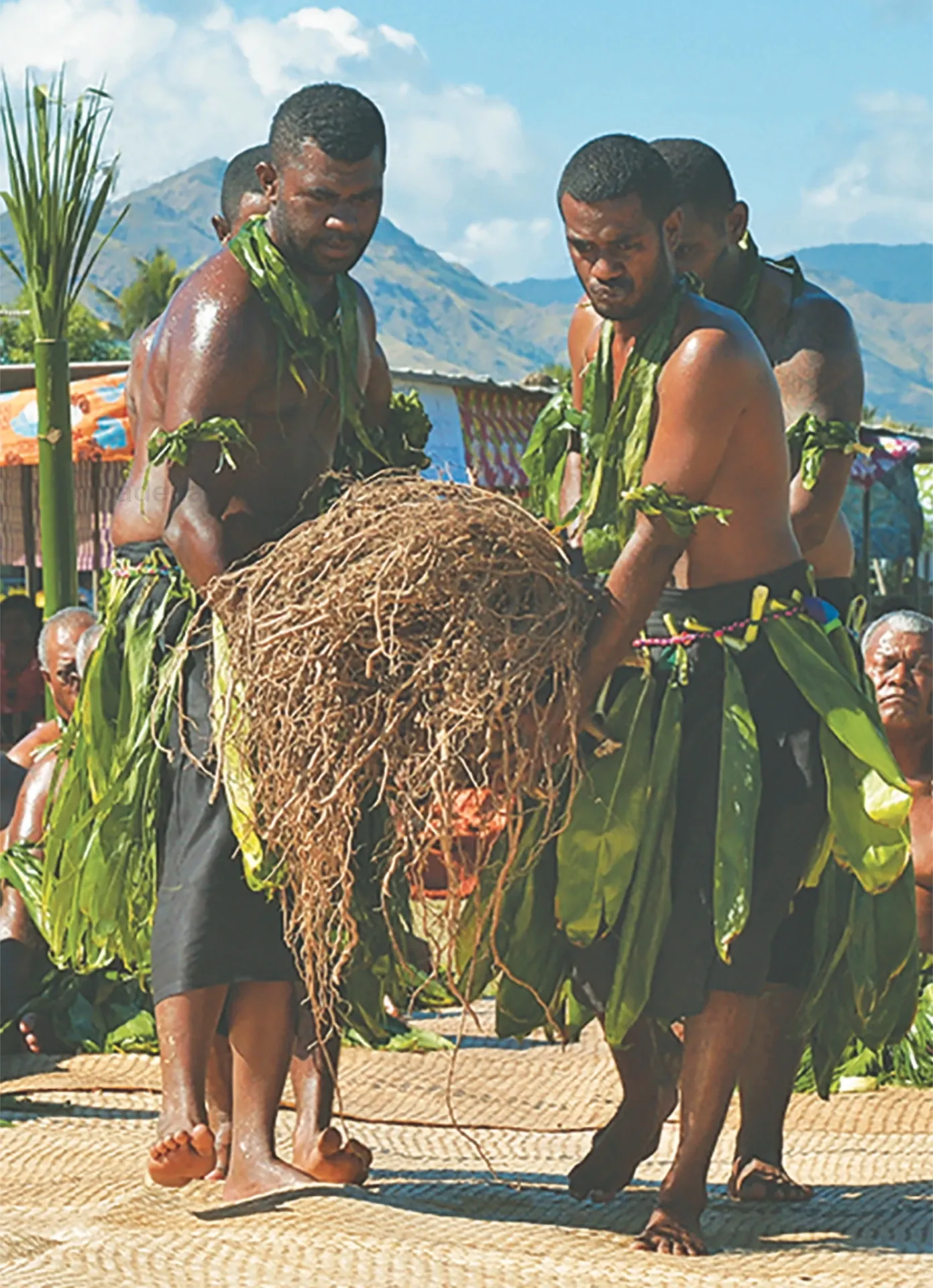
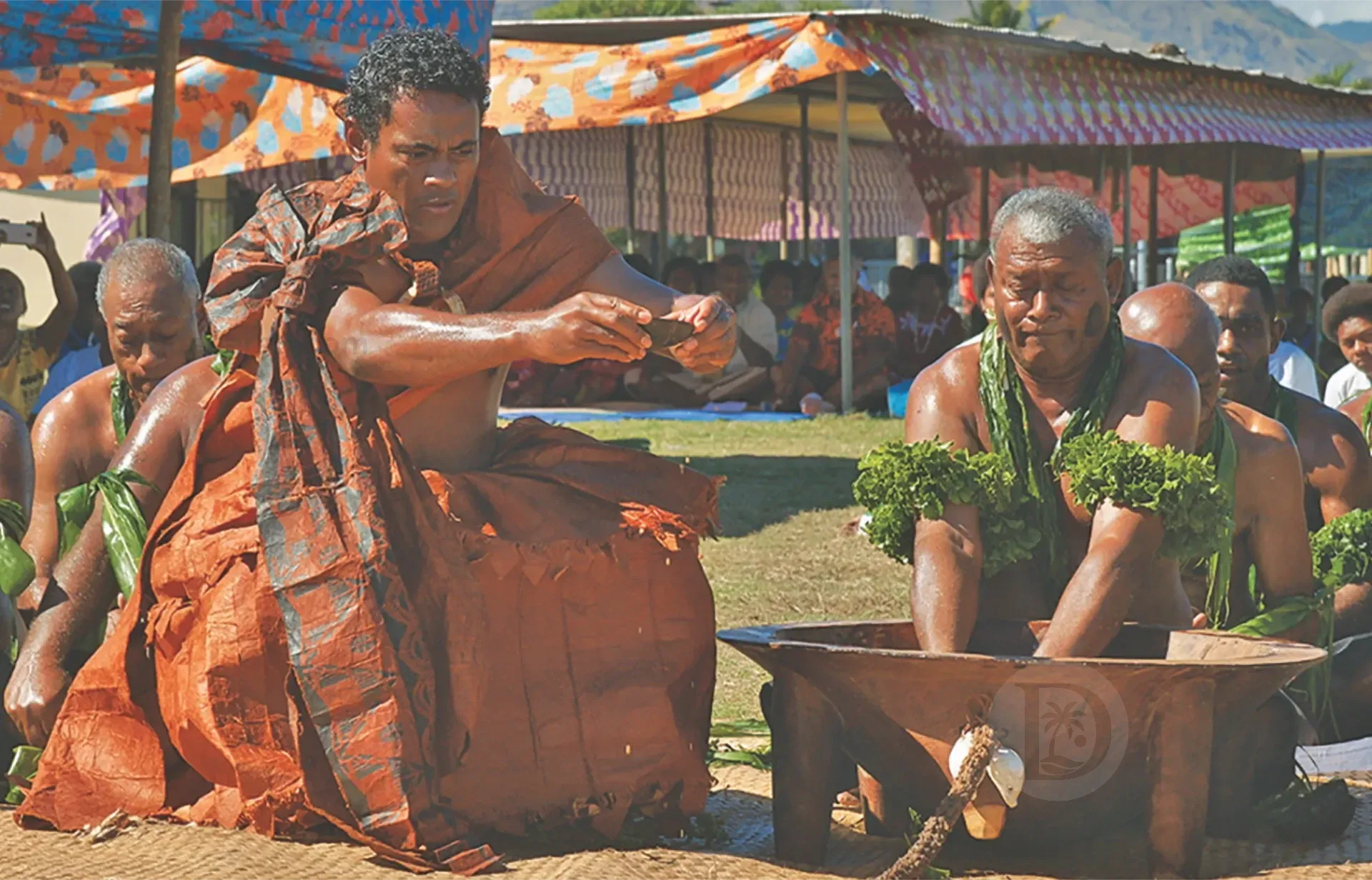
Next on the program was the Sevusevu where the Tui was presented with a whole green root of yaqona. The meaning of the Sevusevu was that of a sharing of the fruits of the soil and an affirmation by the people of their recognition of the Tui as their king.
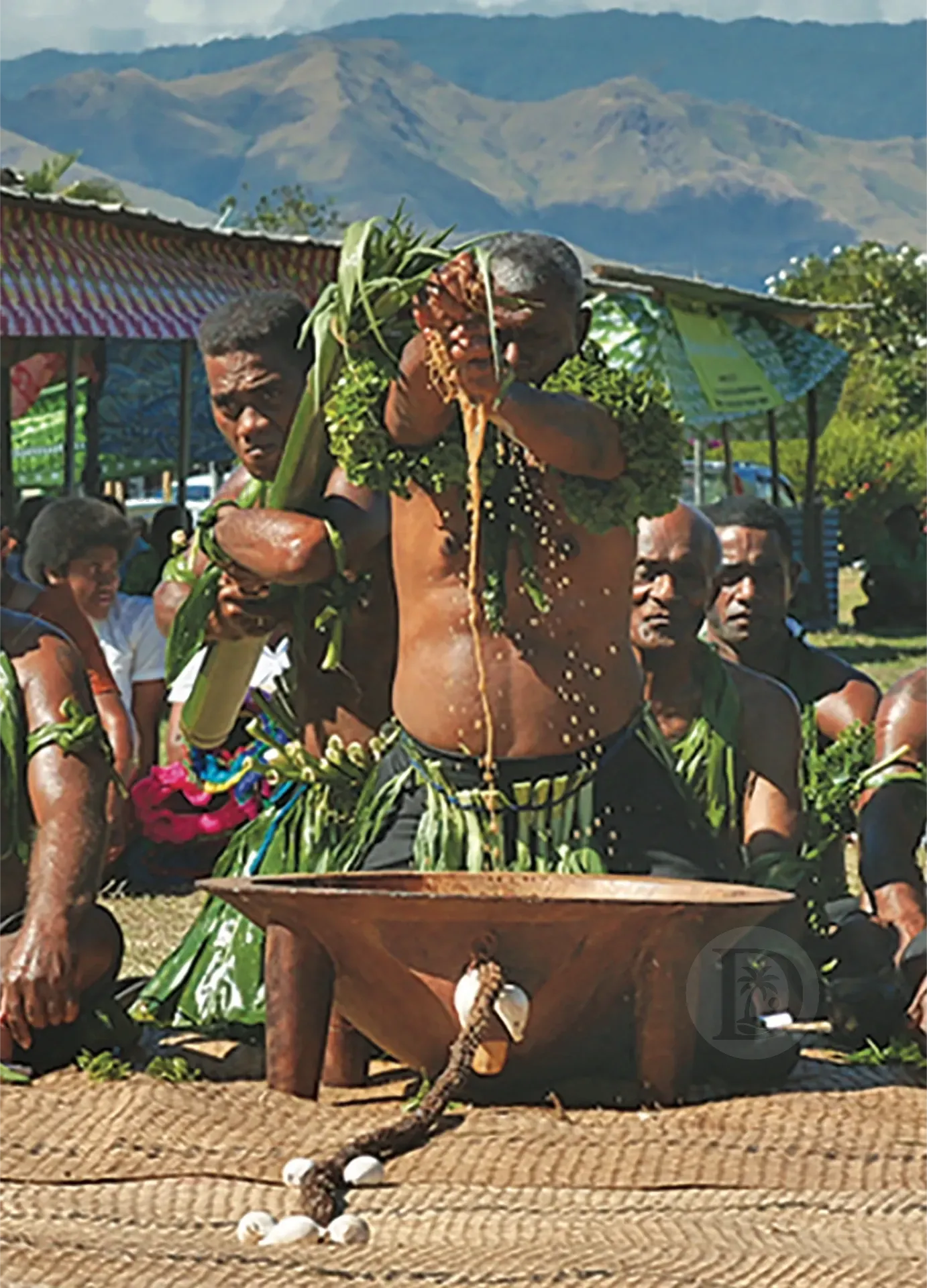
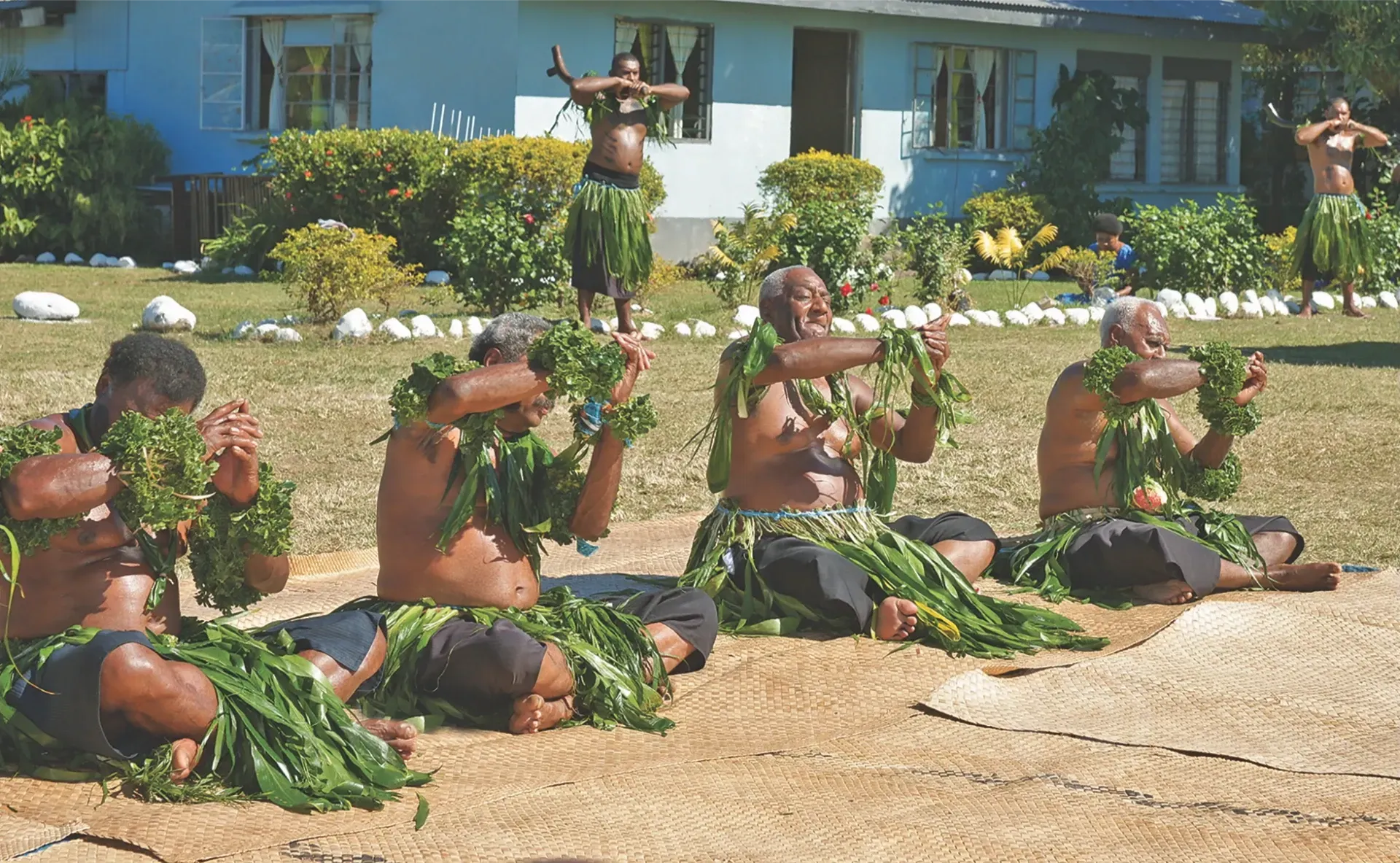
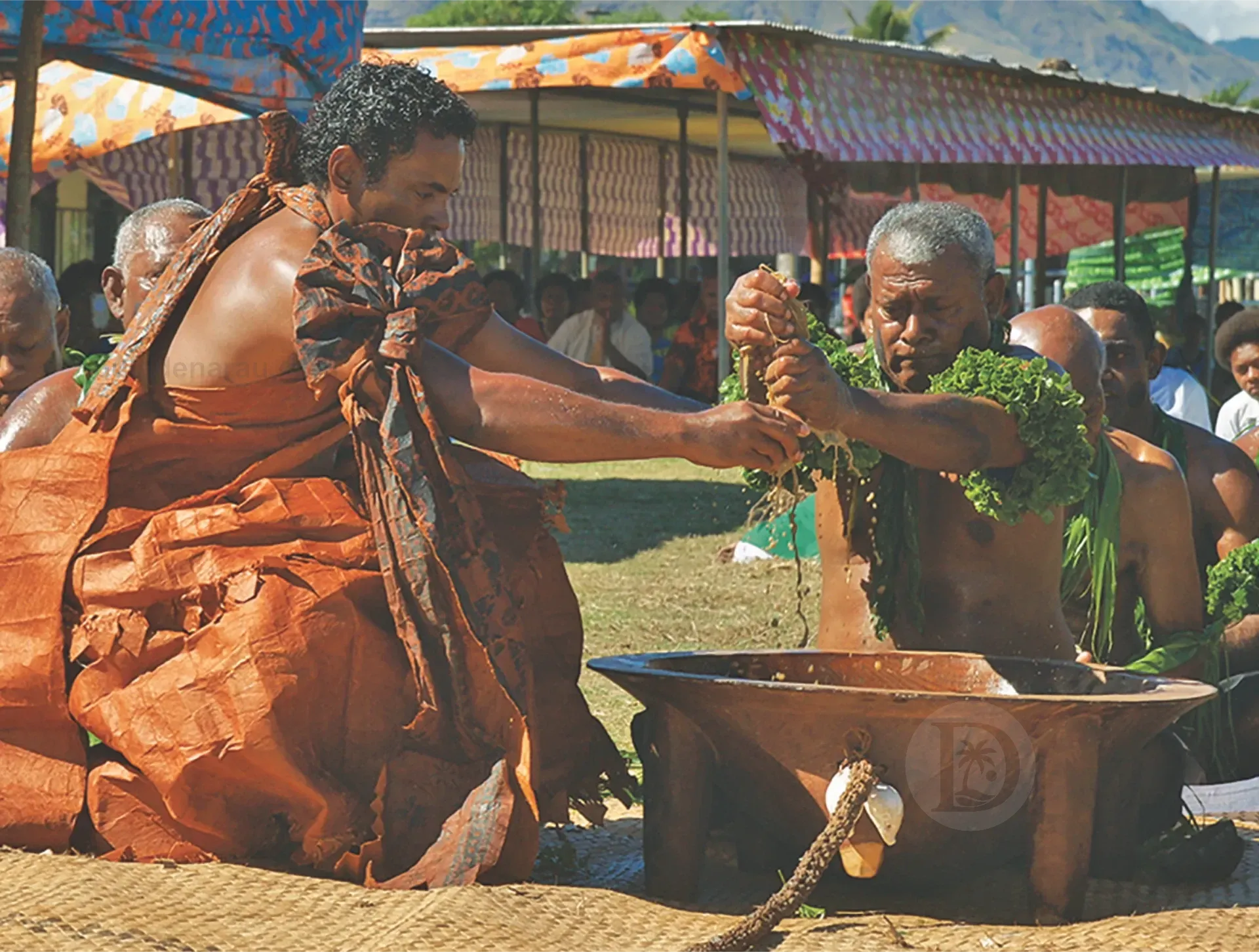
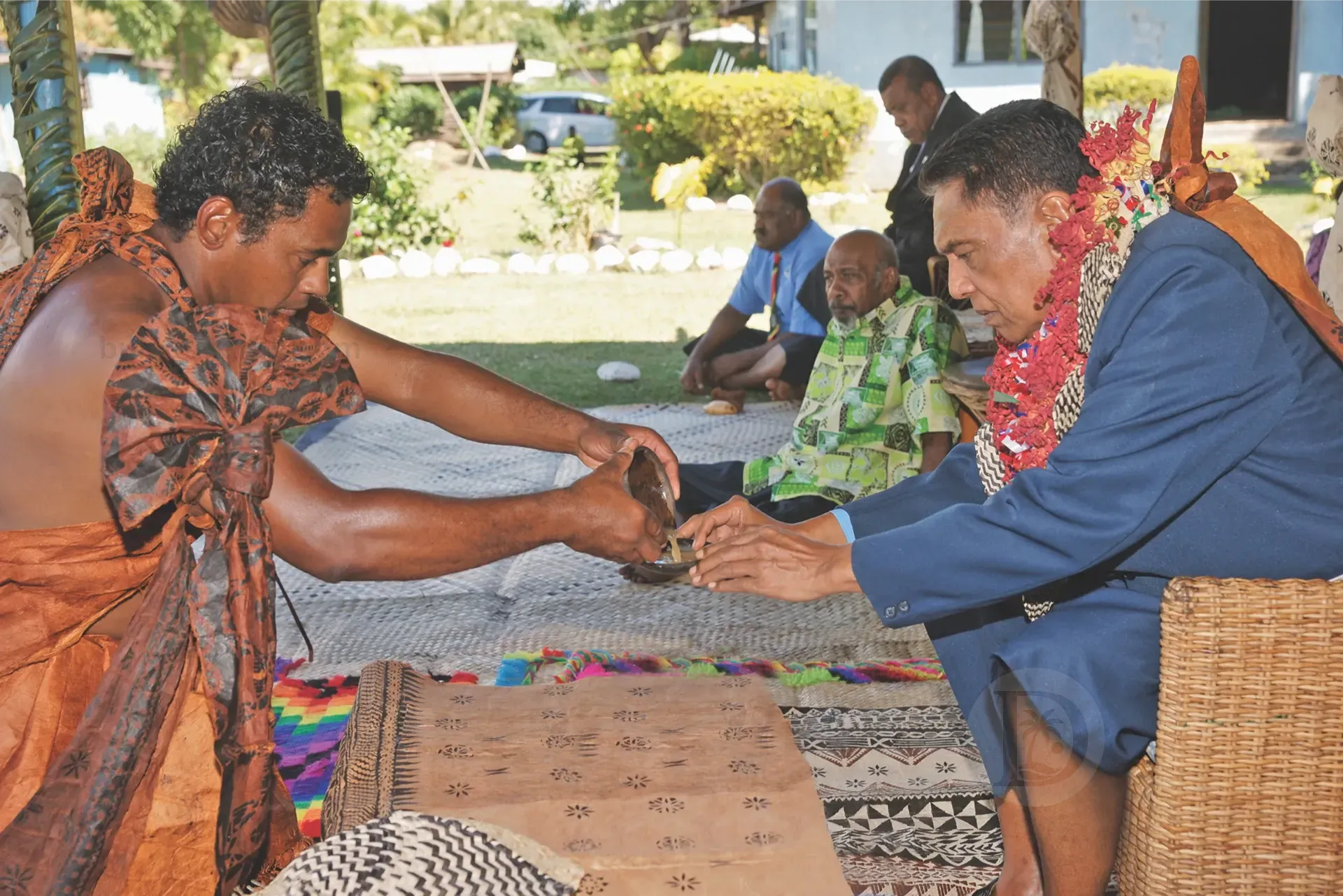
After the presentation and acceptance of the sevusevu it was time for the preparation and serving of the chiefly yaqona. The Yaqona Vakaturaga ritual lies at the very heart of the ceremony of welcome. It is its main focus and is performed by members of the chiefly clan. Collectively their task is covered by the term Veiqaravi. The meaning behind that term is that before the members of the chiefly clan may rise to positions of being served they must first learn to serve. Dried yaqona root that had been pounded into a powder was mixed with water in a tanoa and strained through fibers of the vau tree to remove any residual powder. Once prepared the tanoa was tilted so that the Matanivanua could see and assess the strength of the mix. He cried, “wai” for more water until he was satisfied the mix was correct which he indicated by crying out loud, “wai donu tu na yaqona vakaturaga”. Upon this cue the yaqona party commenced performing their yaqona meke or dance and the cupbearer danced from behind the party up to the tanoa.
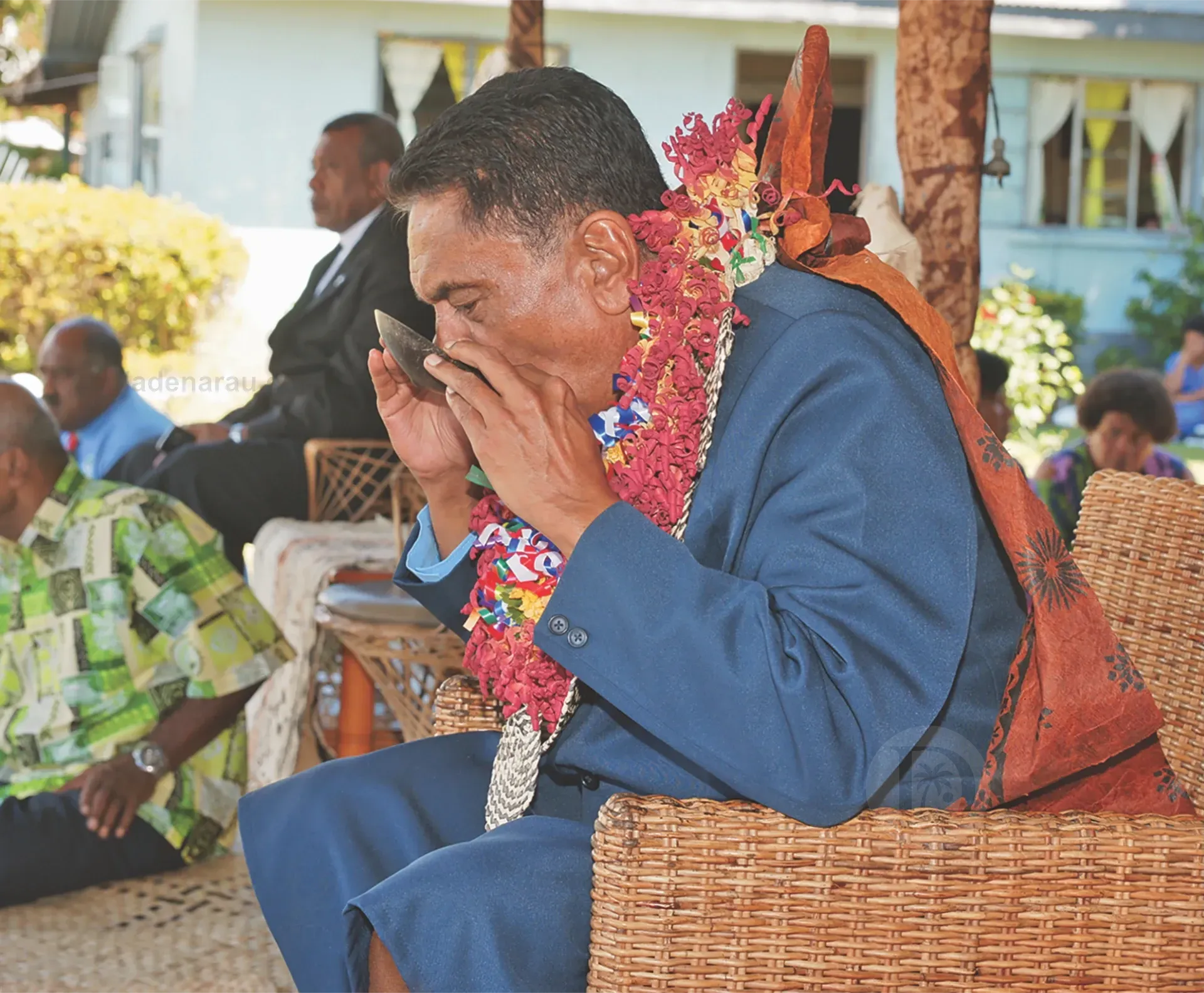
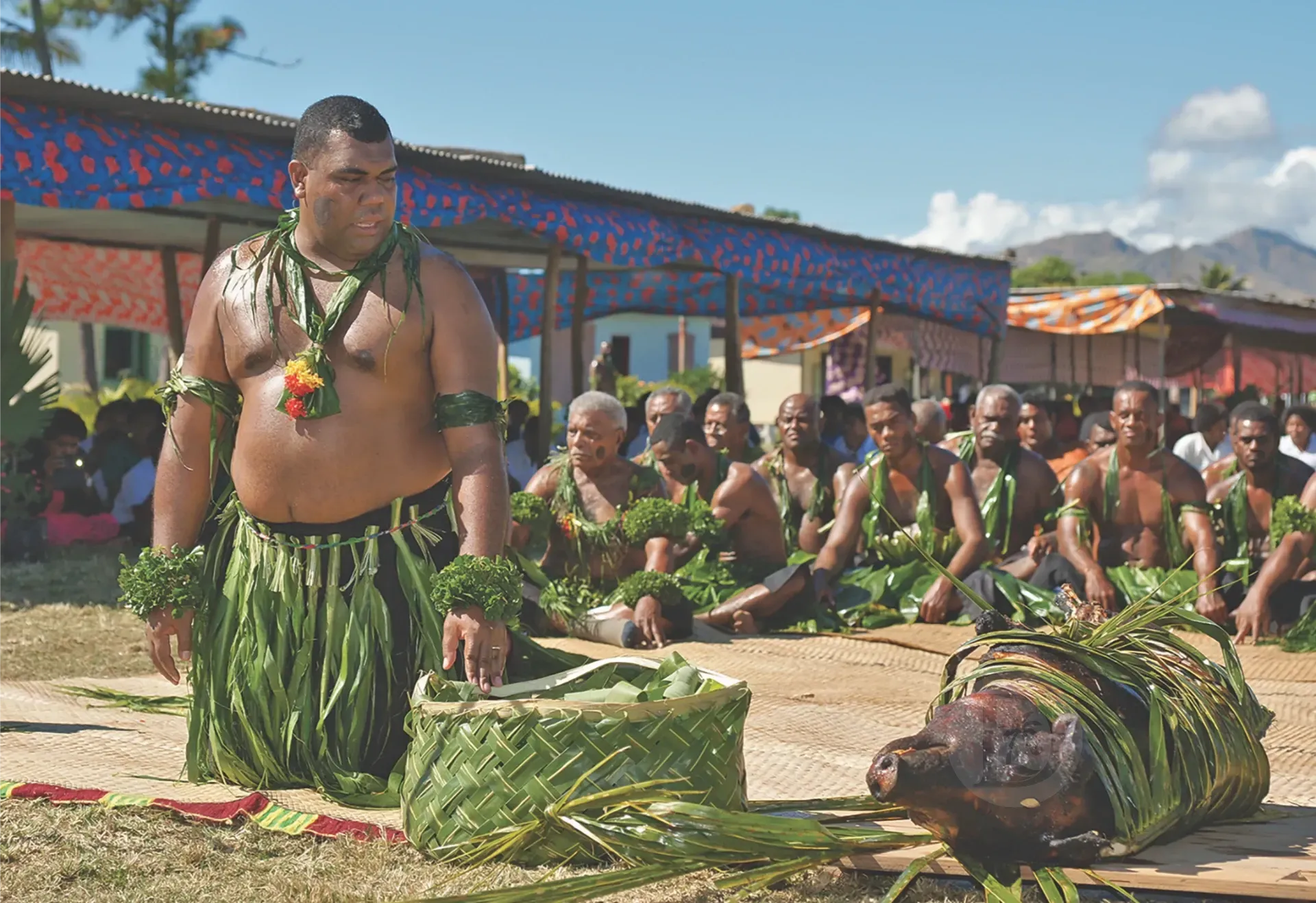
The mix was strained a final time as it was wrung through the vaufibers directly into the serving cup, filling it to the brim. The cupbearer approached the Tuiand transferred the yaqonainto theTui’spersonal bilo, which he then drank in one draught. The Matanivanuawas served after the Tuiand they were the only people to drink. Immediately after the serving and drinking of the chiefly yaqonathe Tuiwas presented withlovo, which is earth oven, cooked root crops, specifically dalo, or taro, and a whole pig. This part of the ceremony is called the Wase ni yaqona and is a presentation of chiefly food signifying the prosperity of the land. The Tui and his invited guest were then adorned with salusalu, or flower necklaces, after which the Tui addressed the assembled people in the Vosa Vakaturaga,or the king’s speech. In his address he thanked the vanuafor the traditional ceremony and called for them to receive blessings, success, peace and prosperity in unity.
His speech was replied to, after which the church fund raising event was declared open. The collection started with the Tui’s entourage making their personal donations. For the next few hours the Tui remained at the rara lending his support as the assembled people contributed to the collection. Once complete the ceremony was closed with the Vakatale, the presentation of a final tabua marking the end of the ceremony and bidding the Tui and his entourage farewell and safe travels.
To view all the images in this piece, you can click on any image, and it will pop up, and you can then cycle through and view all images with their captions in a curated gallery.
*Audio Recorded at Serua Island July 1957: G.K. Roth Collection, Museum of Archaeology and Anthropology, University of Cambridge. George Kingsley Roth served in the British colonial administration in Fiji from 1928 until 1957, eventually rising to the position of Secretary for Fijian Affairs. He held a Master’s in Anthropology from Cambridge University, England and was instrumental in creating the Central Archives of Fiji in 1954 to ensure the colony’s history wasn’t lost.