For partnership and business-related enquiries, please get in touch.
Masi & Tabua
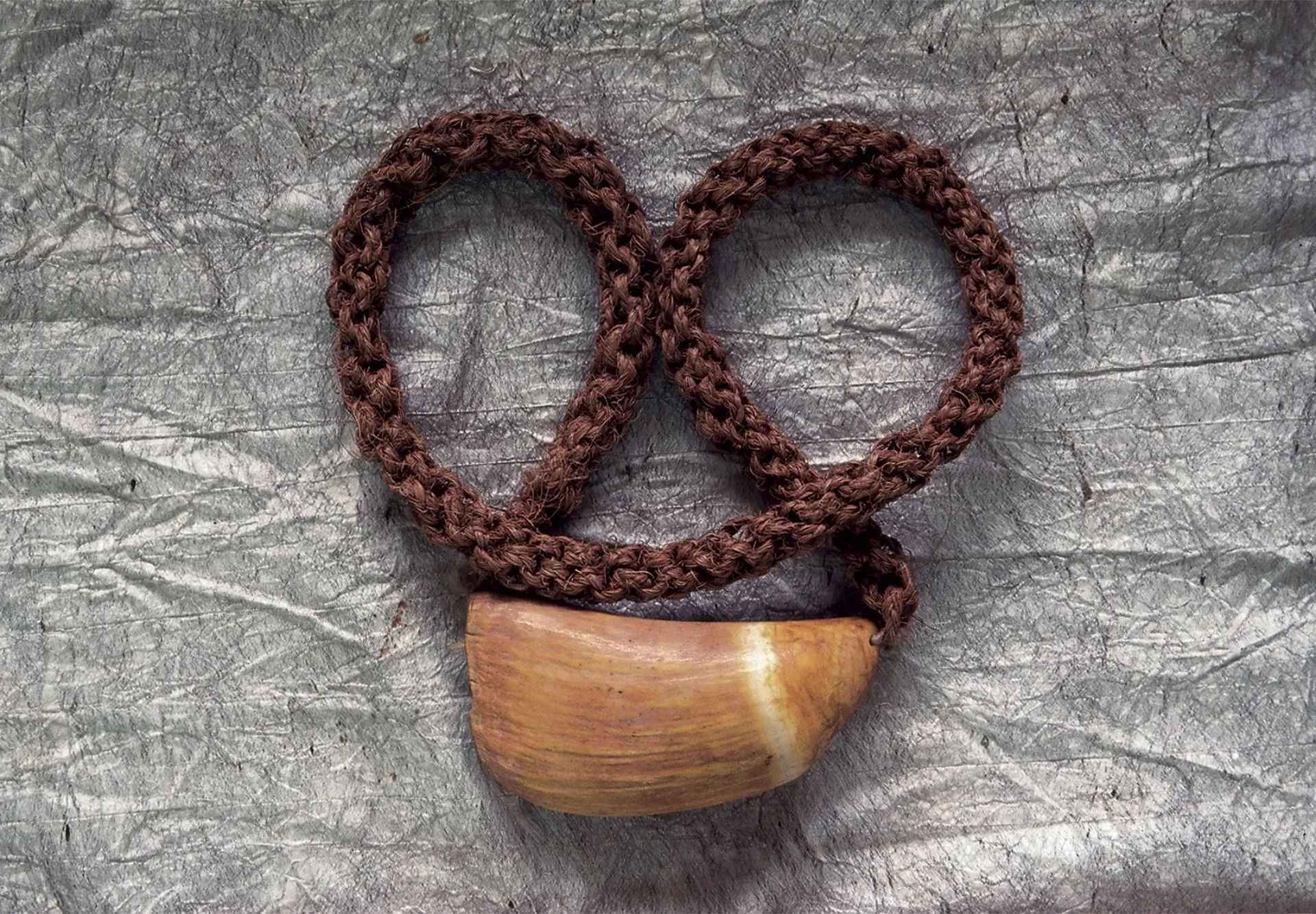
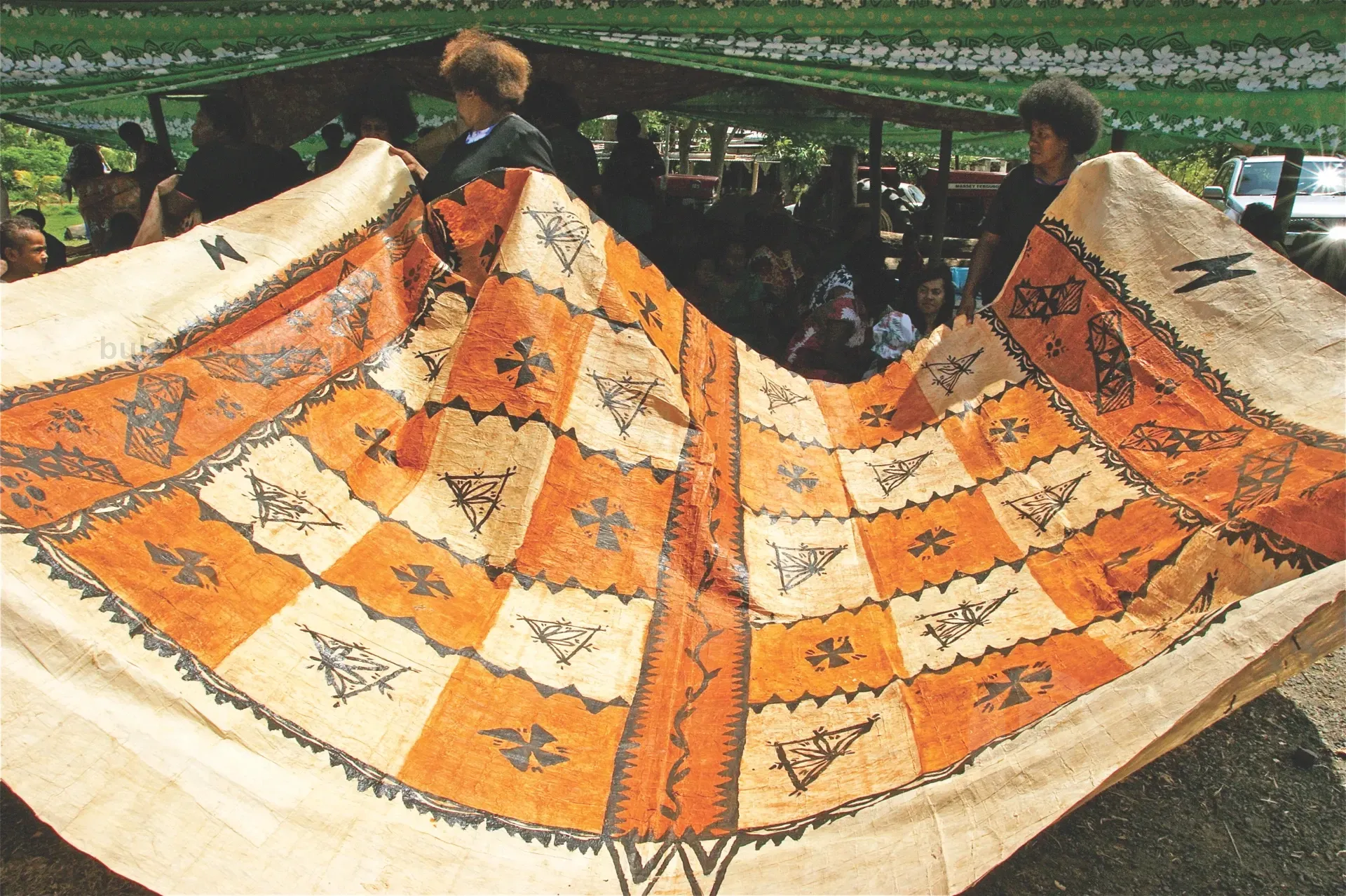
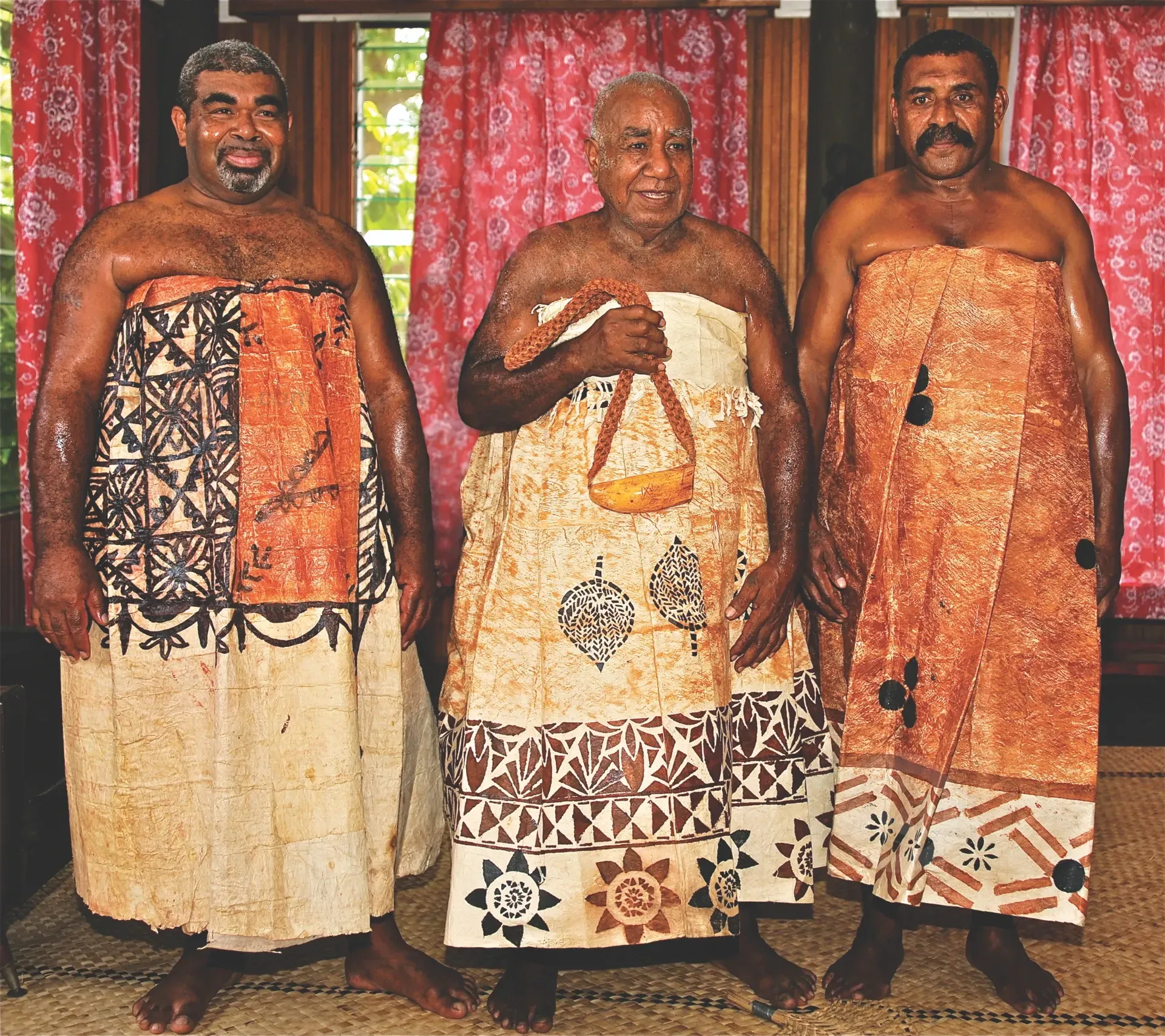
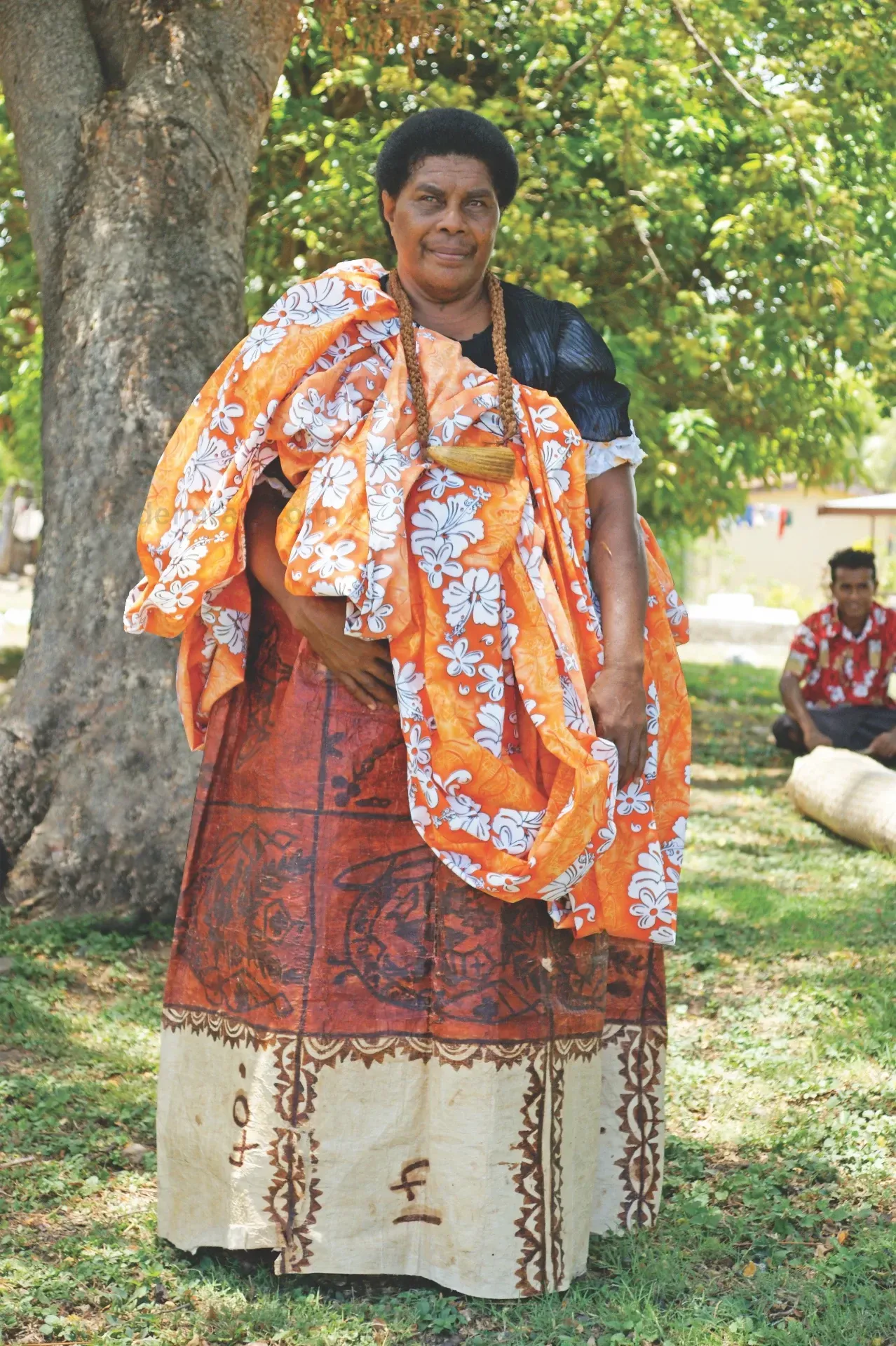
They are two contrasting yet defining aspects of traditional Fijian material culture. Masi is a cloth made from tree bark and is an intrinsically practical item, used for clothing, decoration, canoe sails, turbans, mosquito nets, and ceremonial. Tabua are teeth of the sperm whale and have no intrinsic value. Their value is ineffable, mystical, and unchallenged as the most important item in Fijian Material Culture.
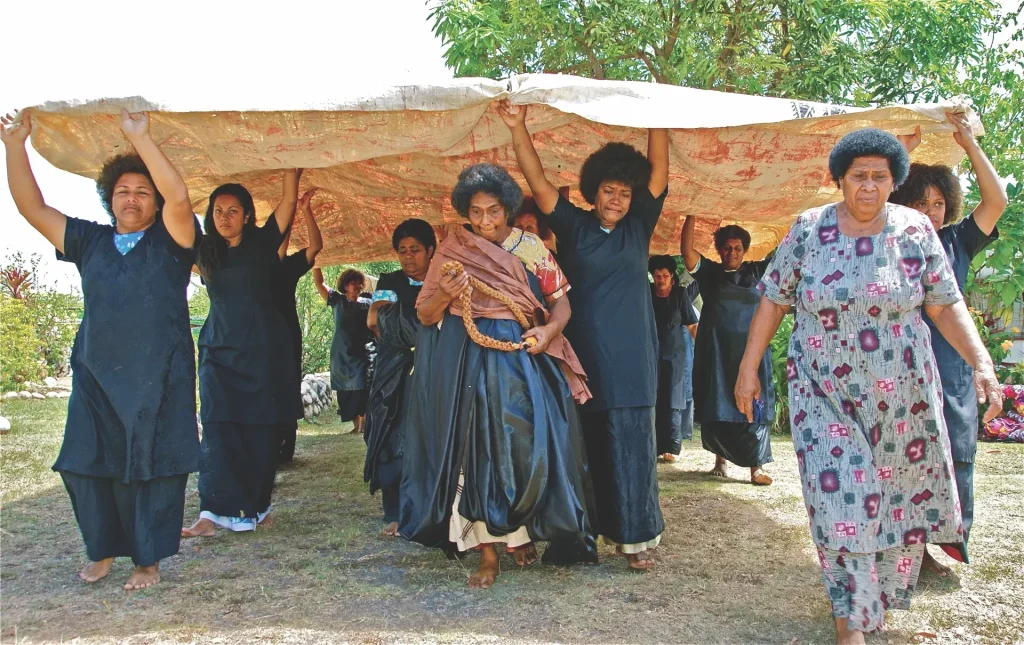
Masi cloth was introduced to Fiji by those intrepid voyagers who settled the southwest Pacific. It is known by different names in different islands of Polynesia all the way east to Hawaii and south to New Zealand. The name it is most commonly recognised by is Tapa, or Tapa cloth.
When Europeans first arrived in Fiji they observed that Masi cloth was used for clothing, for mosquito netting and for the sails for canoes. It was an indispensable part of life and valued as such.
To make Masi the bark is first stripped from the mulberry tree and soaked in water. The pulp is scraped off and the remaining fibres are beaten on wooden anvils into the desired texture and size. The size is determined by overlapping strips of the pulp and beating to seam them together.
Masi may be plain or decorated in many different ways. The style of design and decoration, usually identifies the area it comes from and the people who made it. The colours derive from the bark of the mangrove, red clays, and soot from charred nuts. It is a laborious exercise in this modern age, only justified by the cultural value placed upon it.
The word Tabua means a sacred object. Today Tabua are the teeth of sperm whales. Other cultural items performed the role before sperm whales’ teeth, such as sacred shells. Whale teeth were first introduced from Tonga, primarily in trade for bird feathers (but also for sandalwood, which was desired for adding its scent to coconut oil), And then by Europeans who came to trade for sandalwood and bêche-de-mer. Recognising the value of the teeth in Fiji and having access to an almost unlimited supply from whalers a that time, they made the most of the situation. Despite the abundance of supply they were still an object of relative rarity and they became significant items of trade and ceremonial presentation. And in due course, in appropriate circumstances, they also assumed spiritual significance. Today, and in Fiji’s recent past, Tabua have assumed the position of the utmost cultural value in Fiji.
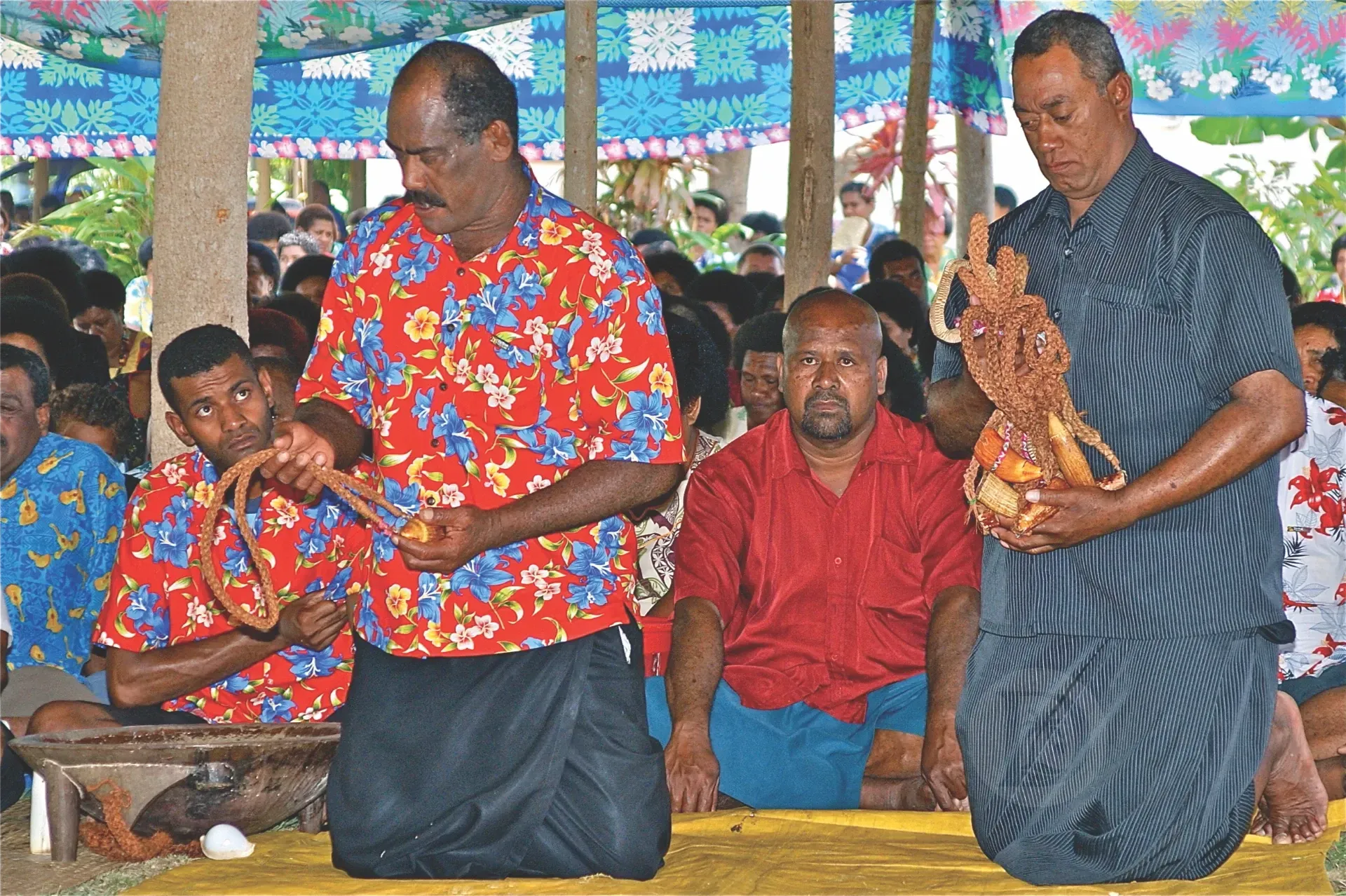
The sale of Tabua is strictly controlled, but the presentation of Tabua is usually considered essential to mark respect on family or state occasions. It usually accompanies a request for marriage, to mark births and deaths, to resolve disputes, to request forgiveness for transgressions, upon the opening of schools and hospitals, at the launching or commissioning of vessels, to mark the visits of high chiefs or important dignitaries, and on virtually any other important occasion.
There is of course a limited supply of Tabua and to ensure that there are enough to go around they are recycled, so to speak; they will be presented to someone on one occasion who will in turn present them to someone else on another occasion and so they keep circulating.
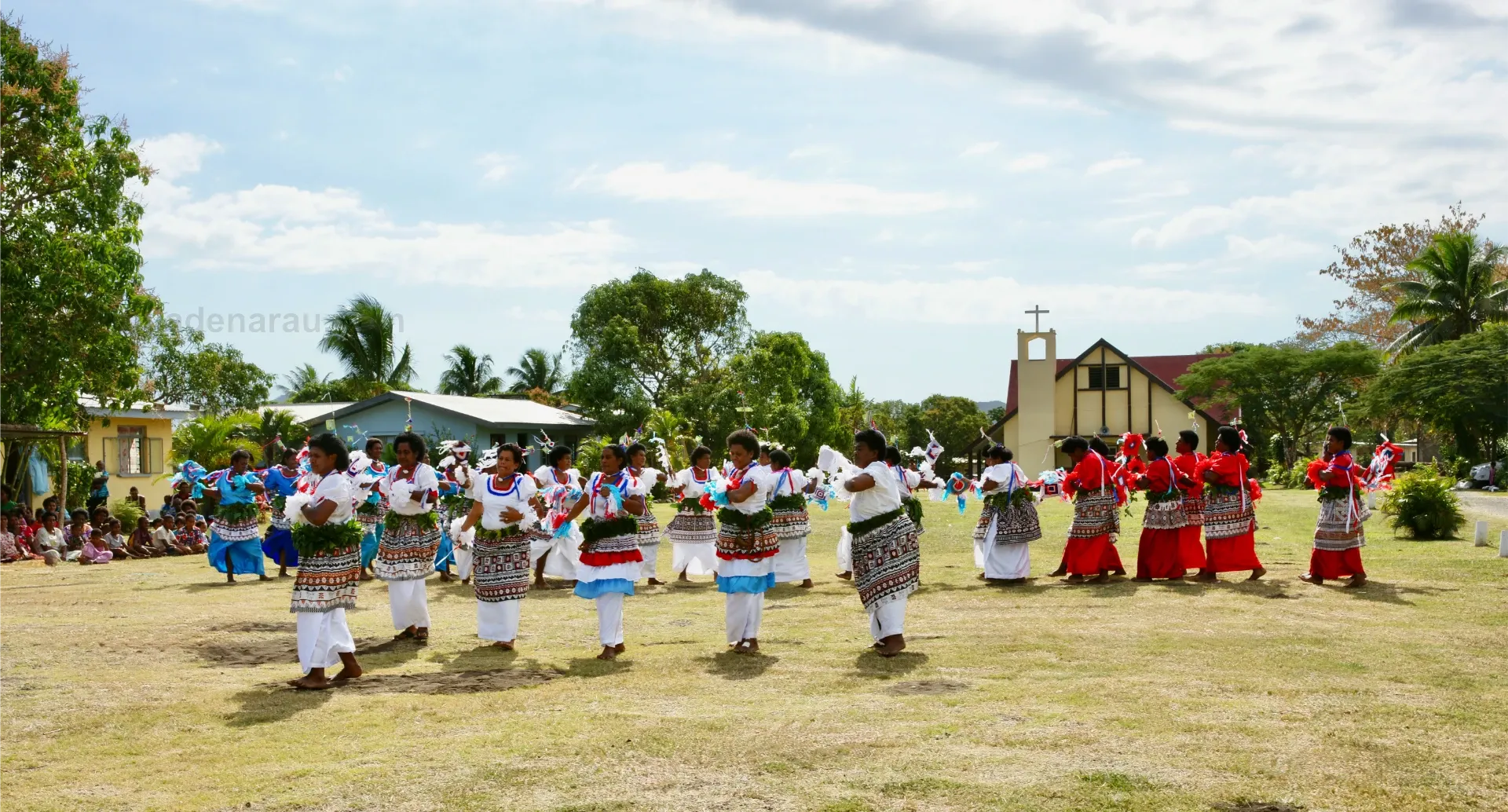
Masi and Tabua are obvious aspects of Fijian culture. While important in their own right their continued use also keeps alive associated aspects of culture and tradition, such as language and ceremonies, that are thousands of years old.