For partnership and business-related enquiries, please get in touch.
Drum Beats
“When the bodies of enemies are procured for the oven, the event is published by a peculiar beat of the drum, which alarmed me even before I was informed of its import.”*

Picture credit Caines Jannif collection.
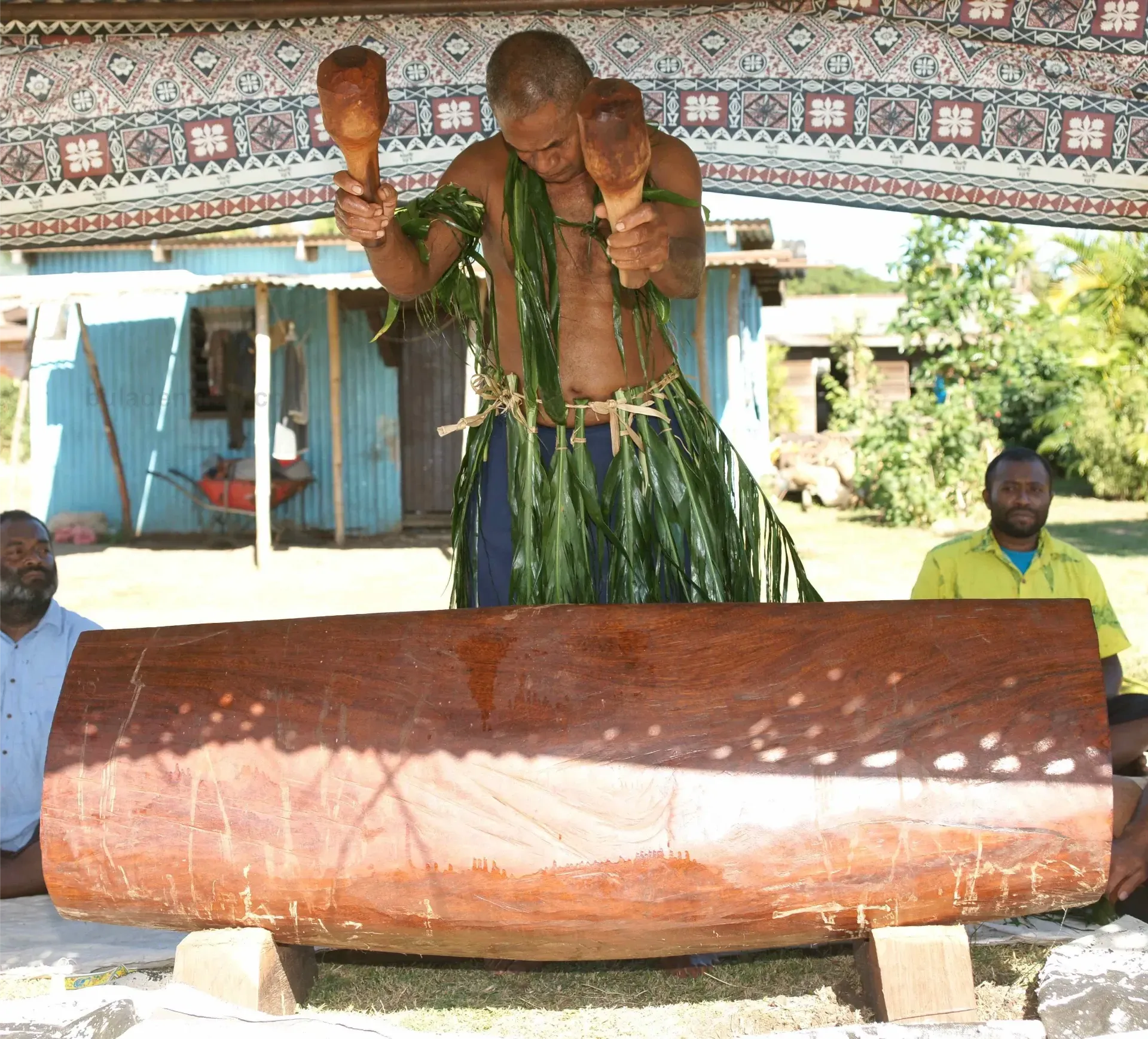
Laliis Fiji’s drum. It is usually made from one of three traditional woods suitable for their acoustic resonance, dilo, tavola and vesi. With roots lying far back in Fiji’s past, lali can be found in all villages in Fiji reflecting a cultural continuity from antiquity to the present day. Lali are beaten for a variety of reasons and the beat identifies the reason. For instance: in times of celebration lali accompany and guide festivities. Upon the receiving of gifts they sounded in acknowledgement.
Canoes, while made, were considered to be alive during construction and were woken each day before work and put to sleep at the end of the day by the beat of lali.
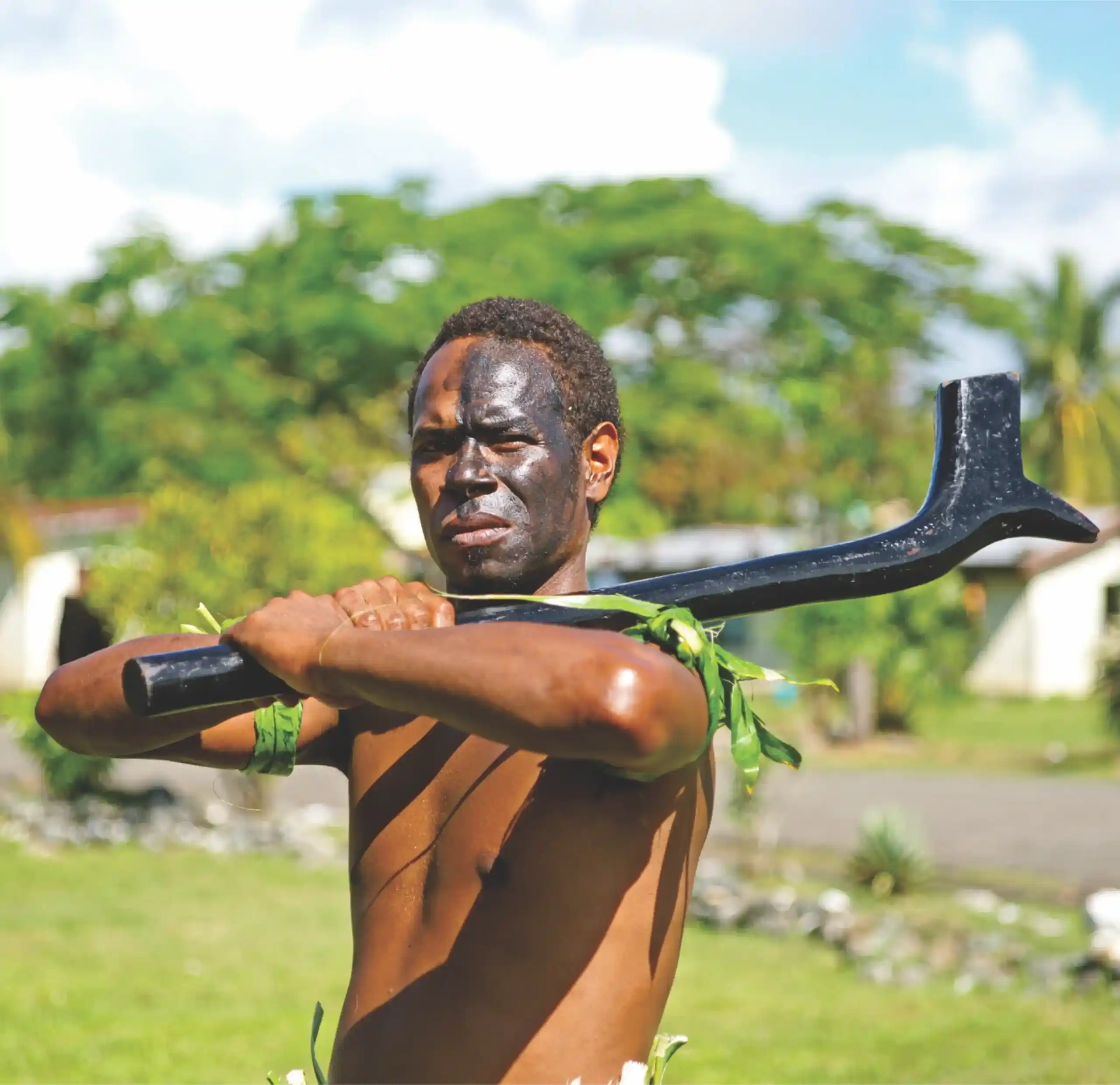
In times of war and conflict the lali was used to warn inhabitants of enemy intrusion and to alert enemies that they had been discovered. Some lali could be heard from as far as ten miles away. In those times lali rang out their decisive beats that were sometimes martial and sometimes gruesomely celebratory.
From the intrepid missionary Thomas Williams’ book Fiji and the Fijianswe can read, “In October great numbers of the enemy were slain, and their bodies, carried with dreadful shouts, passed Viwa, on the way to Mbau, there to be shared among the faithful towns. The death-drums sounded day and night in honour of the victory” and “When the bodies of enemies are procured for the oven, the event is published by a peculiar beat of the drum, which alarmed me even before I was informed of its import.”
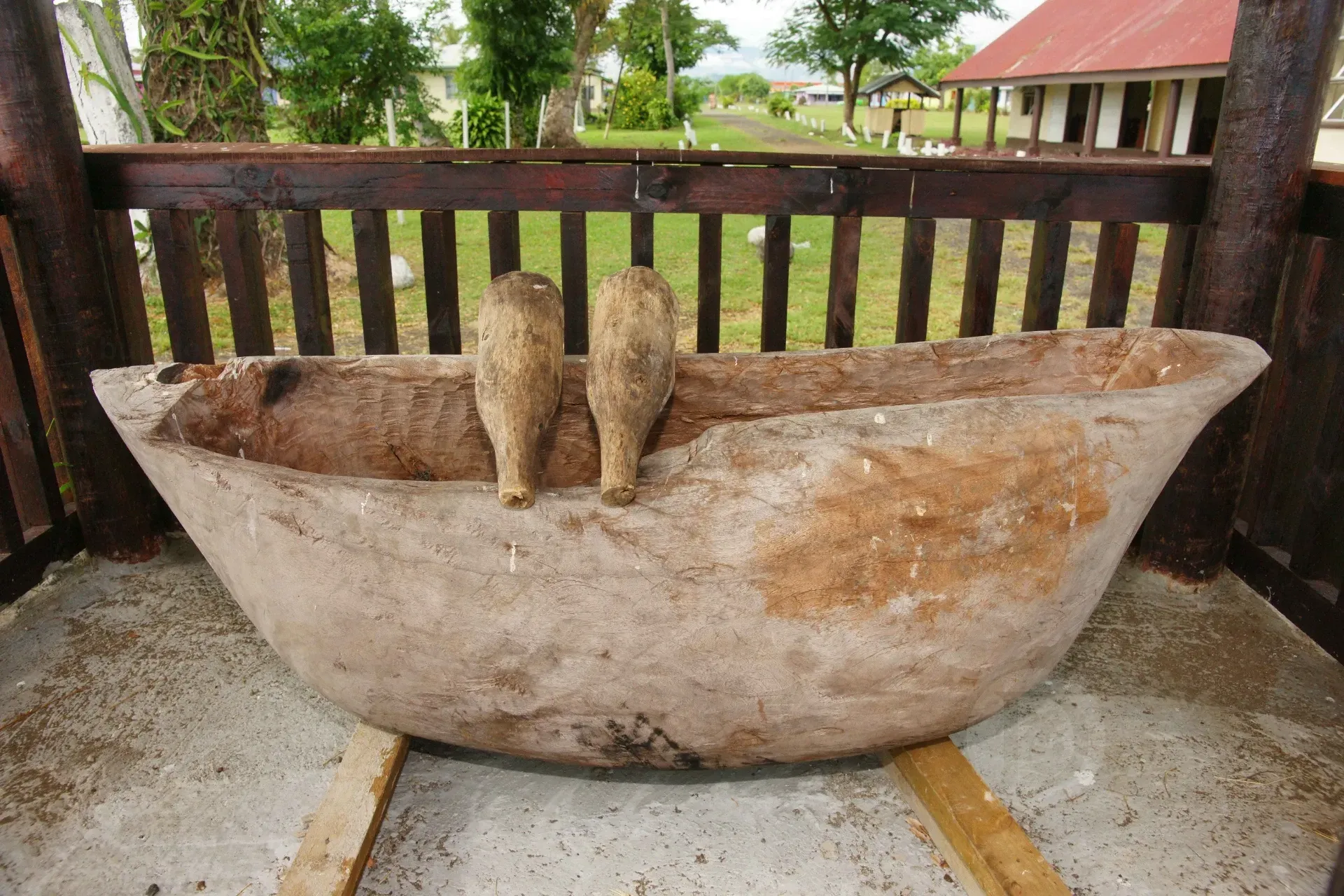
The picture below of an older looking lali is in fact a newer lali that has not been aesthetically finished. It resides in the koro, or village, of Tavualevu located about an hour and a half by car north of Denarau. It is where the Tui, or king, of Tavua resides. The village has three lali.This one is located next to the village church. And it was made especially for the king’s coronation. This lali is used for worship purposes only.
As you look at the picture, past the lali, on the right beyond the red roof of the church, you can see a large grass area. That is the village raraor green. Another laliis located there, out of frame of the picture, on the right of the church. That laliis used to announce the death of the Tui and ceremonies attendant to that, as well as other important district events.
The driveway you see runs alongside the rara and joins another road that leads to the village’s formal entrance. Here the last lali is to be found and its purpose is to notify the residents when the Tui leaves the koro to stay overnight somewhere, and when he arrives back.
As mentioned above at the time of the hosting of ceremonies the rara lali officiates, providing among other potential beats, a countdown. Three beats means get ready to be in place, two means you should be on your way and one means that the event has started. If the Tui is in attendance; when the function is over, the laliis beaten to announce he is returning to his house. On occasions such as these I have seen small children immediately sit wherever they may be, in respect of their traditions, until the Tui has made his way home.
*Williams, Thomas – Fiji and the Fijians 1815-1891, Volume 1, pp162-3