For partnership and business-related enquiries, please get in touch.
Meke – Fijian Dance.
“The artistic sense of the Fijians was expressed in meke-a combination of dance and song…Important districts developed meke particular to themselves: Bau had its club dances, Cakaudrove its spear dances (wesi), Rewa its realistic representations of the breaking waves and the flight of flying – foxes…”
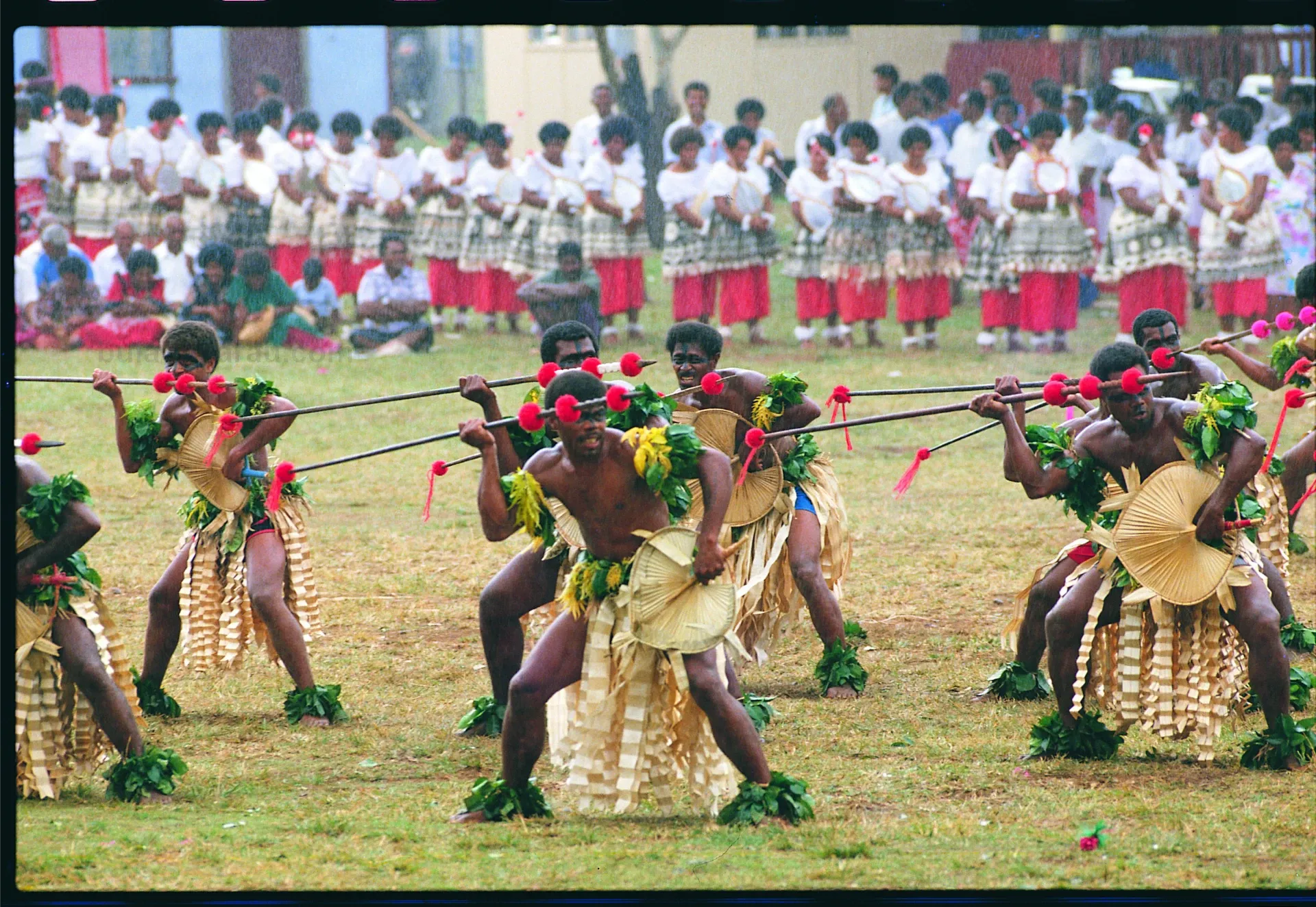
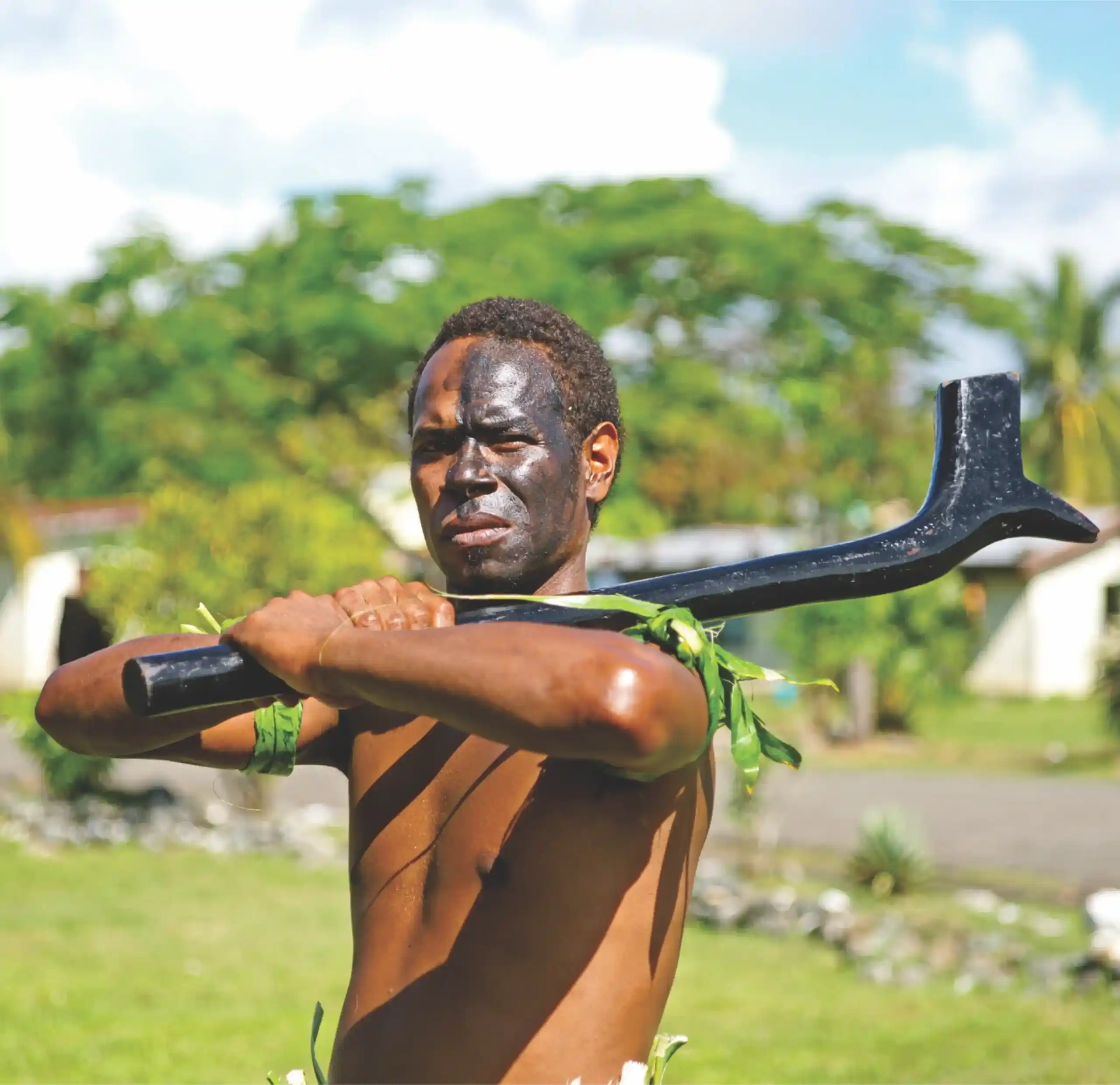
“In general a party of men and women sat near the chief spectators and provided the accompaniment. The rhythmic clapping of hands and beating of small wooden gongs (or even pieces of wood or bamboo), and the chanting of traditional songs, kept the dance in perfect time. The chorus chanted the theme while the dancers remained hidden behind trees or houses; when all was ready, the chant began again and the dancers approached, usually in files; under the direction of a leader, whose antics and incitements caused much mirth, they massed in close formation, split into bands, advanced and retreated, pranced and postured, swung their clubs and poised their spears, all with a precision born of long practice and a natural sense of rhythm.
Club and spear meke represented scenes of warfare, often vividly portrayed; these were men’s meke, in which the warriors displayed their skill. There were woman’s meke, also with quieter action, and depending for their effect upon graceful movement, the play of colour, and concerted action of hand and arm.
In the vakamalolo – a type of meke introduced from Polynesia – a few performers were ranged before the chief spectators, in a sitting position, and with the singers behind. The movements of the vakamalolo were principally of the head, arms, hands and body, with local muscular action. The most spectacular of the meke,were those representing the breaking of waves on the coral reef and the robbing of a banana grove by flying foxes. In the wave meke the dancers came on in long undulating lines suggesting the silent sweep of the tide; gradually the ripple grew to a swell; the long lines broke into smaller companies advancing with outspread hands and bodies bent forward to represent the surge of the waves, which presently broke into the surf and spray as the dancers leapt aloft and tossed their heads to display turbans and streamers of white bark cloth; and the broken ranks retreated only to give place to others behind. The flying fox meke was quite as realistic.”*
Today in Fiji traditional meke is not such a common sight. Many areas remember and on occasion display their meke but presumably the performances are not as practiced and polished as they may have been a hundred or more years ago.
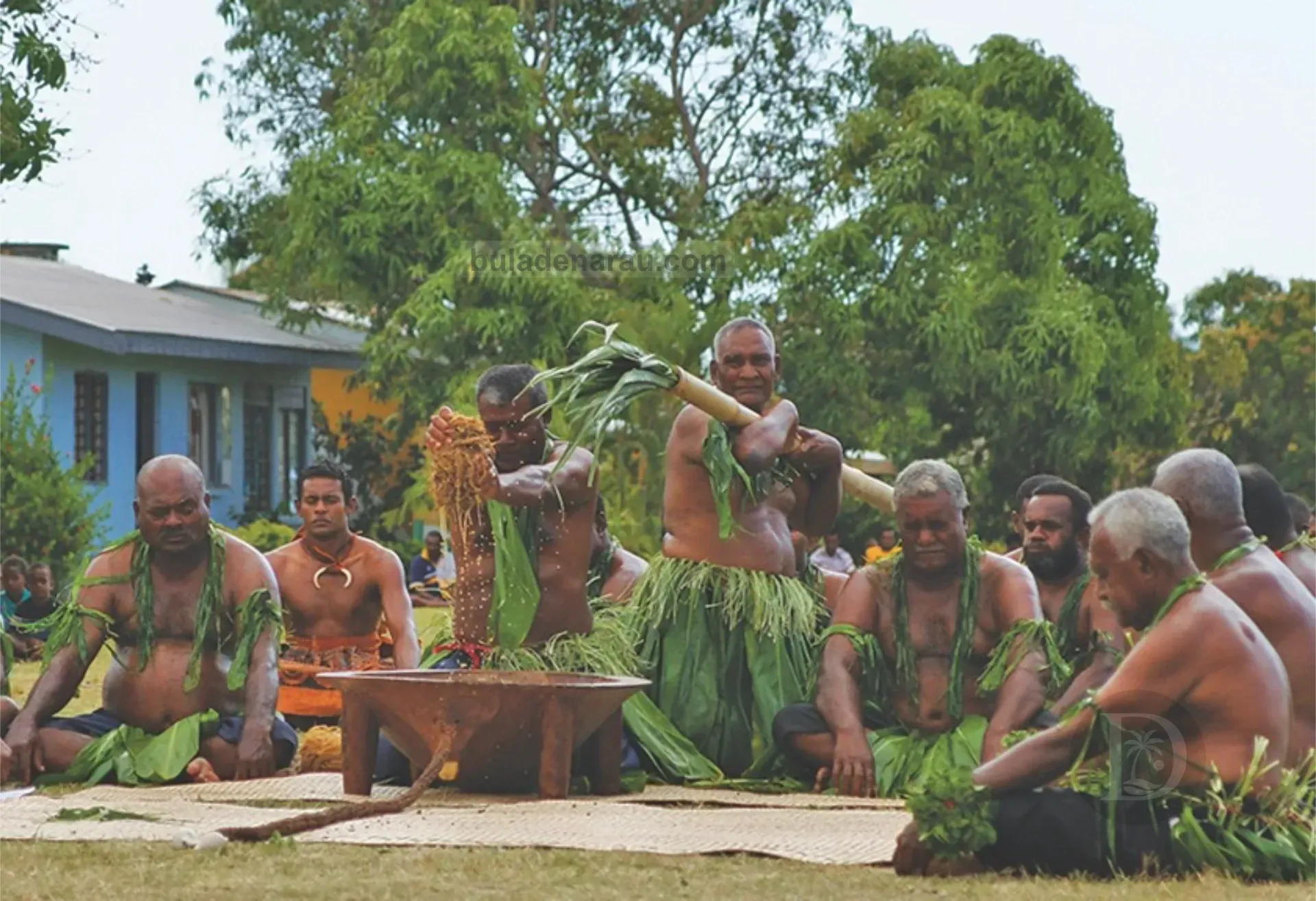
Perhaps the exception that proves the rule might be that of yaqona vakaturaga, or chiefly yaqona, meke.Yaqona vakaturaga meke are still performed today in accordance with strict rules and etiquette handed down unbroken through generations. In chiefly yaqona ceremonies some of the men who participate in the ceremony may chant and clap dictating the tempo and timing of steps in the ceremony; for example quoting from Derrick again,
“ The tanoa” yaqona or kava mixing bowl, “was placed at some distance from the chief, with its plaited cord (enriched with white cowrie shells) laid out towards him. The chanting party was ranged on either side, with minor chiefs and people behind. When the yaqona was ready, the cord was wound up, the cup-bearer came forward, his cup was filled, and he turned to face the chief. Holding the cup with arms fully extended, he slowly lowered his body until his knees were fully bent and every muscle was taut. At the appropriate time of the chant he straightened up, approached the chief, stooped again, filled the chief’s cup and squatted before him.”
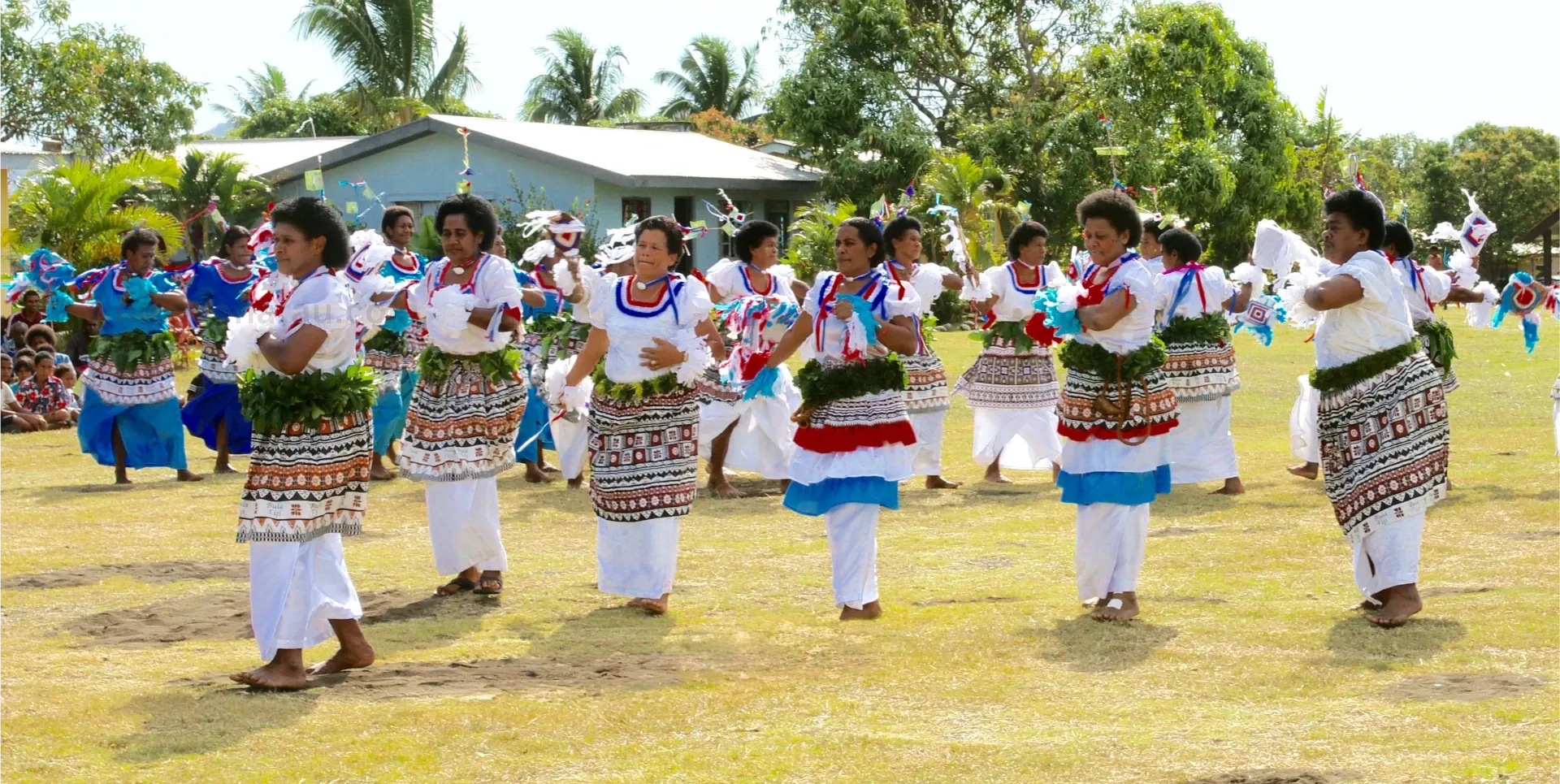
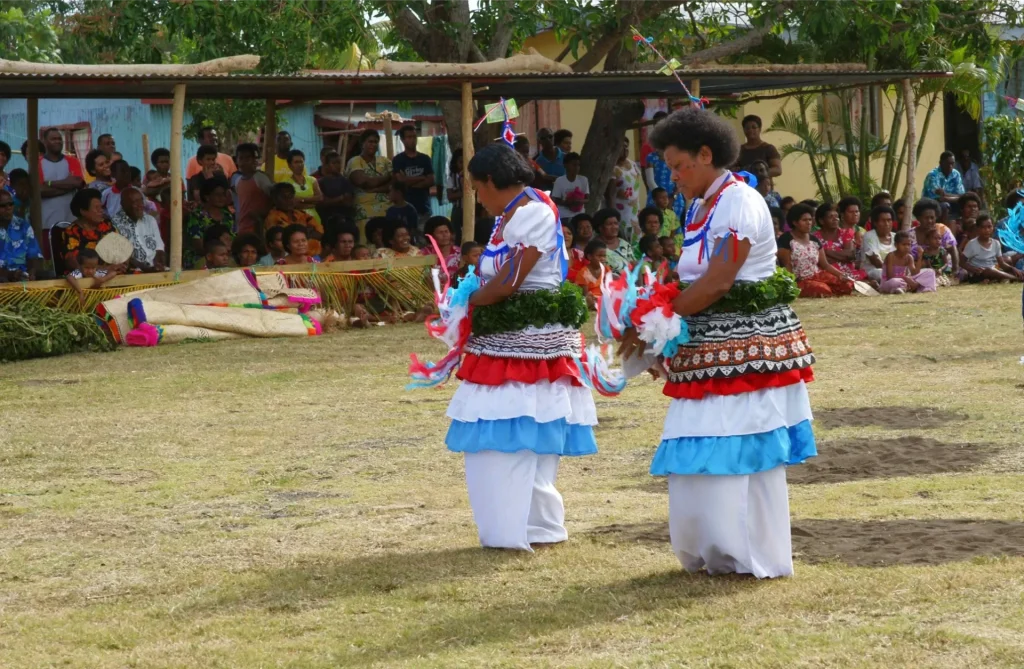
While traditional meke may have lost some of its lustre today, there are some who strive to keep it alive and who continue to practice very old meke. In some of the pictures accompanying this story you can see women performing a meke particular to their yavusa, or tribe, the Yavusa Navauvau, of the Vanua O Tavua. The origins of this meke are deeply rooted in the past, and contain references to ancestral worship. This is significant because it means that its origins are not only rooted in pre-Christian Fiji but that it has survived any attempts to stifle what must have been observed as pagan references in the post Christian contact and conversion period. It is, in broad terms, an unusual meke, and serves to demonstrate how individual communities can, and do, retain and celebrate their distinctive cultural identities within Fiji’s broader cultural complex.
Some of the unusual aspects of this particular meke include the presentation, halfway through the performance, of tabua to the vanua, or the wider community of tribes of which the performers are part. Also note the spikes in the hair of the performers upon which money – in this case five-dollar notes – are skewered for collection by the vanua. The uniqueness of the mekeis suggestive both of its local nature and the possibility of it having been the recipient of many different influences over time.
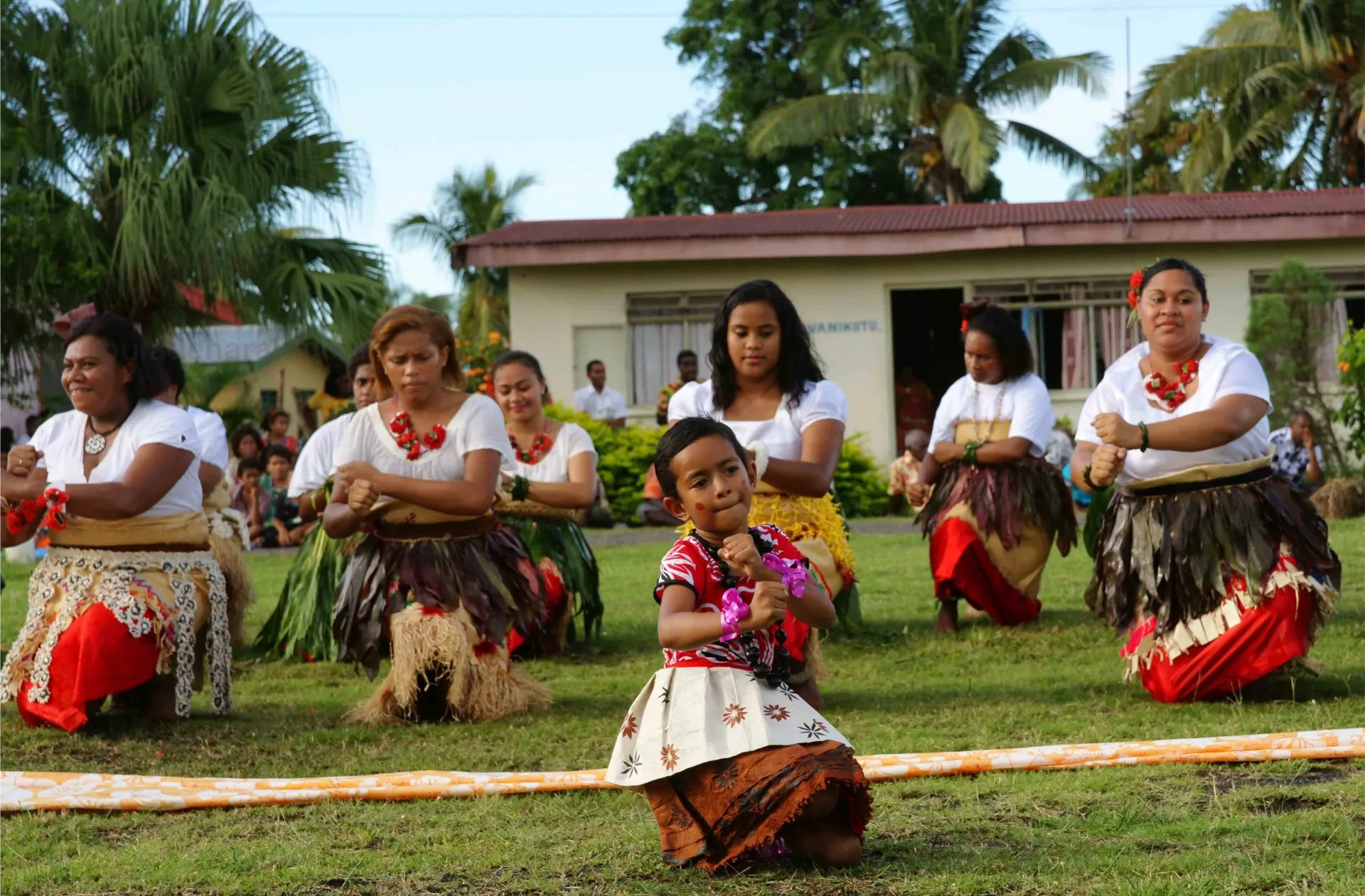
On another occasion the women who performed the meke discussed above, were present at another function where Tongan students, from the University of the South Pacific, performed meke. Both communities enjoy historical and familial ties. The purpose of the function was to reinforce those ties and to explore a part of the vanua’s cultural heritage. It is ties such as these that in the past most likely added some outside features to unique local meke. Where ties like these, which may have lessened in the near past, are revitalised, no doubt they will result in influences and innovations that will be reflected in the cultural wealth of future generations.
* From R.A. Derrick, A History of Fiji, volume one, third edition 1957 page 17.