For partnership and business-related enquiries, please get in touch.
Cassava Fiji Staple – with Cassava Vakalolo Recipe
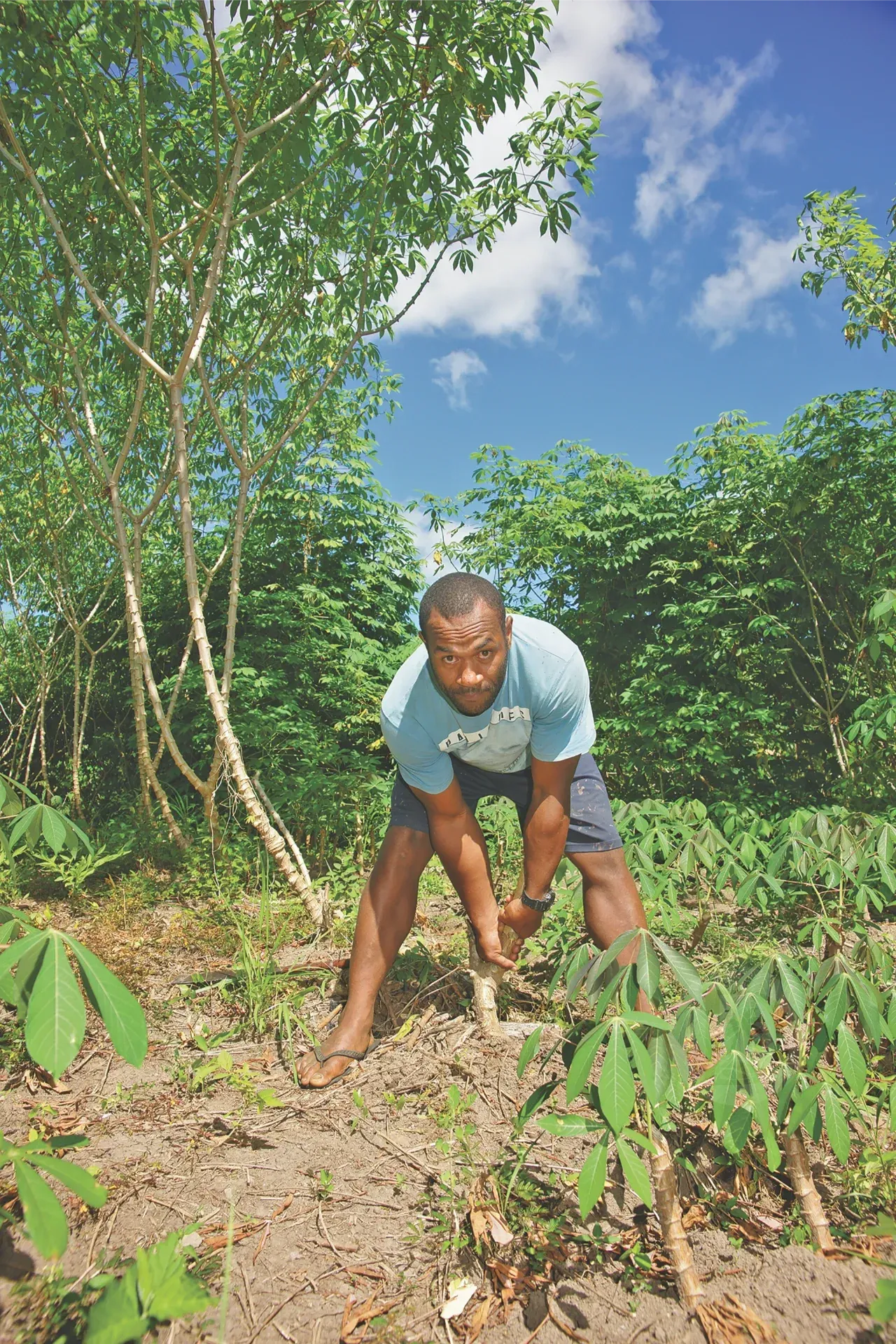
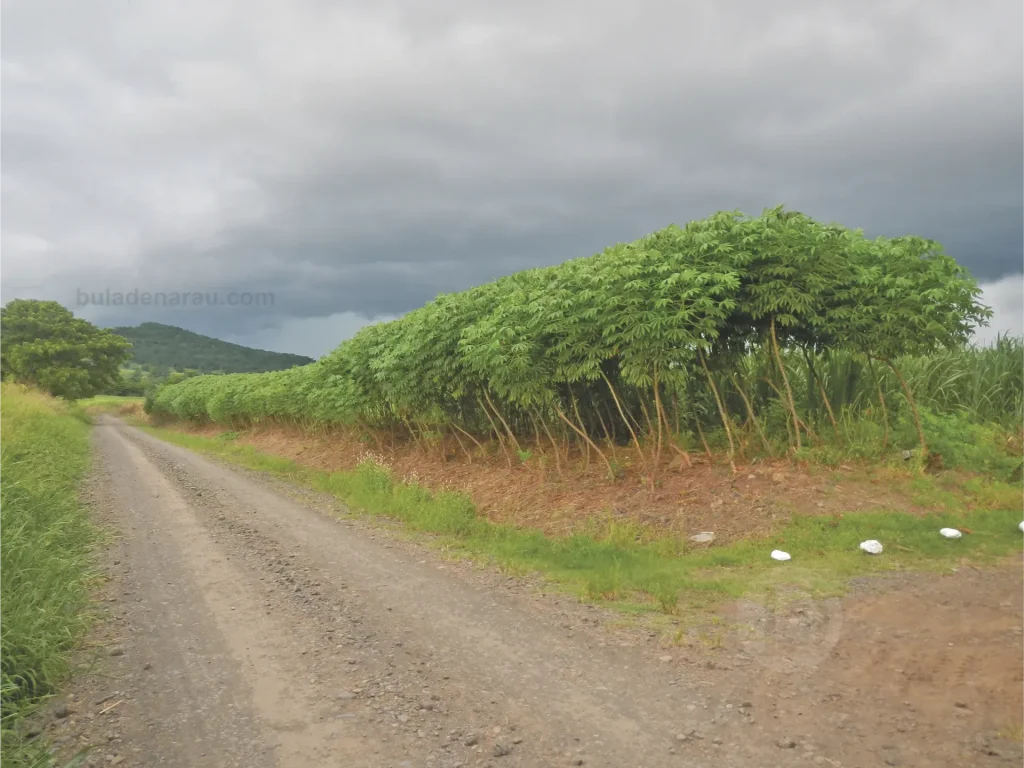
Cassava, Manihot esculenta, is, after rice, the most widely consumed food in Fiji. Tavioka is its local name, and it can be seen everywhere in Fiji, growing along roadsides and on hillsides. It is ubiquitous – even many urban households will have a small cassava patch growing in the backyard – evidence of its importance as a household staple.
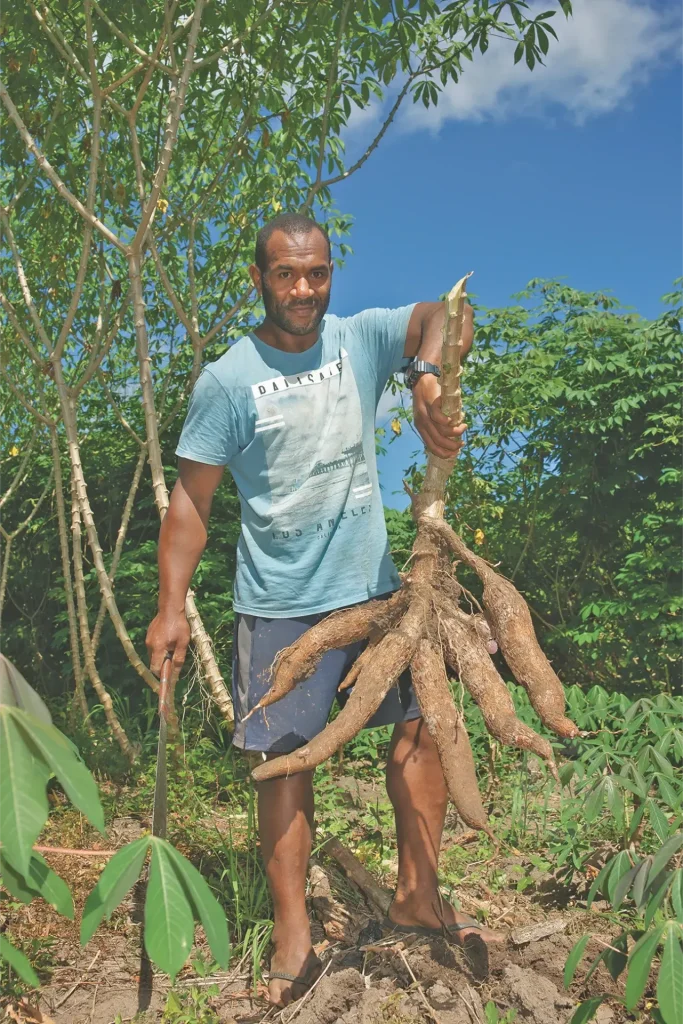
Introduced by European traders in the early to mid-1800s, it first appears in colonial records in 1862, and has since become the dominant root crop in Fiji, ahead even of the more traditionally esteemed dalo. Depending on the variety, cassava takes around a year to mature, though faster-growing types can be harvested in as little as six months — a flexibility that’s made it a reliable staple for rural households growing it both for their own table and as a cash crop. Cassava, or tavioka as it is known in Fiji, is probably the most important crop grown here. It helps anchor the otherwise wide range of food and produce grown and consumed by the people of Fiji.
Fiji is not alone in recognizing cassava’s benefits; worldwide, hundreds of millions of people depend upon it. It is thought to have been originally domesticated in Brazil around 10,000 years ago, and its importance as a food crop has ensured its successful migration to much of the tropical and subtropical areas of the world.
The cultivation of tavioka is a first choice in Fiji because the plant is hardy and produces a lot of food per plant. It is tolerant of poor soil and very dry conditions. Today, it is the dominant staple, root crop of Fiji. The more traditionally highly regarded root crop, dalo or taro, is still cultivated both at a subsistence and commercial level. Both are accompanied by another classic Fijian staple, vudi.
While there are other culinary uses, such as cooking it in a lovo or earth oven, it is mostly boiled in water. When cooked, it is soft and has a delicate flavour much like the potato, and like the potato, it is used as an accompaniment for meat and fish dishes, soups, stews, and after boiling, drying and cooling for frying into chips.
For Fiji’s farmers, it is not only an essential crop domestically, but it is also an established export crop with a promising future. Apart from eating tavioka as it is, it can also, very usefully, be made into flour. It may be used as a feedstock for making ethanol, and the leaves are popular as animal food.
While Fiji has a serious and real commercial cassava industry, it is in the lives of ordinary villagers that it makes the most impact. Drive past or visit any village and you will see cassava plantations. It is in this context that its true value can be seen. Every day villagers ‘pull’ cassava for breakfast, lunch, and dinner. And when they need cash they ‘pull it’ and take it to the market to sell.
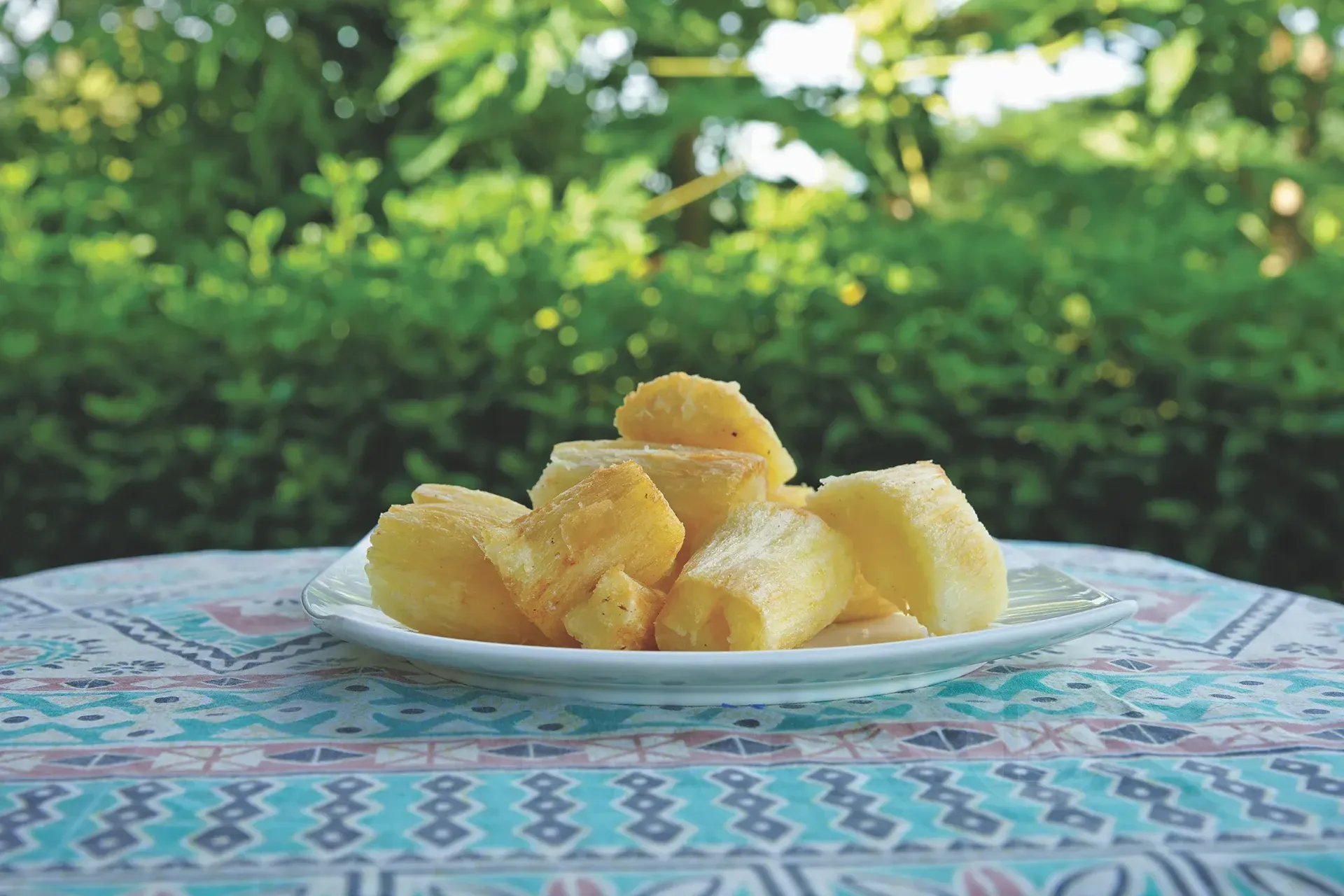
Look for some cassava chips at your resort, ask for them. It is a simple culinary adventure to try some fresh fish and cassava chips. Alternatively, fried cassava with a salsa is decidedly delicious! Grown right here in Fiji!
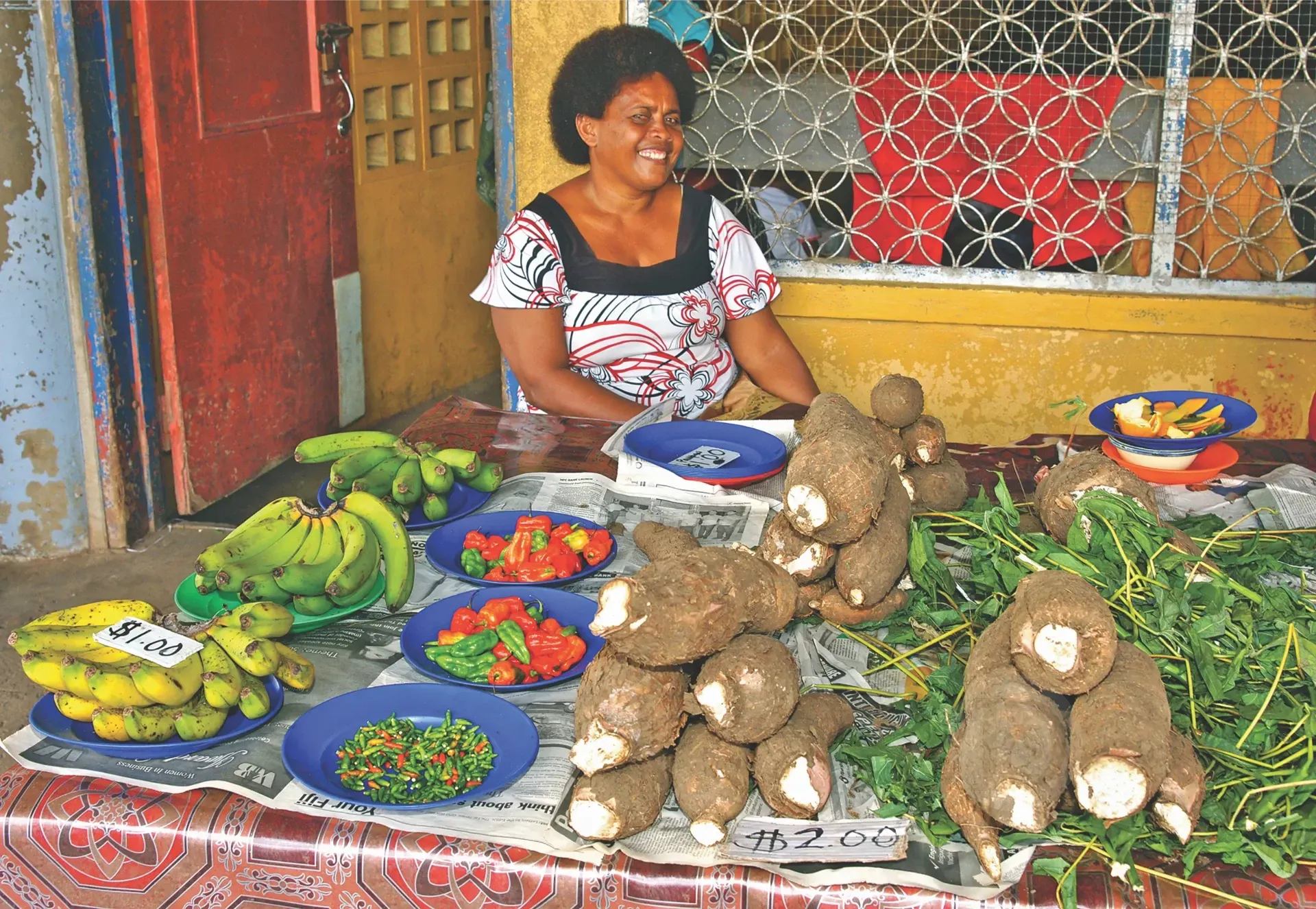
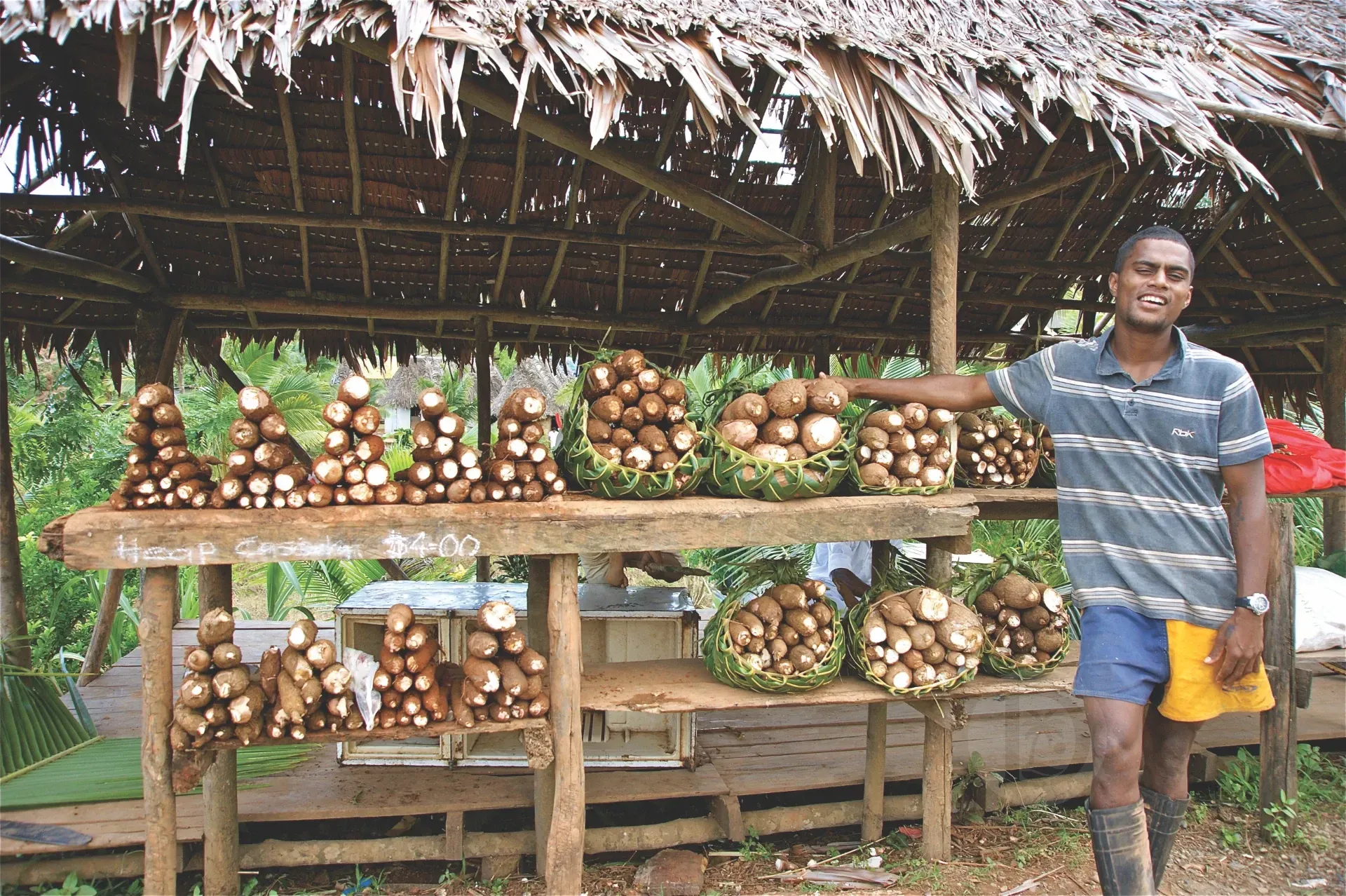
Roadside stalls and downtown marketplaces are where to go to buy it. A tour of Nadi market, especially on its busiest day, Saturday, reveals women piling it up in small heaps for sale. Ten-dollar amounts are popular. That is the way most fresh things are sold in markets here, in heaps or piles rather than by weight.
Finally, many Fijians, at home and abroad, hanker for their natural puddings or sweets. One evergreen favourite is a pudding using cassava or tavioka. Ask if this is available at your resort.
Authentic Cassava Vakalolo (Steamed Cassava Pudding)
Note: In Fijian cuisine, “Vakalolo” refers to the technique of preparing an ingredient with coconut milk/cream. This Cassava Vakalolo is a steamed, dense pudding that highlights the earthy flavor of our favorite root staple.
Ingredients
- For the Pudding:
- 1kg fresh cassava (peeled and finely grated)
- 2 cups thick coconut milk (first pressing)
- 1/2 cup brown sugar (adjust to taste)
- Optional: Banana leaves (for authentic wrapping and steaming)
- For the Vakalolo Sauce:
- 2 cups coconut cream
- 1/2 cup brown sugar or caramelized sugar
Instructions
- Prepare the Cassava: Grate the peeled cassava into a bowl and lightly squeeze out excess moisture using a clean cheesecloth or muslin bag.
- Mix: Combine the grated cassava with 2 cups of coconut milk and 1/2 cup of brown sugar until the mixture is uniform.
- Steam: Wrap the mixture in banana leaves or place in a greased heat-proof dish covered with foil, then steam for 45–60 minutes until firm.
- Prepare the Sauce: Simmer the coconut cream and sugar in a saucepan over low heat until it reduces into a thick, caramel-colored syrup.
- Serve: Slice the steamed cassava into squares and pour the hot vakalolo sauce generously over the top.
To view all the photos in a curated gallery view, simply tap on any one of them. It will pop up, and you can cycle through all of them.