For partnership and business-related enquiries, please get in touch.
The Origins of Fiji – by Dr Patrick Nunn
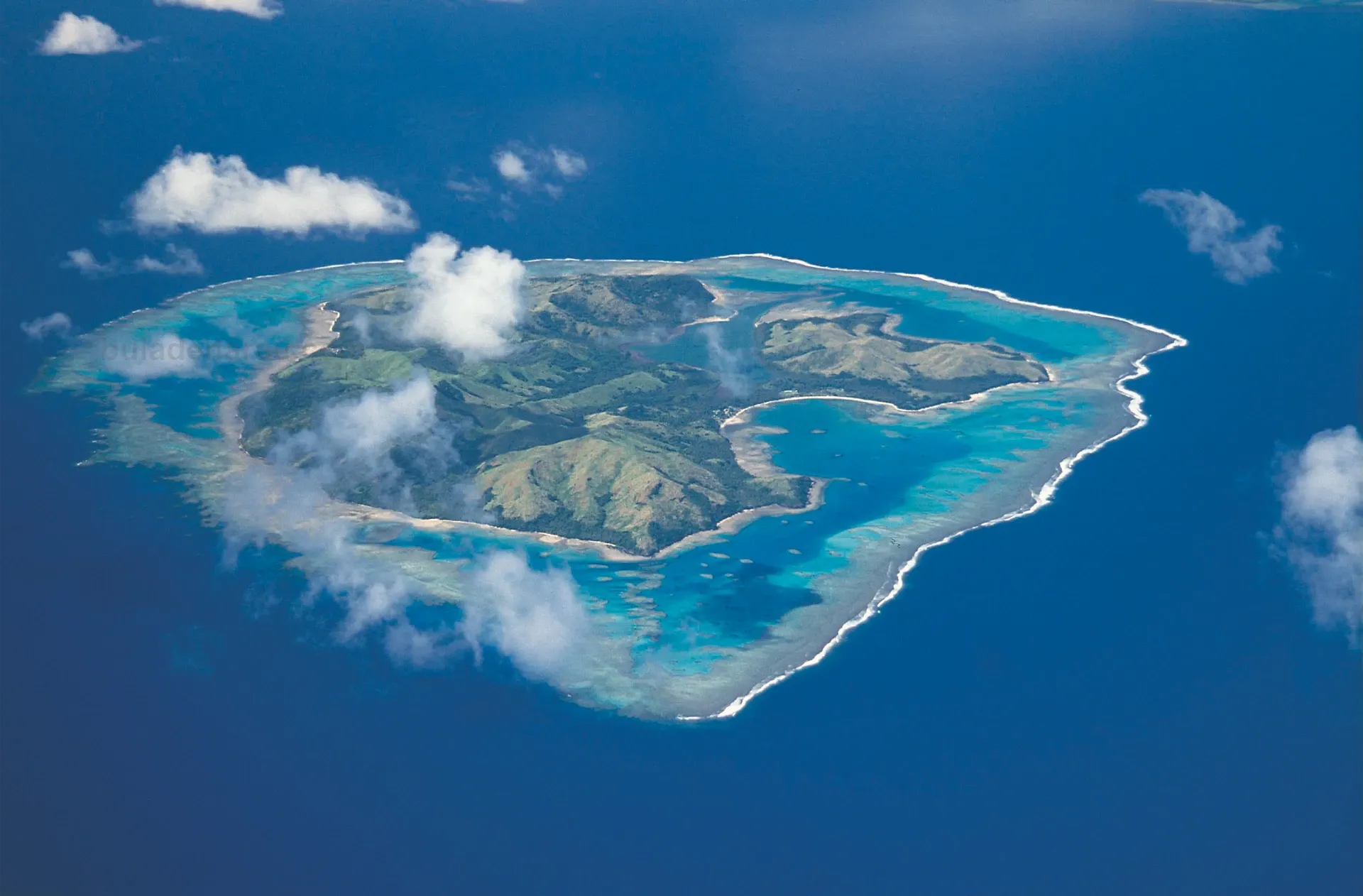
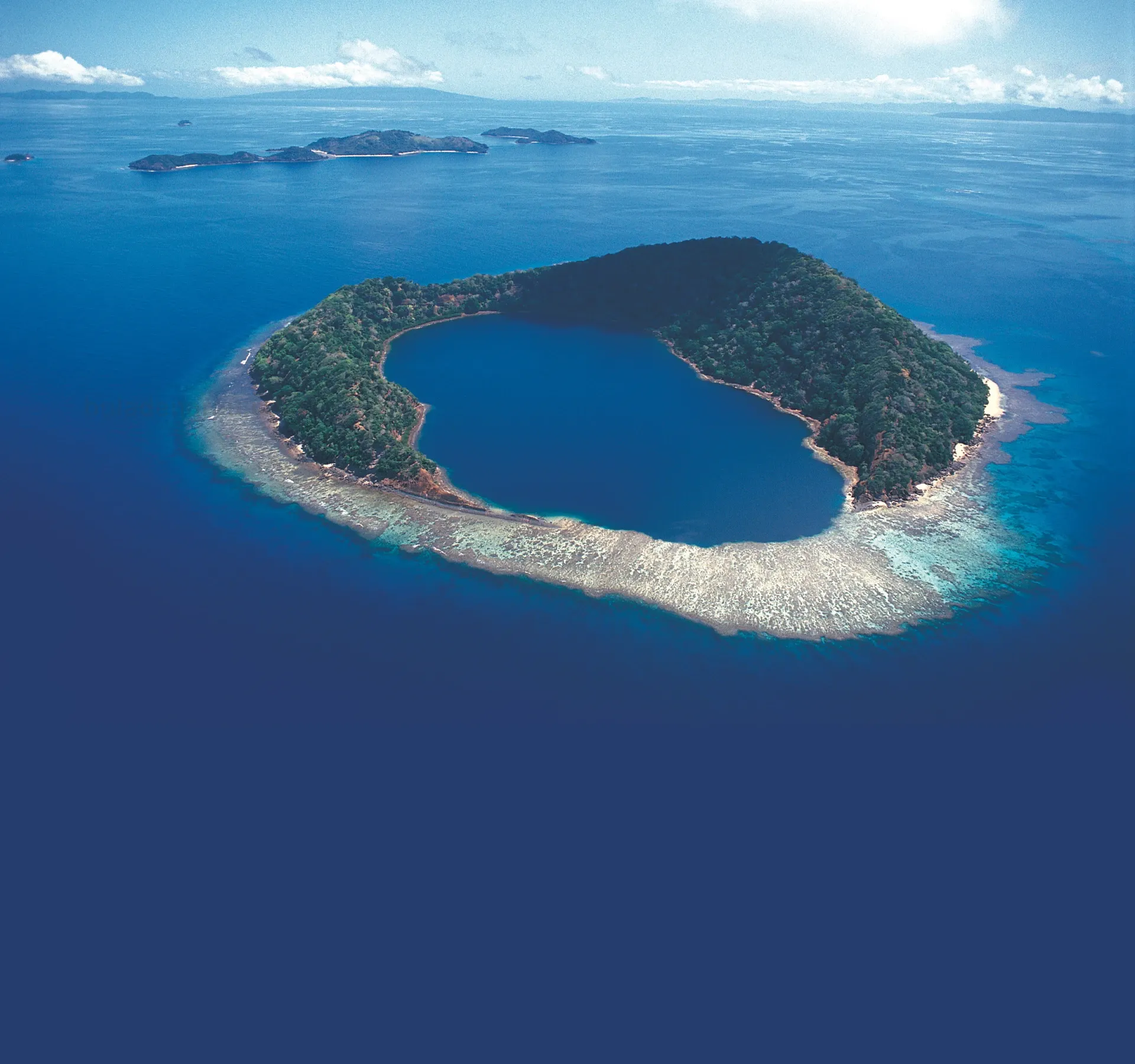
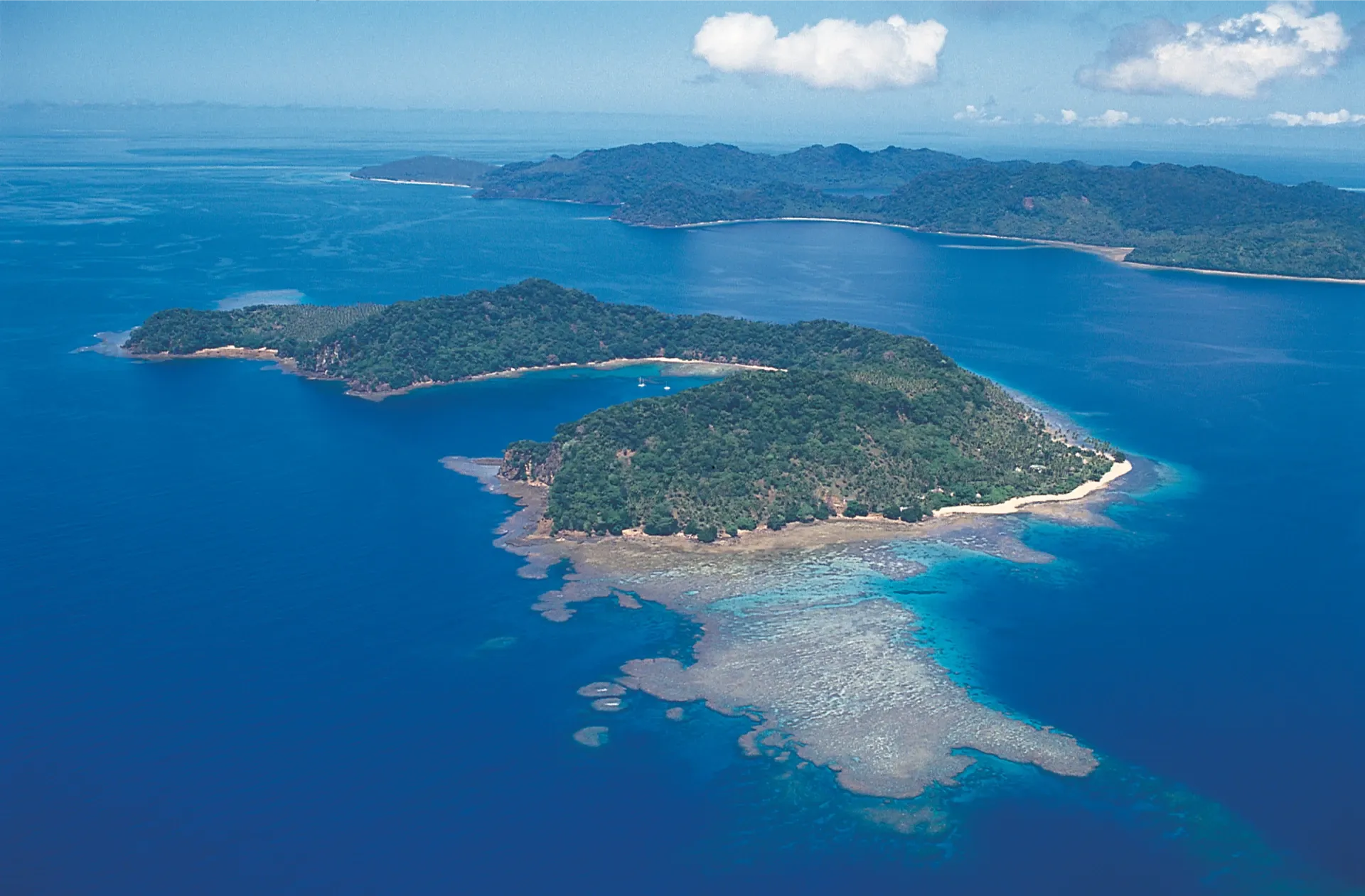
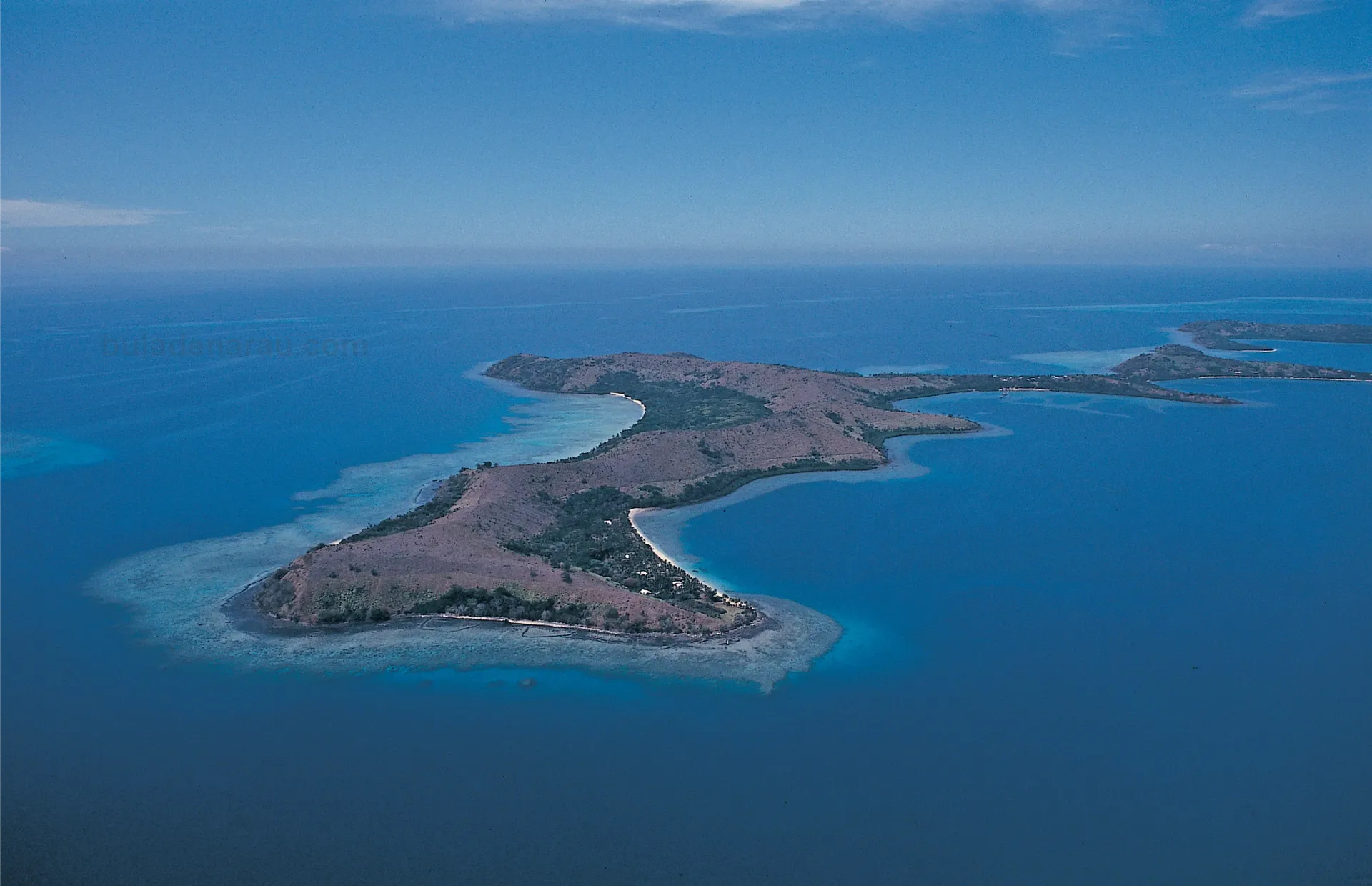
An aerial view of Batiki Island. Brought to the surface of the ocean by volcanic eruptions, the island has been subsiding ever since. The barrier coral reef indicates the level of subsidence since the island was formed millions of years ago. As the land sinks every slowly, the ocean reclaims the space to form beautiful lagoons where coral gardens flourish
Pacific Island legends attribute the origins of the Pacific Islands to the work of giants, who, as they crossed the oceans would on occasions rip up the sea-bed and by tossing massive fistfuls of rock across their path create whole island chains and archipelagoes.
The reality, though quite different, is no less dramatic. The islands owe their origin to volcanic eruptions which continue around Fiji (but not in Fiji) to this day.
The oldest rocks in Fiji, visible in road-cuts a few kilometers up the Sigatoka valley, were mostly produced by underwater volcanoes more than thirty-four million years ago. Such volcanoes are currently active in Tonga and Vanuatu, Fiji’s nearest island neighbours to the east and west respectively, and are spectacular in their activity, rising like some huge prehistoric leviathans out of the ocean to blow steam and smoke and belch lava before – after a period of weeks or even months – disappearing below the waves.
In fact Fiji’s emergence as an archipelago of beautiful islands was due to continuing volcanic activity over a span of more than thirty million years with the last eruption thought to have occurred a few hundred years ago in Vuna, Taveuni, as evidenced by human remains discovered buried beneath volcanic ash.
Why did these volcanoes erupt? One massive section of the earth’s crust, kilometres thick, and known as the Pacific Plate, has for at least forty-two million years been thrusting beneath another section called the Indo-Australia Plate. As the Pacific Plate was forced down into the Earth’s interior it melted. Then the liquid rock pushed upwards and in places rose again in volcanic eruptions.
The evidence remains in Fiji’s skyline of mountainous peaks. When you stand on Suva’s seawall, as did the English poet Rupert Brooke in the early years of the twentieth century, and look across its magnificent harbour you can see the mountains in the distance he named the “Dragon’s Teeth.” Their jagged outline suggests the jaws of a monstrous serpent – a suggestion most appropriate when considering their origin six million years ago at the spot where two plates met, one forcing the other to writhe within the furnace of the earth’s interior only to emerge again in a series of gigantic explosions.
I am convinced that Fiji’s earliest settlers who had travelled through the islands of Papua New Guinea, the Solomons and Vanuatu where activity continues to this day, knew what volcanoes were and recognised them as sources of power. They may even have worshipped them. The first Fijians sought out the centers of old volcanoes to settle in, perhaps hoping to absorb their potency.
Inland from Tavua at Vatukoula on the north west coast of Viti Levu lies Fiji’s most productive gold mine. It occupies the centre of an old volcano which erupted over three million years ago and also formed the huge cliffs of the upper Sigatoka Valley.
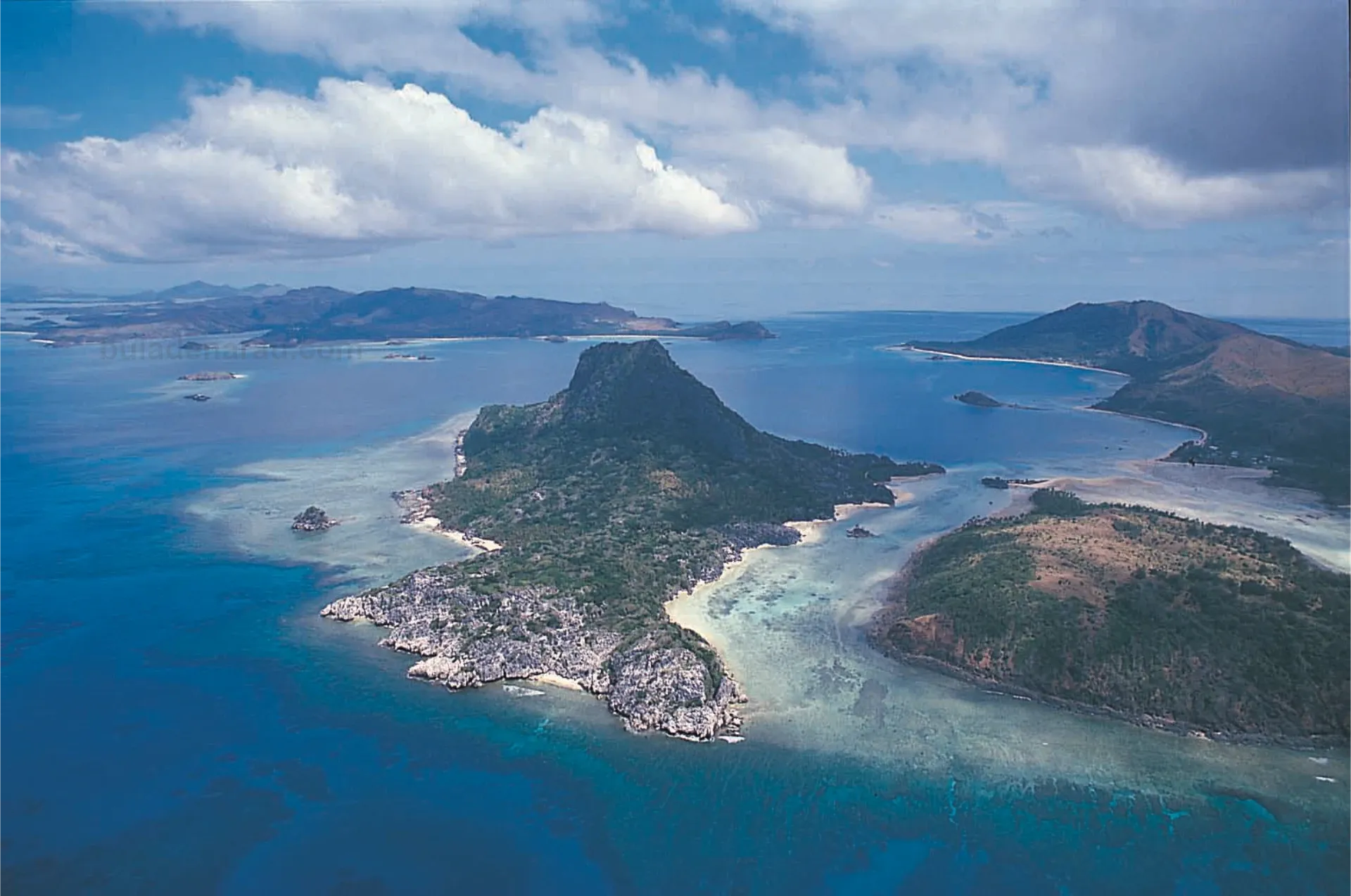
Denarau guests can easily see the Sabeto range beyond Nadi Airport where the form of a “sleeping giant” is clearly discernable, the work of yet another volcano. So too standing on the beach at Denarau, you can look out to sea at the Mamanuca and Yasawa Islands on the horizon and recognize their peaks as the remains of some of Fiji’s oldest volcanoes.
Are there active volcanoes in Fiji today? Perhaps. There are reports of bubbling water and floating pumice masses off the western-most end of the island of Kadavu suggesting underwater activity nearby. The beautiful “garden” island of Taveuni in Fiji’s north-east is geologically much younger than its neighbour islands and the site of its most recent volcanic activity. It is also something of an enigma, not quite fitting into the pattern of Fiji’s more uniform past and thus not predictable as to its future.
There is no need to be concerned the islands will suddenly and without warning revert to their violent past. It is possible some volcanic activity may occur in the future but if and when it does, it will be preceded by ample warning.
Should the leviathans of the sea or the dragons of the mountains stir and wake, the earth will shake, fissures will open, steam and smoke will pour out and then we shall know the islands of Fiji are on the move again.
.