For partnership and business-related enquiries, please get in touch.
Fiji’s Resilient Reefs – By Stacy Jupiter, PhD Wildlife Conservation Society (WCS)
Many of Fiji’s reefs are located adjacent to the deep sea and channels, where currents transport cooler water upwards that helps to moderate warm temperatures at the surface. Also, with over 35% of the southwest Pacific’s coral reefs found in Fiji, it means that there are a lot of corals to reseed areas that may be impacted by warming events.
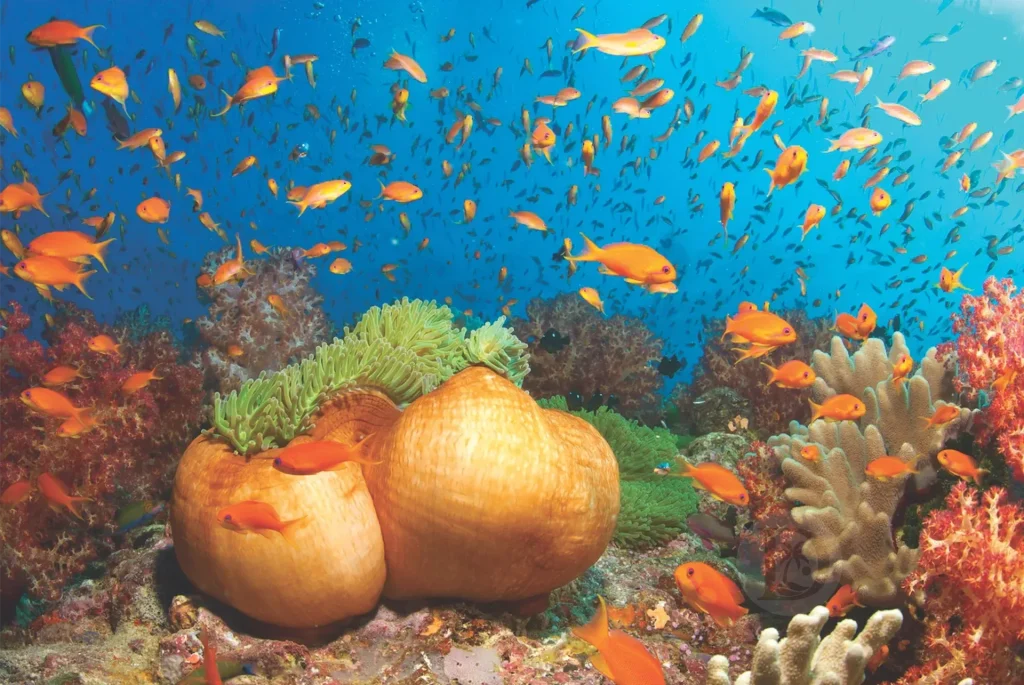
Over the past few years, the international media has been flooded with stories on the impending doom of coral reefs. In some places around the world, corals on reefs are in fact dying at unprecedented rates. Climate change impacts are the main culprit.
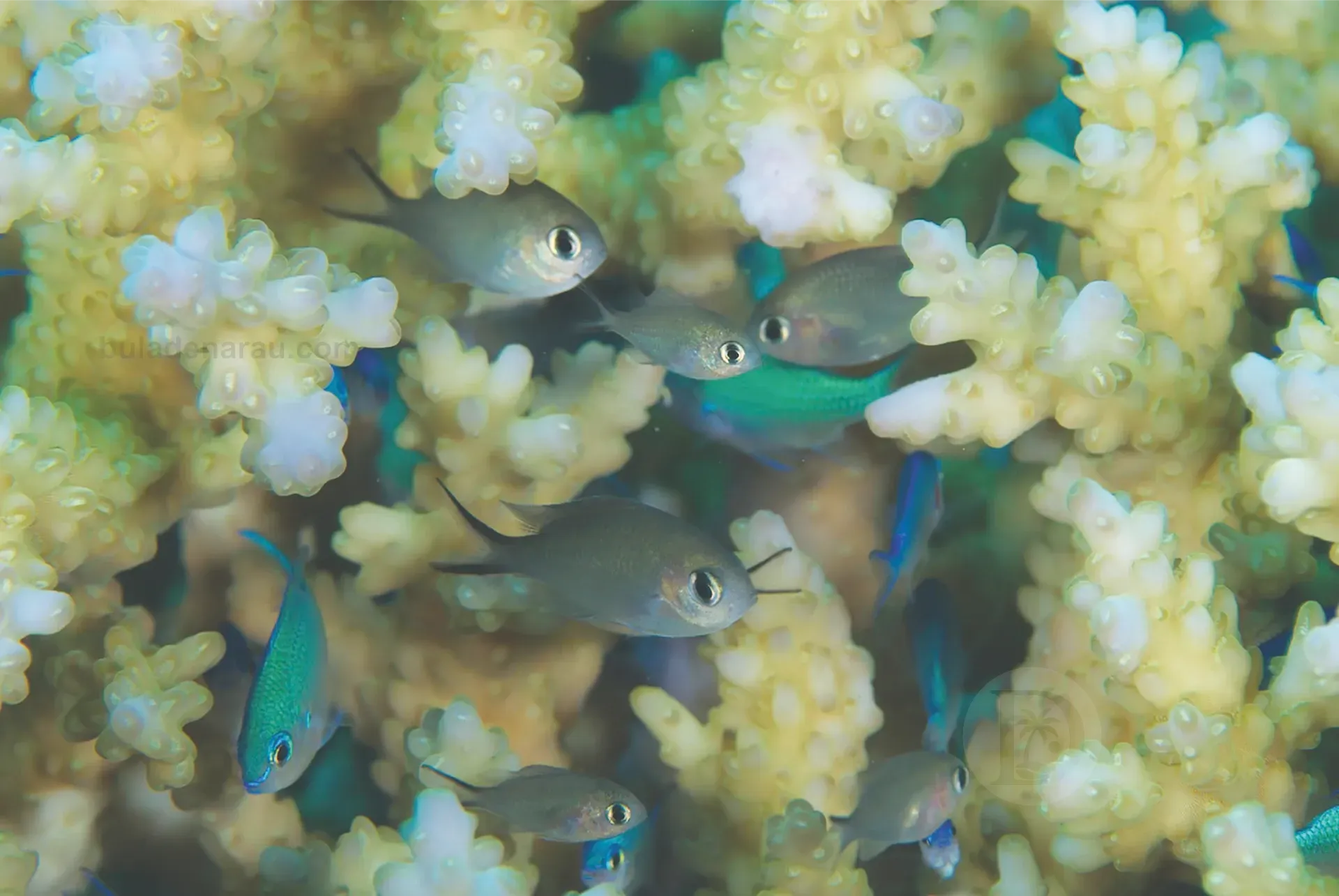
There is no doubt that global warming has caused sea surface temperatures to increase. In 2017, the world’s global oceans were 0.84 degrees Celsius warmer than the twentieth century average. While that doesn’t sound like a lot, the ocean has been storing a massive amount of excessive heat which is driving extreme ocean heatwaves. Corals are particularly sensitive to abrupt changes in ocean temperature. When they experience extreme conditions, they get stressed. One very visible consequence of this stress is that they may expel algae called zooxanthellae that live in their tissues. Zooxanthellae and corals have a mutually supportive relationship. Living in tissues of corals provides the algae protection from would be predators in the water column. The corals, in return, benefit from food that the algae produce through photosynthesis.
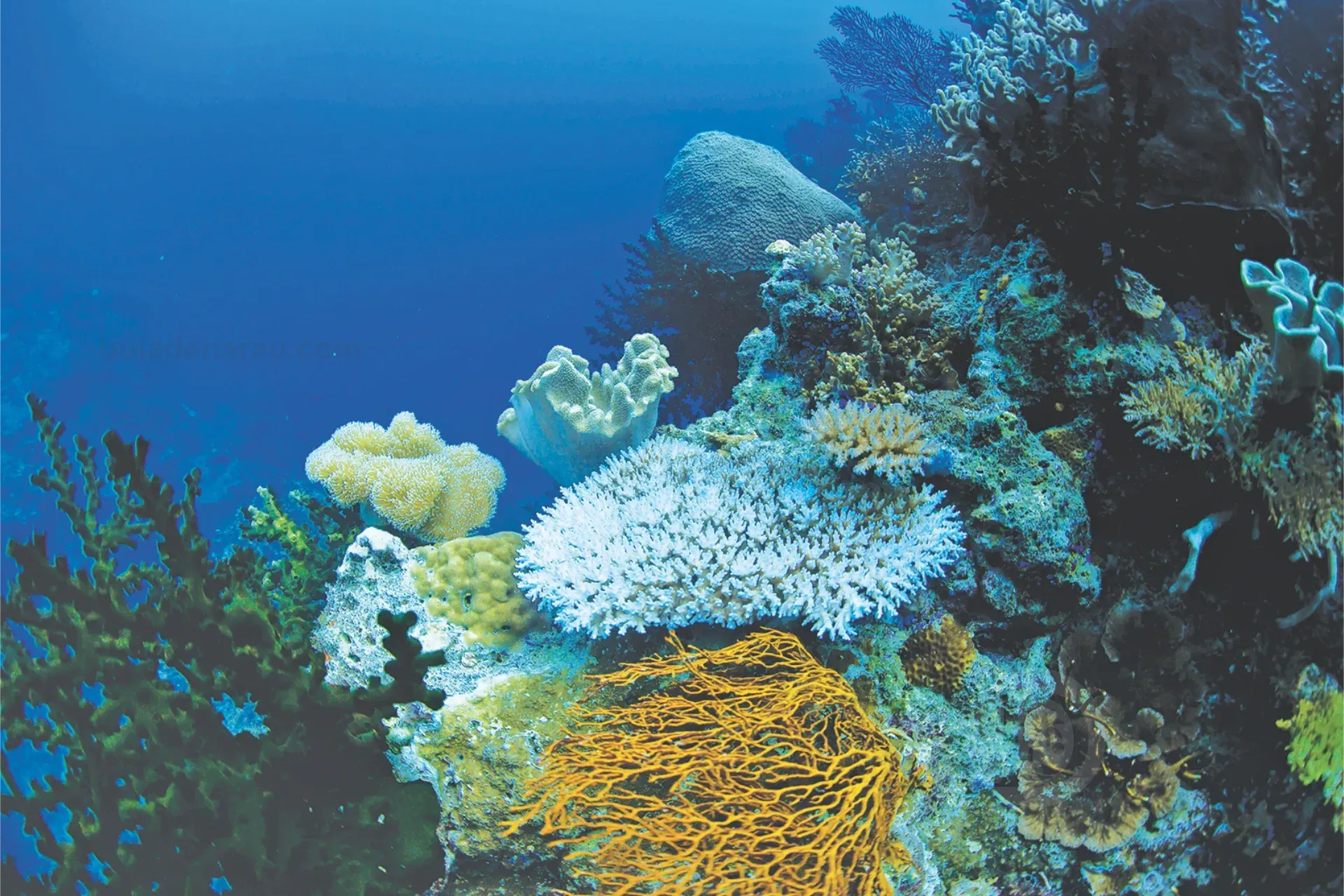
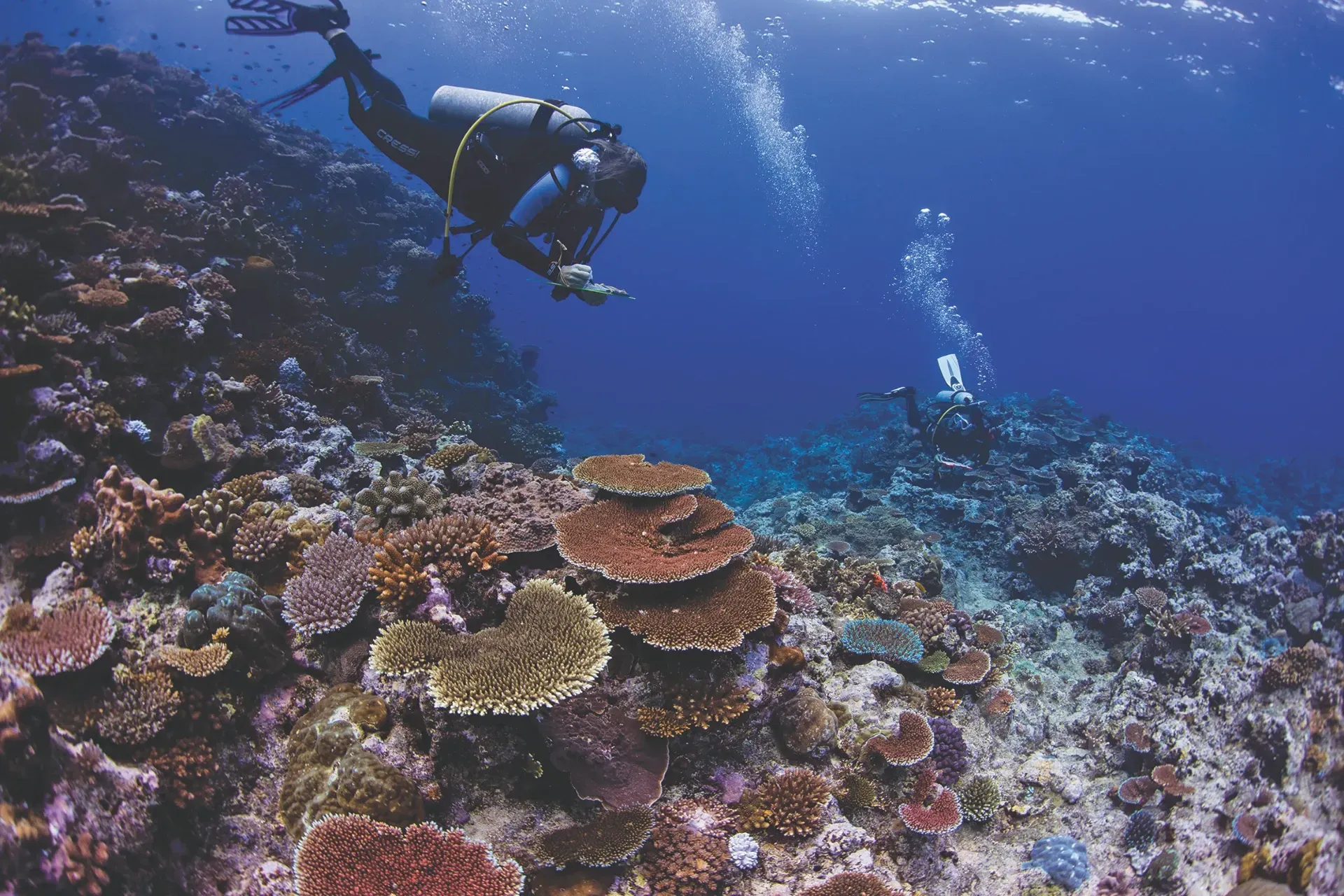
It is primarily the pigments within zooxanthellae that give corals the brilliant colours visible on the reef. Once the algae are expelled, corals look white, which is where the term “coral bleaching” came from. The world’s coral reefs experienced unprecedented levels of coral bleaching between 2014 and 2017, during a particularly prolonged warming event. Bleaching can cause vast areas of corals to die as they lose their major food source, but corals can also recover if the waters cool down quickly so the zooxanthellae can return. Surveys by local scientists at the Wildlife Conservation Society (WCS) and other groups show that Fiji’s reefs did not fare too badly during the 2014-2017 event. This is partially due to localized cooling that the reefs experienced from stormy conditions created by Tropical Cyclone Winston, which badly affected Fiji in February 2016. It may also be due to the fact that many of Fiji’s reefs are located adjacent to the deep sea and channels, where currents transport cooler water upwards that helps to moderate warm temperatures at the surface. Also, with over 35% of the southwest Pacific’s coral reefs found in Fiji, it means that there are a lot of corals to reseed areas that may be impacted. A recent study led by WCS of over 2500 reefs from the Indian and Pacific oceans found that Fiji is not the only place where coral reefs are thriving. Over 450 reefs across 22 countries, including in Fiji, were found to have intact coral reefs located in ‘cool spots’ of climate change that could have survived the 2014-2017 climate event. These locales are urgent priorities for protection and management, which can be accomplished through actions such as setting up marine protected areas with local communities, reducing fishing effort in these sensitive locations, and controlling activities on the land to minimize impacts from pollution. In terms of what you can do to contribute to protecting coral reefs, here are some ideas that have been endorsed by the International Coral Reef Society. Reduce your personal carbon footprint by doing things like turning back your heating or air conditioning, replacing your house lights with LED bulbs, and reducing your meat and dairy consumption. Write to your local elected representatives and let them know that climate impacts are a priority. And get involved by joining a campaign to save the reef, connecting with citizen science networks to turn your holiday reef snorkel into a means to collect data, and supporting local coral reef conservation activities.
Dr Stacy Jupiter (PhD) has been affiliated with the Wildlife Conservation Society (WCS) since 2008. At the time of writing, she serves as executive director of WCS’s Global Marine program.