For partnership and business-related enquiries, please get in touch.
Young Providers
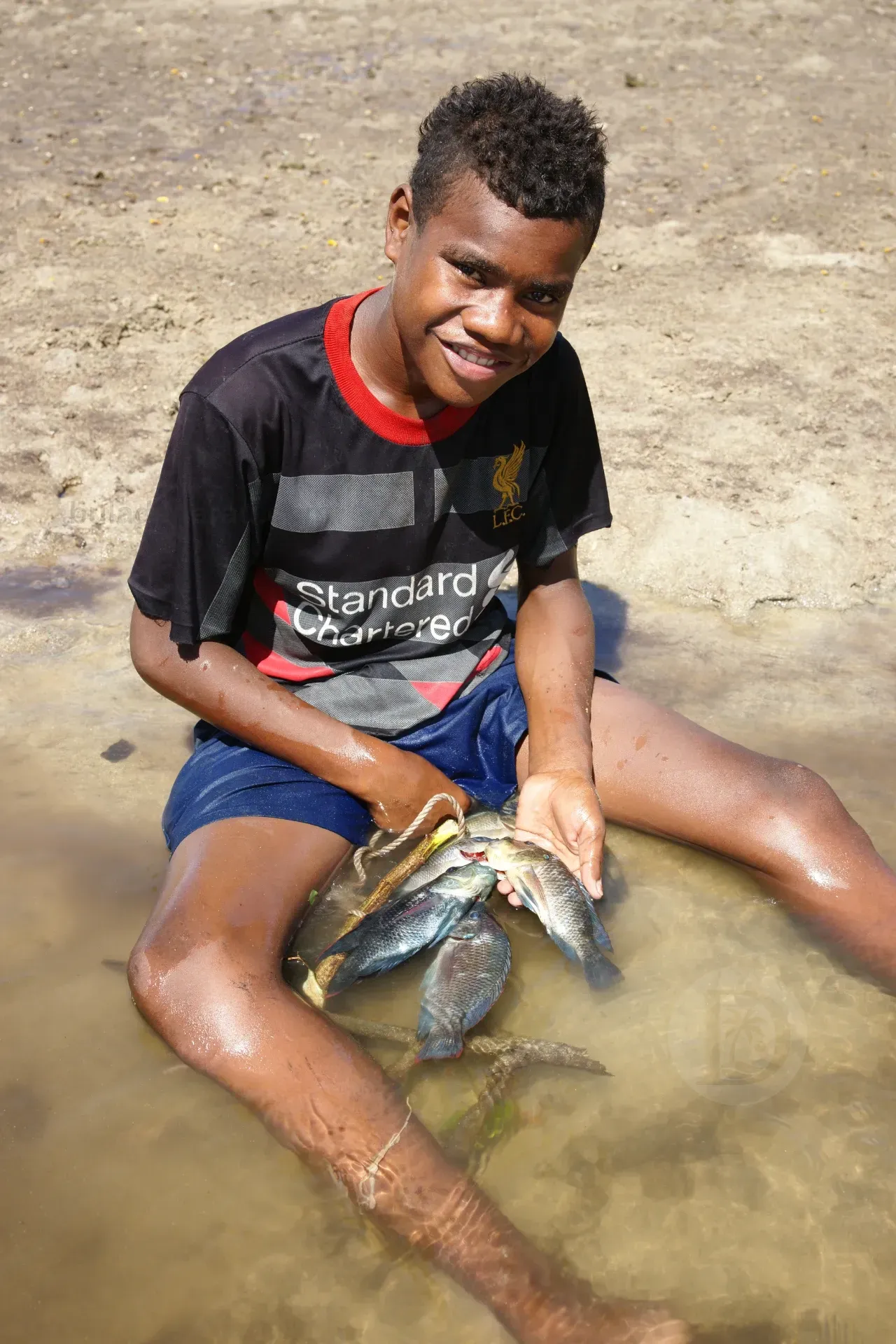
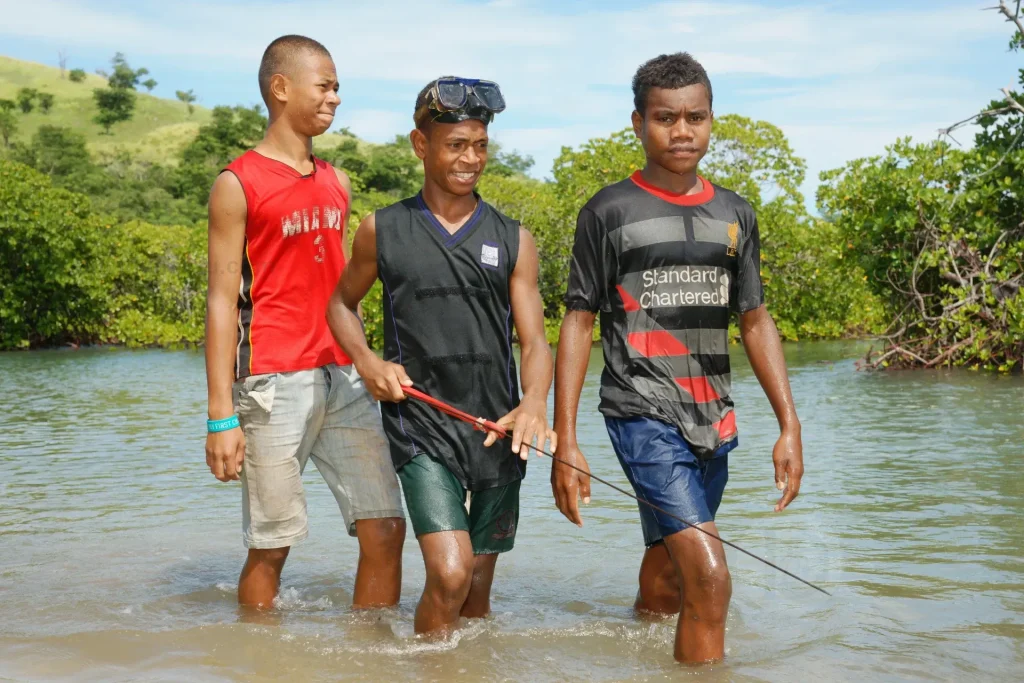
In Fiji many families live a subsistence lifestyle. Even if not living this way diets are often augmented for financial or epicurean reasons. Yes it doesn’t matter how fancy you may be able to live – or where you live – nothing beats a feed of fresh bush tucker. And to emphasise that fact they start the ‘gathering’ process young!
As with all peoples, Fijian society is constantly changing and evolving. Technological innovations, improved access to remote areas, the advancement of a modern economy and greater education and career opportunities; all lend themselves to a significantly different way of life than that of a more customary or traditional village lifestyle.
Even so much of how the people of Fiji live is rooted in family, clan, tribe, and village structures. Children who have been born and raised away from their parents’ ancestral homes retain links to their vanua, or people and land. They are welcomed home whenever they decide to return. In fact, in some circumstances the first time they do so or their parents bring their children ‘home’ it is marked as a special occasion and requires observance of a traditional ceremony.
For those who remain living in villages, hunting and gathering forms an intrinsic part of a sometimes largely subsistence-based lifestyle. For those working in towns and cities providing for their families necessarily takes on different forms. Nonetheless “townies” when they return home prove to be remarkably adept at finding and utilising what the land and sea have to offer. They all know how to prepare a garden and grow at least the three main staples of life, dalo, bele, and tavioka, or cassava. Often, they grow one or more of these in their city home gardens.
And why is this. Well in terms of economic development, Fiji is still close to a rural based economy. After all, up until around the turn of the century the largest sector of Fiji’s economy was based around subsistence farming and the growing of sugarcane. Even today the population is pretty much split fifty-fifty between urban and rural dwellers.
Also, many of the young people of Fiji, even those who may live in towns or cities, more often than not end up spending time with relatives in rural areas who pass on these types of life skills to the younger generations. Additionally, even the largest urban areas offer reasonable proximity to natural resources such as the bush, rivers, estuaries and the sea.
It should come as no surprise then that even the youth are capable of contributing to the family meal. What you see here is an example of four young men on a successful hunt and cook out. It is a reminder of how bountiful and plentiful the Fiji Islands are and how a simpler way of life still exists.