For partnership and business-related enquiries, please get in touch.
Holi – Celebration of Colours
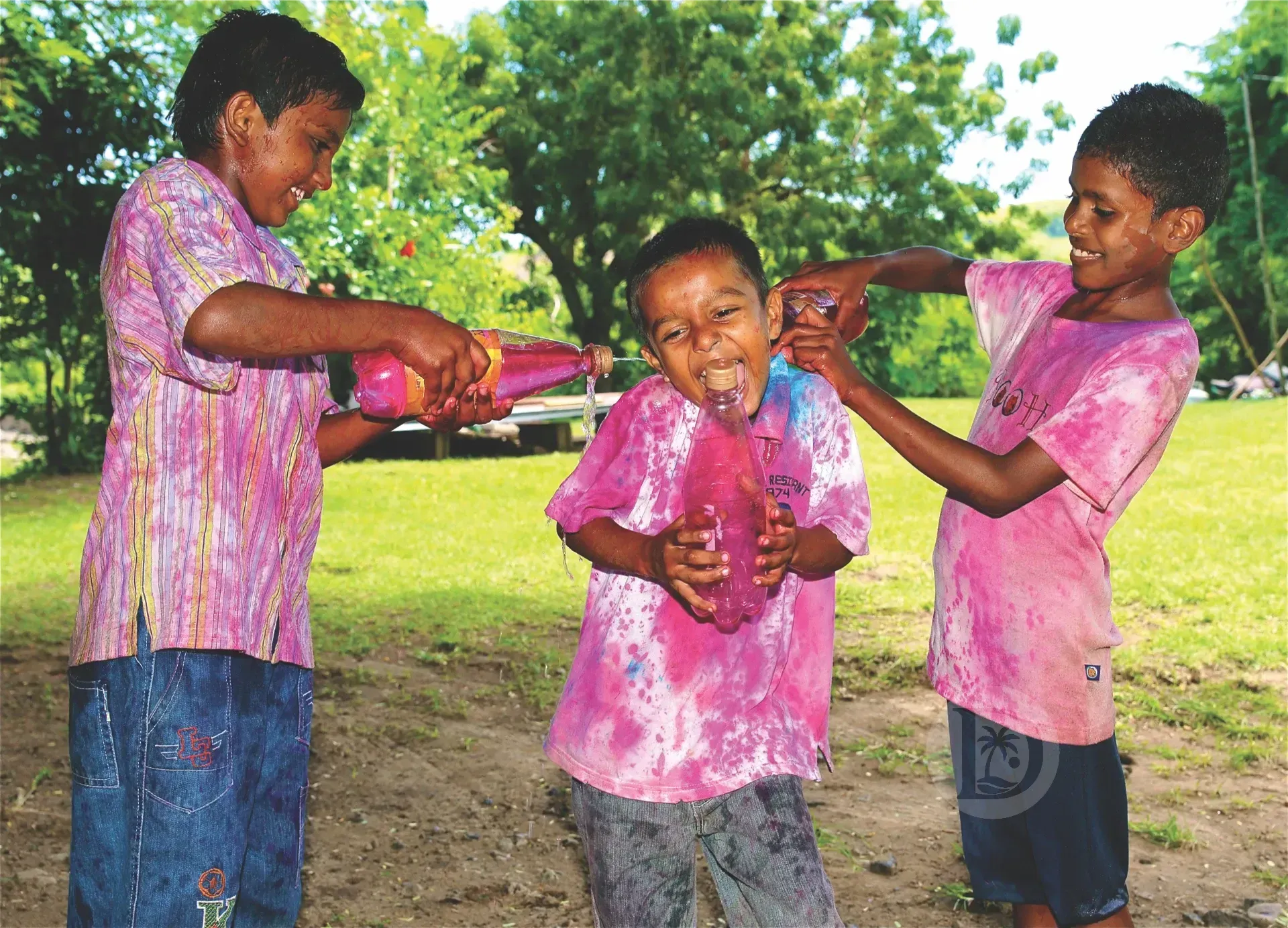
A lot of fun, singing, drinking of Kava and Tea and eating of Sweets. Not to mention playing like kids with coloured water! These are the surface appendages to the festival of Holi – but underneath lies a deeper meaning.
Each year the festival of Holi is celebrated in Fiji. It is an Indian ceremony brought by the people who came to Fiji as part of the colonial government’s policy of indenture from the 1860s to the early 1900s.
Although it is celebrated in autumn in Fiji, it is originally a spring festival.
The themes of colour, fun and goodwill towards other members of the community are at the heart of Holi celebrations.
There is a religious myth that accompanies the festival and it goes something like this. Once upon a time there was a demon called Hiranyakashipu who had shown repentance for his evil ways and so was granted the following gifts by God: he could not be killed by night or day, either inside or outside his house, not on earth or in the heavens and not by man or animal or by weapons. With his position of seeming invulnerability he began to demand that people worship him instead of the gods.
The demon had a son called Prahlada who was a devotee of Lord Vishnu. Vishnu is one form of the Hindu godhead. Despite his father’s threats, Prahlada continued to worship Vishnu. His demon father, jealous and wrathful of his son’s disobedience, tried to kill him. He poisoned him, but the poison turned to nectar in his mouth. He had him trampled by elephants but he emerged unharmed. He was put in a room with hungry poisonous snakes, but he survived.
Finally, he ordered Prahlada to sit on a pyreon the lap of his demoness sister Holika. Holika had been given a gift from God that she could not die from fire. The gift was however dependent upon her not killing innocent people. Prahlada followed his father’s orders, all the while praying to Vishnu to keep him safe. When the fire started, everyone watched in amazement as Holika burnt to death, while Prahlada was unharmed.
Later on in the day, Lord Vishnu came as an avatar in the form of half man and half lion. He killed Hiranyakashipu at dusk, neither day nor night, on the steps of the porch of his house, not inside or outside the house, by holding him on his lap, which was not in the sky or on the earth, and by mauling him with his claws, which were not weapons.
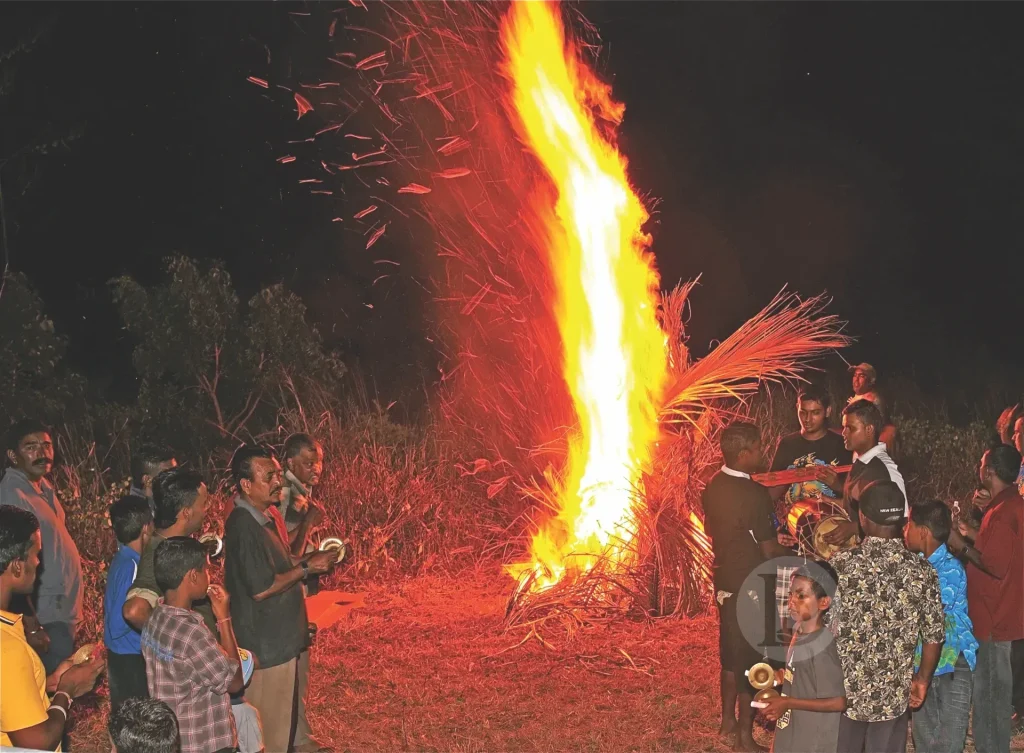
I joined the men from his local north Indian temple on the last two days of the Holi festival. On the penultimate evening the men gathered at the temple, prayed and sang songs. A fire was set to celebrate the burning of Holika. A fresh green plant representing Prahlada was placed inside a circle of dry grass and wood representing Holika and the fire set. The dry material burnt away leaving the green plant unscathed.
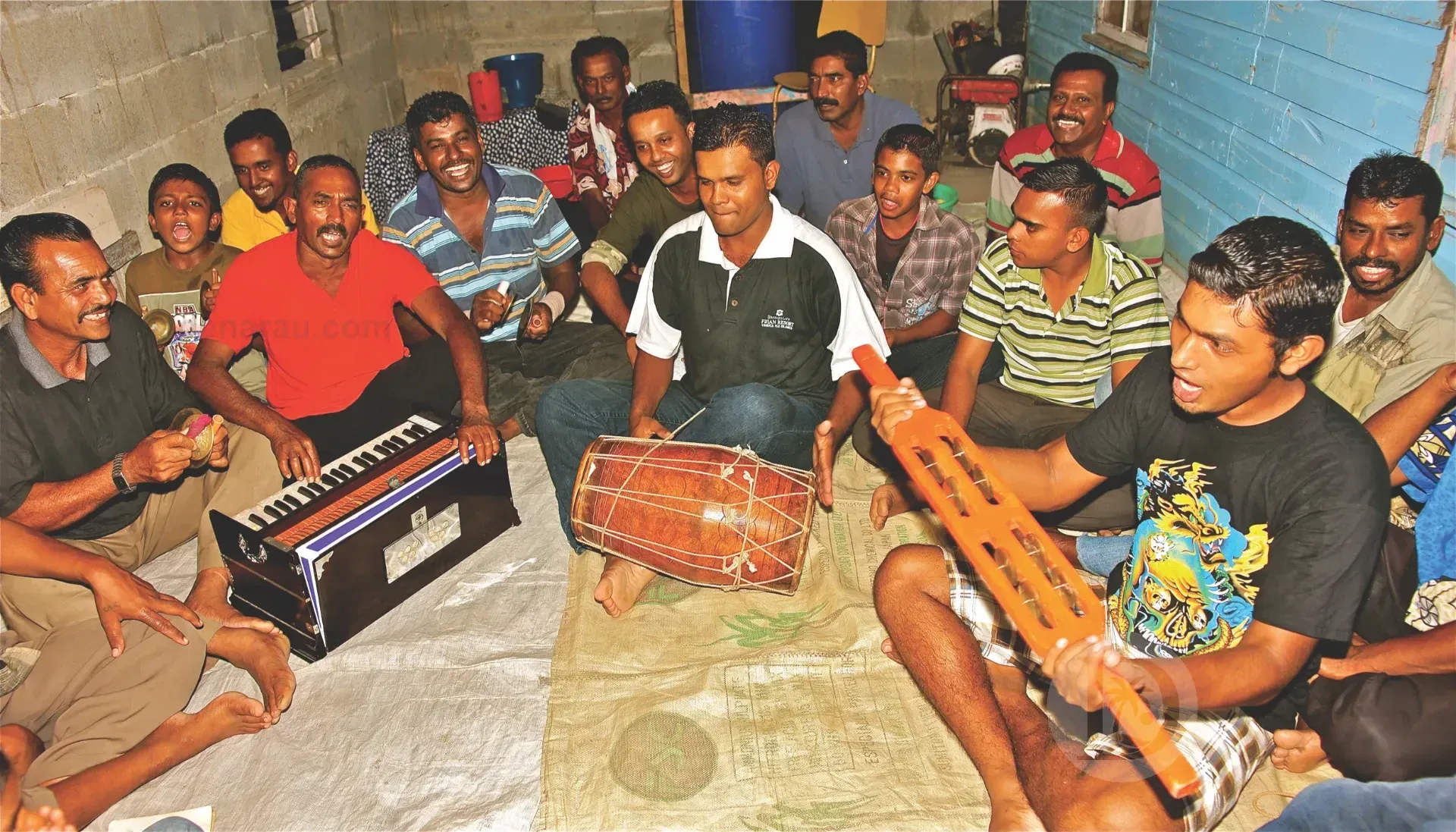
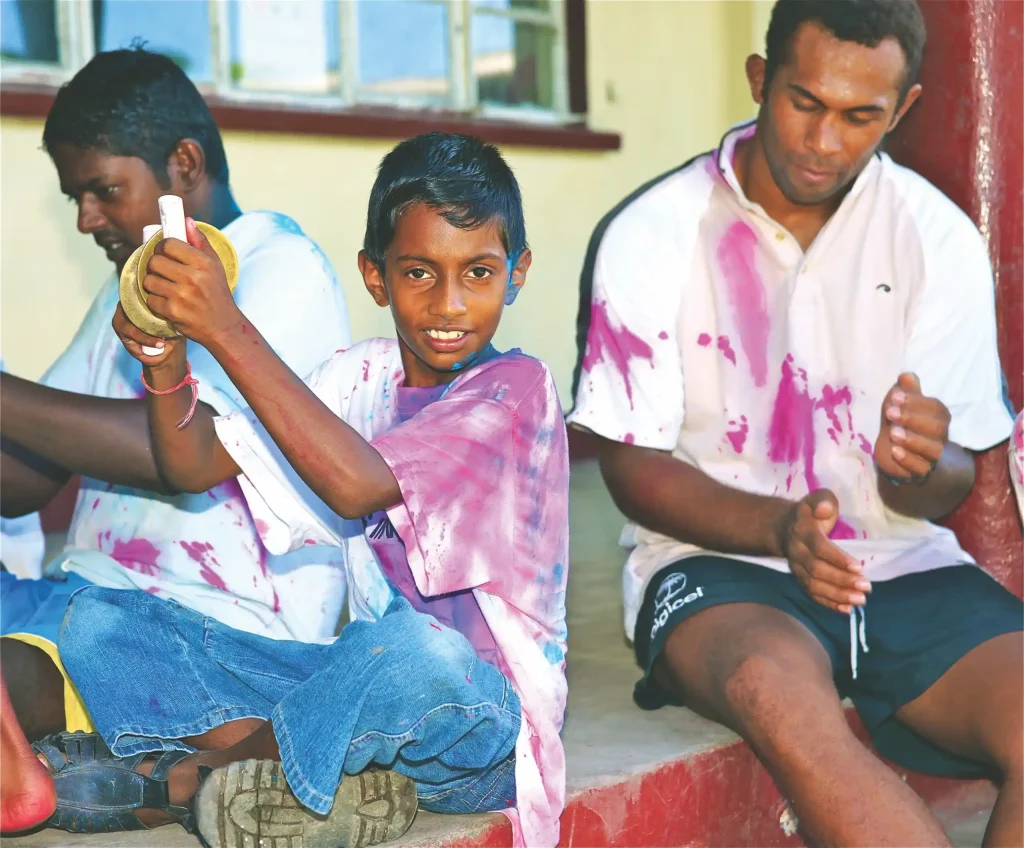
After this we retired to the home of the president of the temple. Here the men sang songs, joked, laughed, drank yaqona, ate sweets and enjoyed themselves. It was a fun evening.
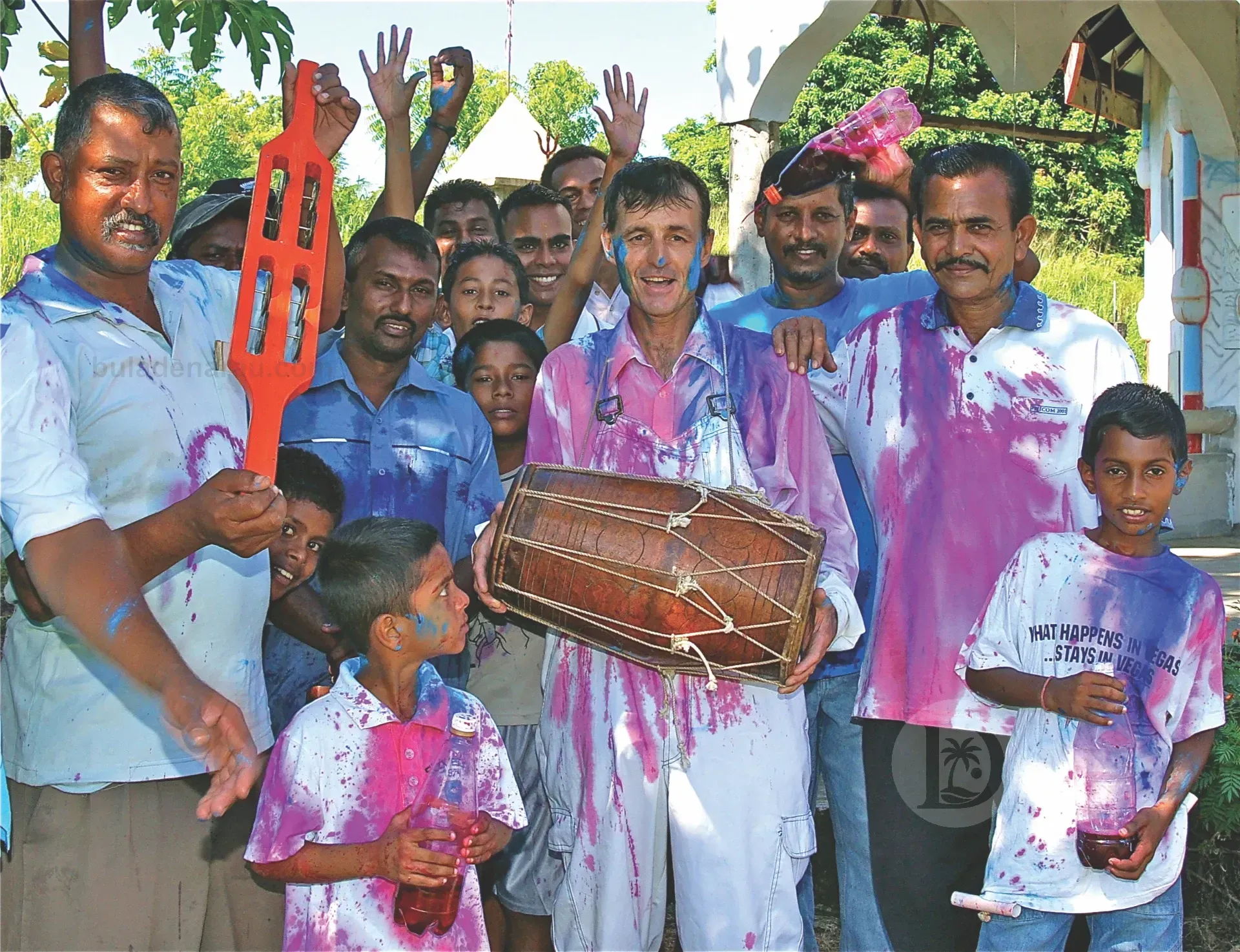
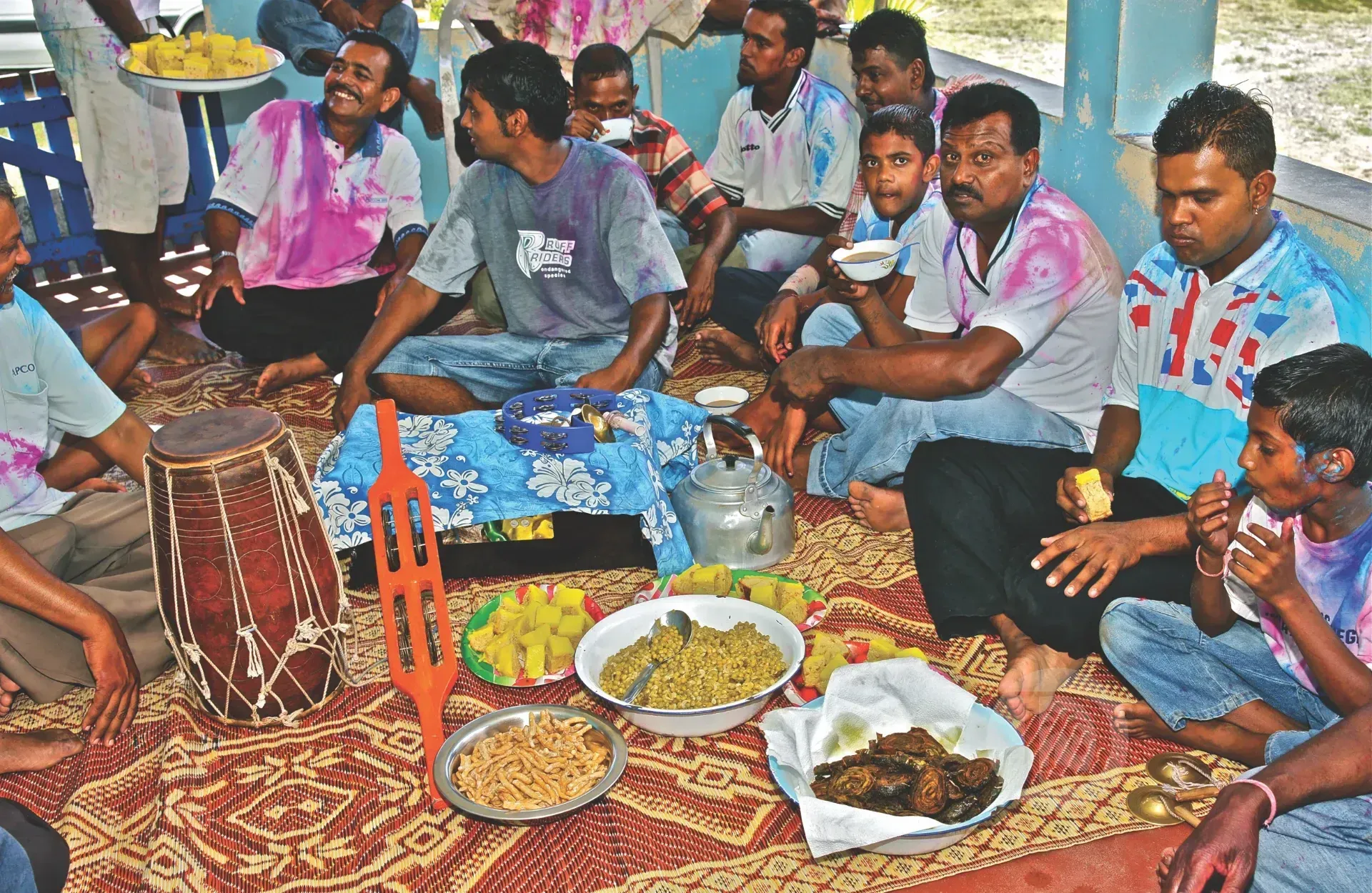
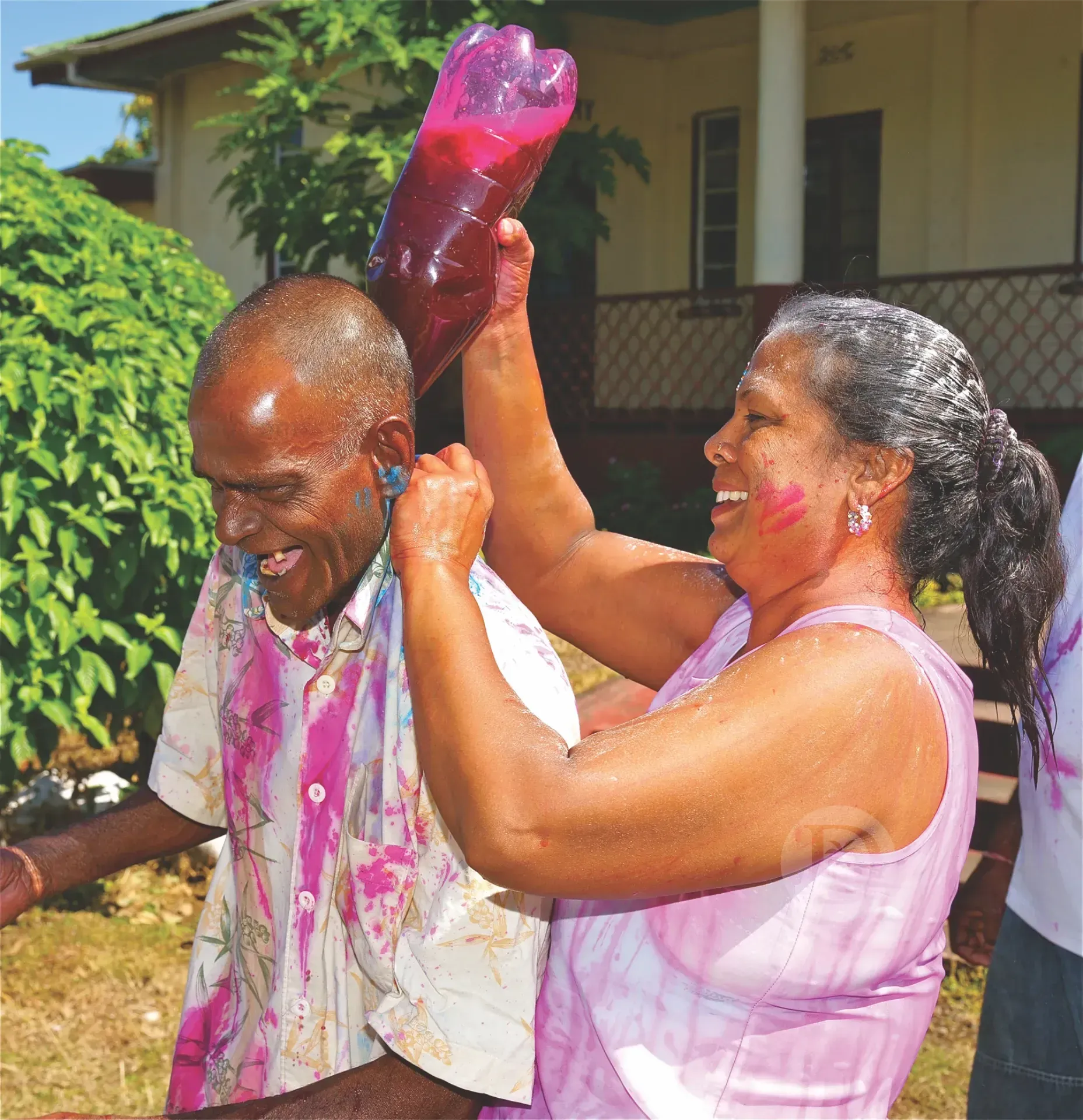
The next day we met again at the temple. After a short prayer session the fun began. Bottles of coloured water and powder were on hand and began to be liberally distributed over everyone. Having suitably decorated our travelling band we departed to visit the households of the men. At each house, the procedure was the same; upon arrival the men assembled, usually on the porch, and sang various songs until tea, cake, and sweets were served to them. The party shifted outside where the men doused the women of the house in the coloured water and powders. Then the men formed a circle and walked around singing the final song for that house as the women repaid the earlier compliment by covering the men with coloured water and powder, amidst great scenes of fun, frivolity, goodwill and happiness.
The celebrations were concluded at each house with a final song. As the men walked around in a circle with the continuous splashing of coloured water and powder they sang the song which translates roughly in part as follows:
…may this house be filled with happiness, as they are celebrating Holi, where each female represents Radha and each male represents Lord Krishna, some friends bring betel quid, some friends bring clove leaves and together they all have fun in Holi…