For partnership and business-related enquiries, please get in touch.
A Fijian Wedding
When a Fijian wedding takes place, especially of a high-ranking person, it is not simply a family affair; it is a community affair.
Fiji is a small country but the social structure of its indigenous landowners, the iTaukei, is quite complex. Starting with the individual family unit, the tokatoka, it expands into groupings of families called mataqali and then into larger regional groupings ofmataqali known as yavusa which are roughly defined as tribes. Groupings of yavusa may cover an extended geographical area and together constitute a vanua, or community; but ‘vanua’ is a flexible term that may describe larger or smaller related bodies of people depending on the context in which the word is used.
This structure forms the foundation of traditional Fijian society and values. It is very much a communal system where everyone is expected and is willing to contribute and take part in community events. So when a wedding takes place, especially of a high-ranking person, it is not simply a family affair, it is a community affair.
The size of a wedding will vary according to the means and status of everyone involved. But there are certain traditions that will normally be followed. The first step in the wedding process is for the boy’s family to approach the girl’s family to request her hand in marriage. This ceremonial request is known as ivosaki. It is made formally and is accompanied by a sevusevu of yaqona or kava. A sevusevu is where yaqona is offered by one party to another in order to show respect to them. Also as part of the ivosakia, Tabua will be presented. A Tabua is a tooth of a sperm whale and is a symbol of great significance in Fijian Culture. It is usually presented whenever a special request or expression of gratitude is being made. The girl’s family will then discuss the request with their daughter and once all have agreed to the proposal the marriage can proceed.
In 2013 Ratu Penijamini, from Tavua on the western side of Fiji, about one and a half hours north of Denarau, married Jimaima from Vanua Vatu in the Lau group of islands. The Lau Islands are on the eastern side of Fiji and so it was a case of east meeting west in this marriage and symptomatic of the ongoing intermixture of the peoples of Fiji.
The wedding was held in Ratu Penijamini’s village. According to custom, once Jimaima married she would reside with Ratu Penijamini’s family and their children would form part of his tokatoka. And so it was his family’s vanua that was responsible for hosting the wedding. It was a large affair given that Ratu Penijamini’s father was at that time the Tui or King of Tavua. As such it required significant preparation but once the vanua was ready they informed Ratu Penijamini’s father and the wedding date was set.
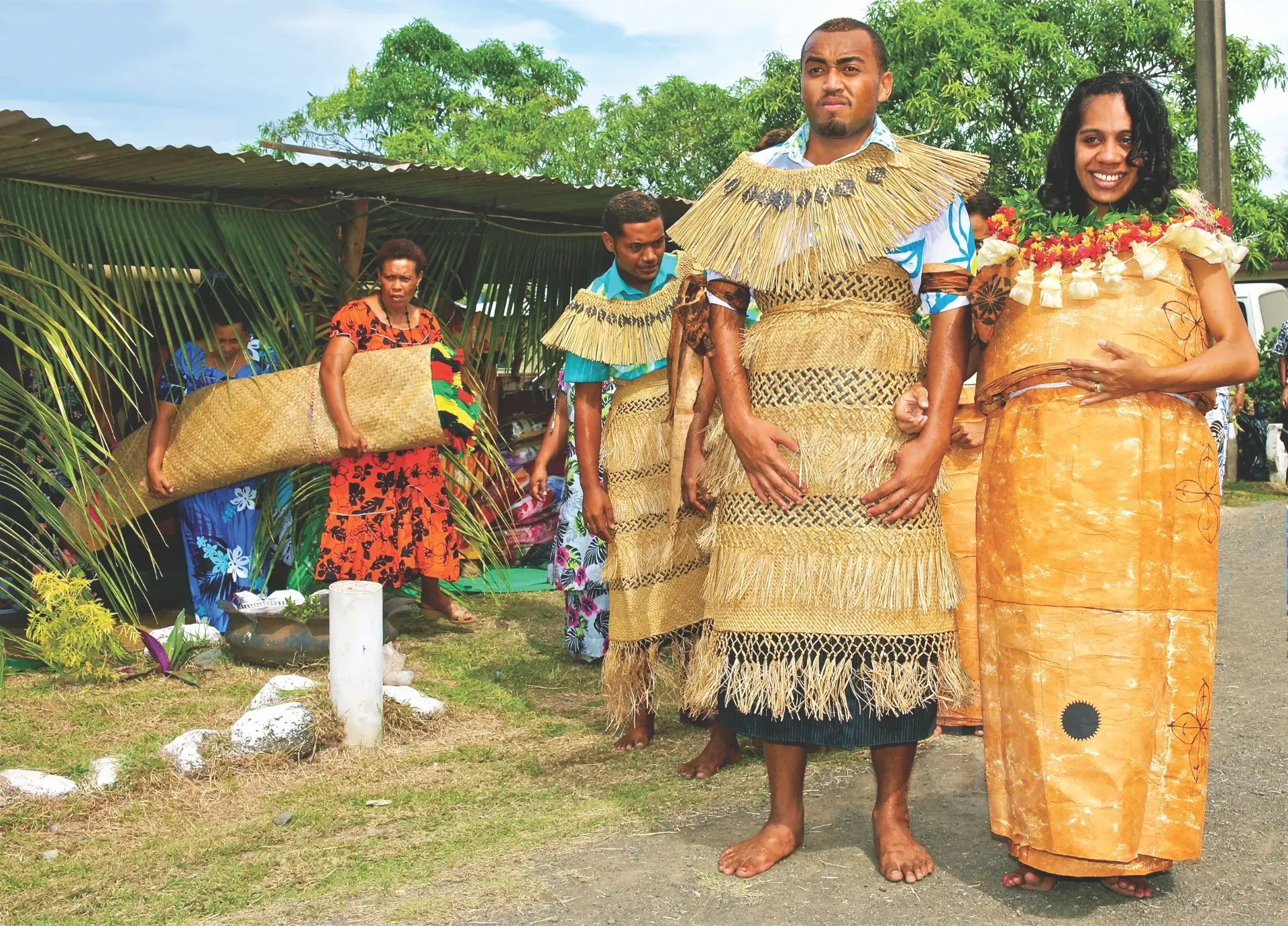
One of the features of a traditional wedding is the exchange of wedding gifts. It differs from a European-style of wedding as the exchange of gifts is between the bride and groom’s families and not to the married couple directly. The ceremony is known as the tevutevu. Normally these gifts consist of woven mats, cloth, pillows, bedding and other practical household items. The gifts are allocated partly for the bride and groom to set up house and as their first acquisition of assets. But the amounts of gifts usually extend beyond anything that they could ever hope to use. The surplus is divided up between the bride and groom’s families.
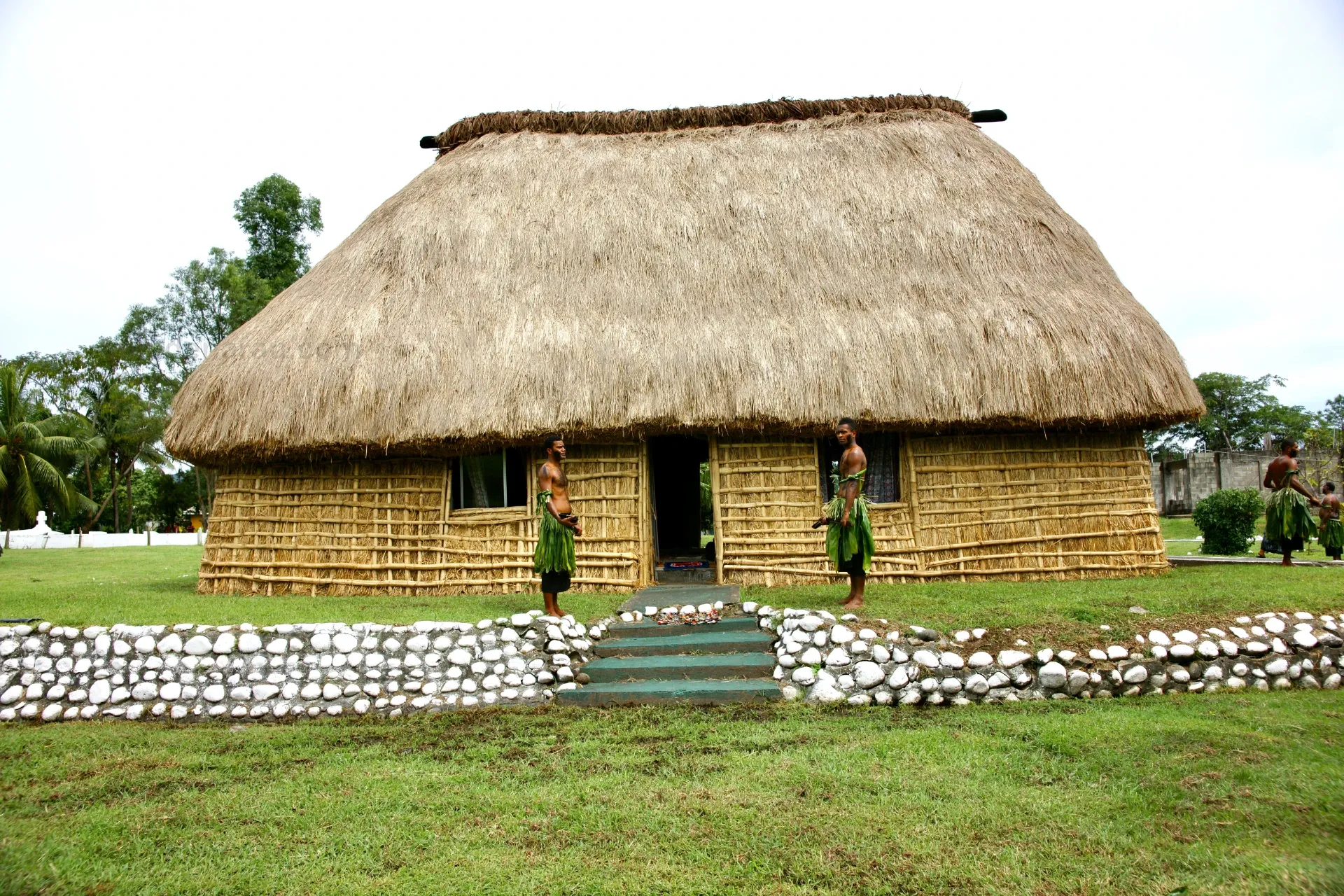
The day before the wedding Ratu Penijamini’s tevutevu was laid out in the chiefly bure. On the wedding day Jimaima’s family arrived and her tevutevu was added to his.
Once Jimaima arrived she was taken away to get ready for the wedding service and a welcoming ceremony was held for her vanua. Firstly her vanua presented a sevusevu, a show of respect, of a green root of yaqona to their hosts and in reply Penijamini’s vanua conducted a yaqona or kava ceremony preparing and serving it to them.
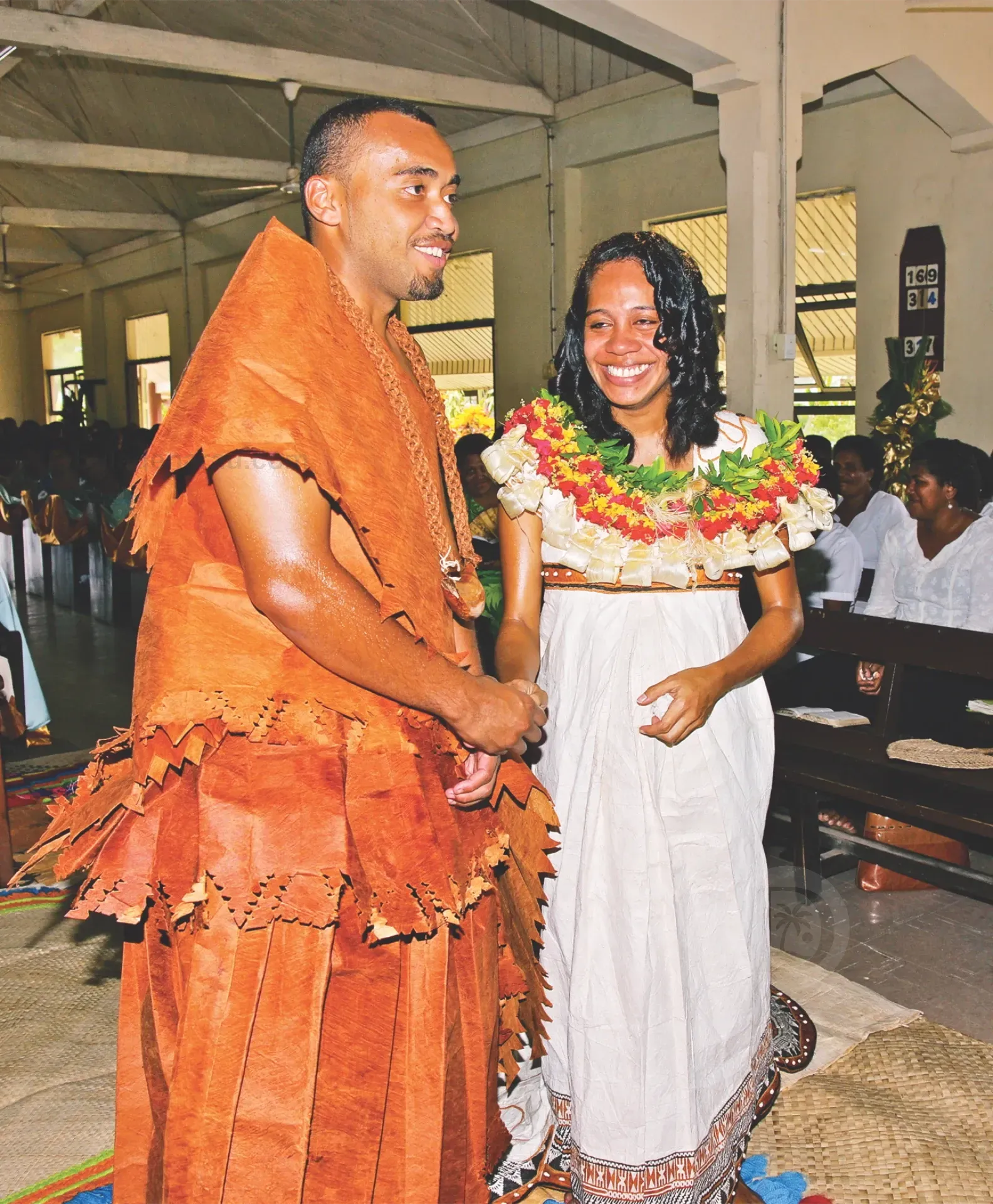
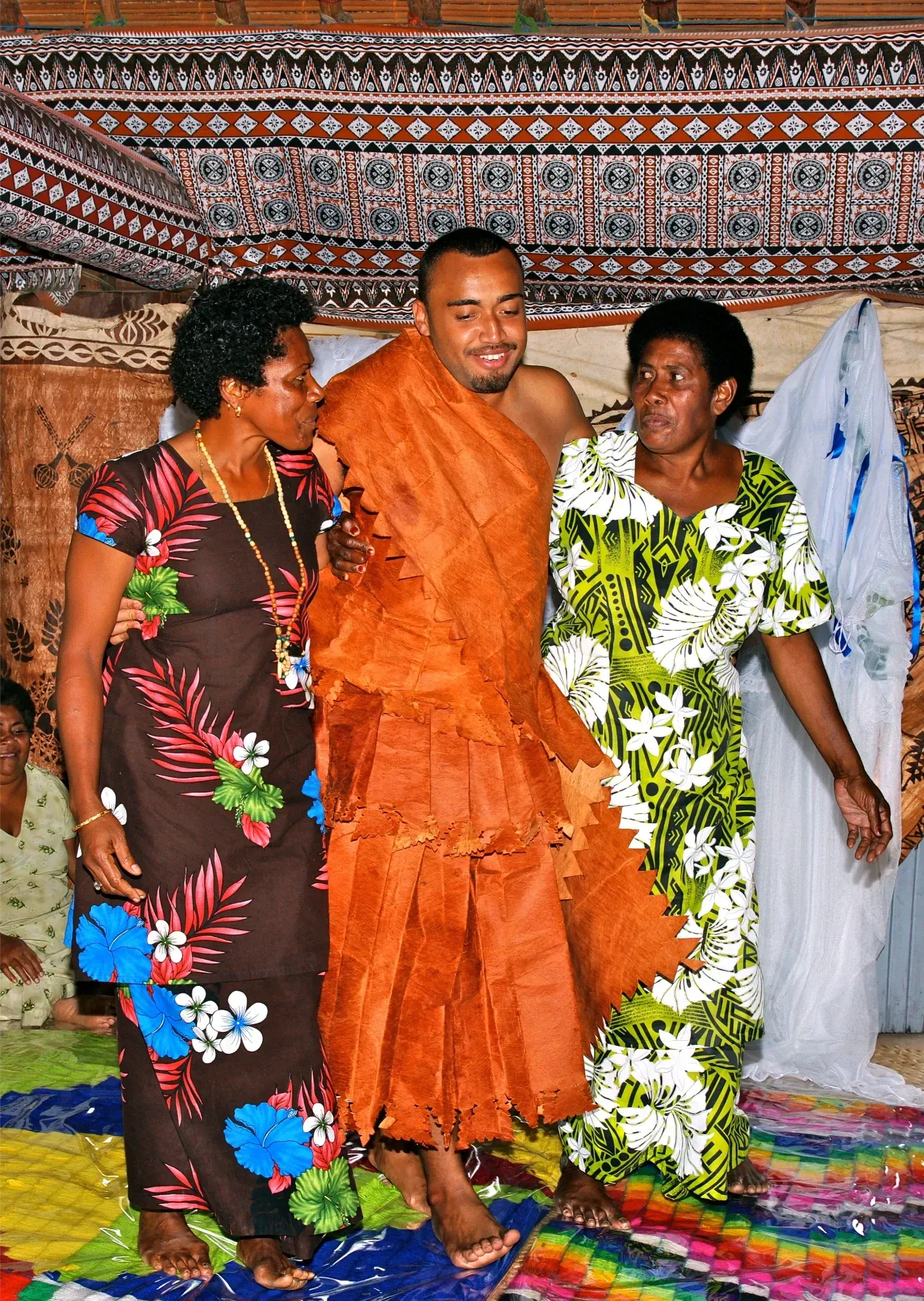
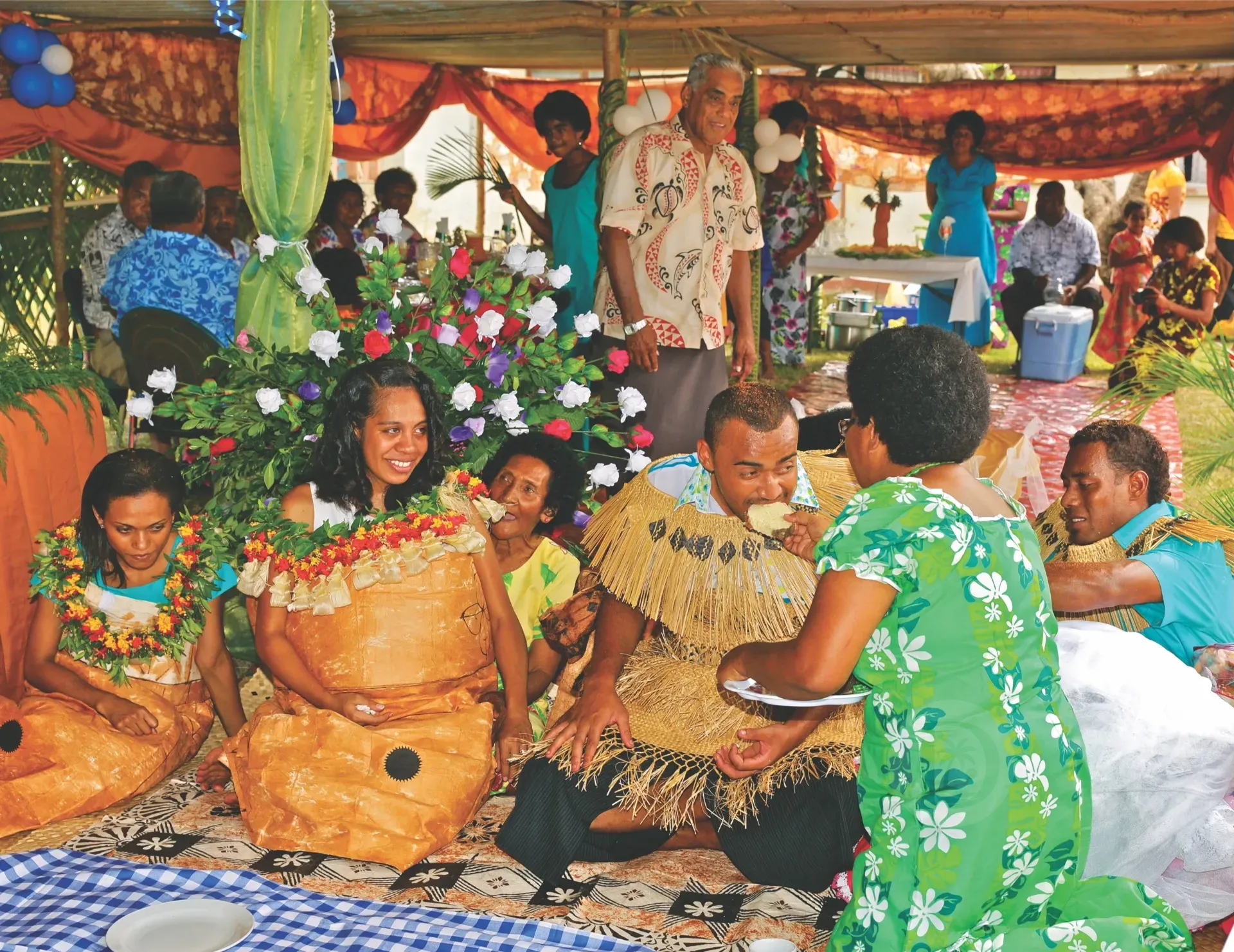
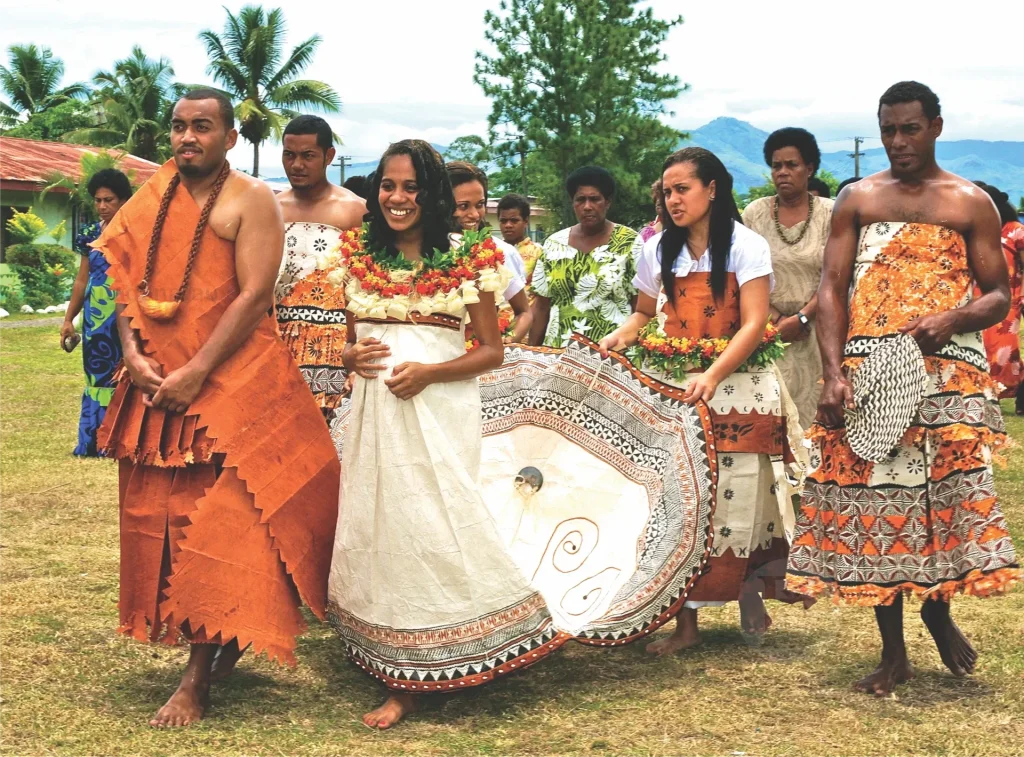
In preparation for the wedding service the bride and groom both wore masiwedding dress and were accompanied by their attendants, also wearing masi. Masiis a traditional cloth made from the bark of the paper mulberry tree. In days gone by it was the only form of cloth available and it still retains its cultural significance. The attendants are usually cousins, or from the bride’s family younger sisters may perform the role.
A Methodist church wedding service, accompanied by several speakers, was held in the village church and the couple joined in holy matrimony. Following the service Ratu Penijamini was presented with a congratulatory bilo or cup of yaqona by some of his male relatives, before going to the chiefly bure where his female cousins waited to dance and celebrate with him.
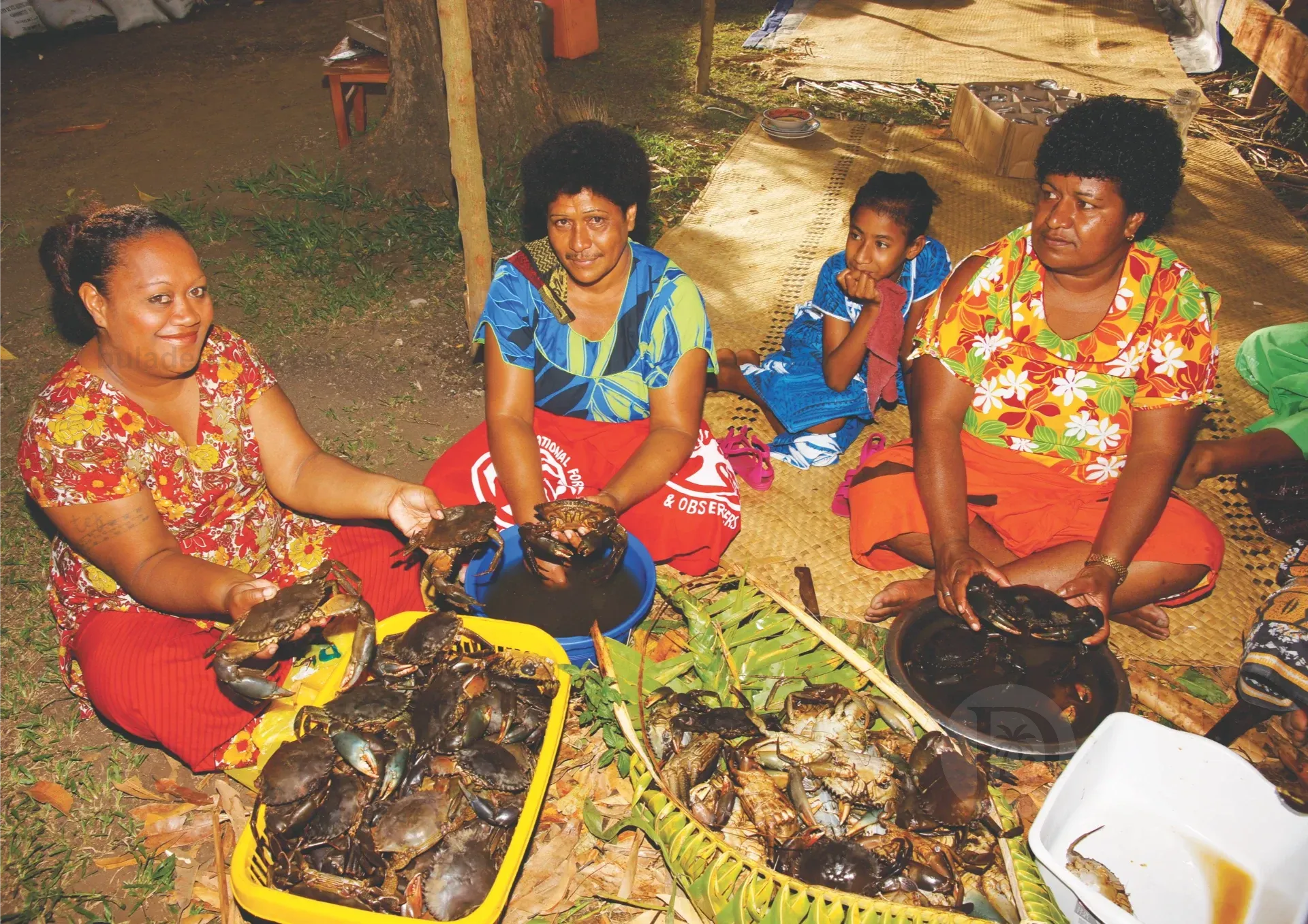
Then the wedding party began. A host of people had been cooking and preparing the magiti or wedding feast all day. Food had been cooking in traditional earth ovens since before dawn and the gathering of fresh seafood, vegetables and meats, that had been going on for days prior to the event, all came together in a splendid variety of dishes.
The bride and groom changed from their wedding masi into new clothes for the wedding feast. Jimaima changed from her white masi wedding dress into coloured masi cloth and Ratu Penijamini into a kuta suit.
The wedding feast or magiti formed an important aspect of the wedding ceremony. For the first time eating together as man and wife they were fed by one of Jimaima’s aunts. The ceremony, called vei vakani, meant that the aunt’s blessing and strength was confirmed on the couple for their married life. And it was this final action that completed the wedding ceremony; all that remained was to cut the cake!