For partnership and business-related enquiries, please get in touch.
Sons of Our fathers
“I clean my rifle every day
and at Government House mount guard,
I watch all night until the day,
Oh! The work is hard.”
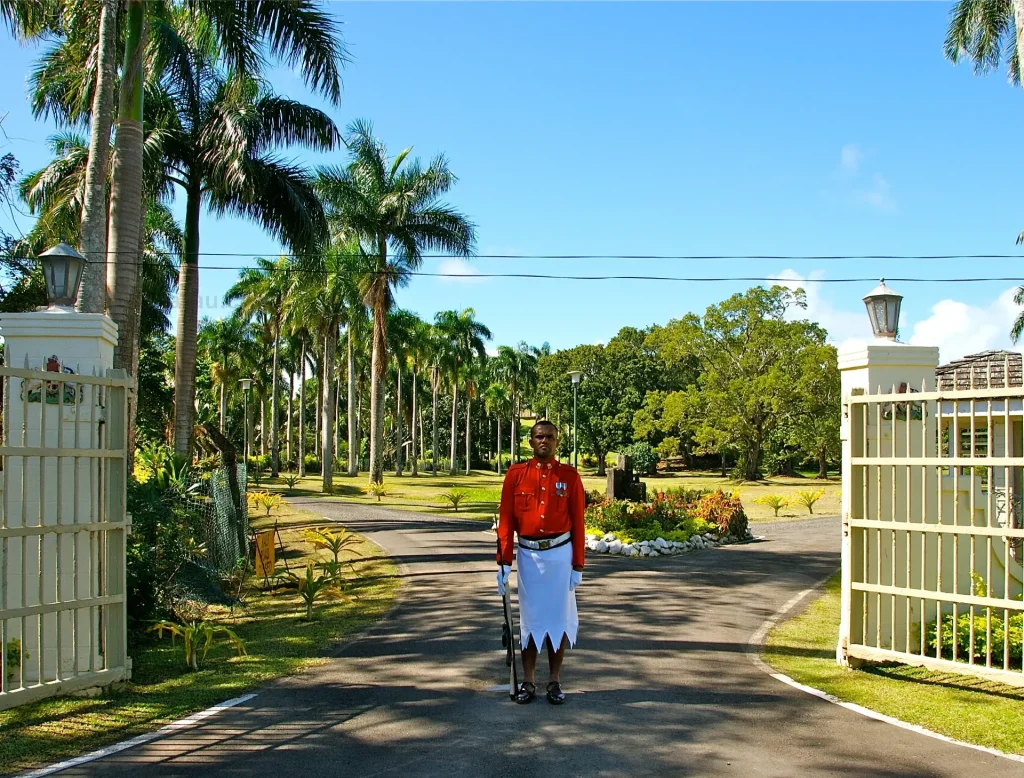
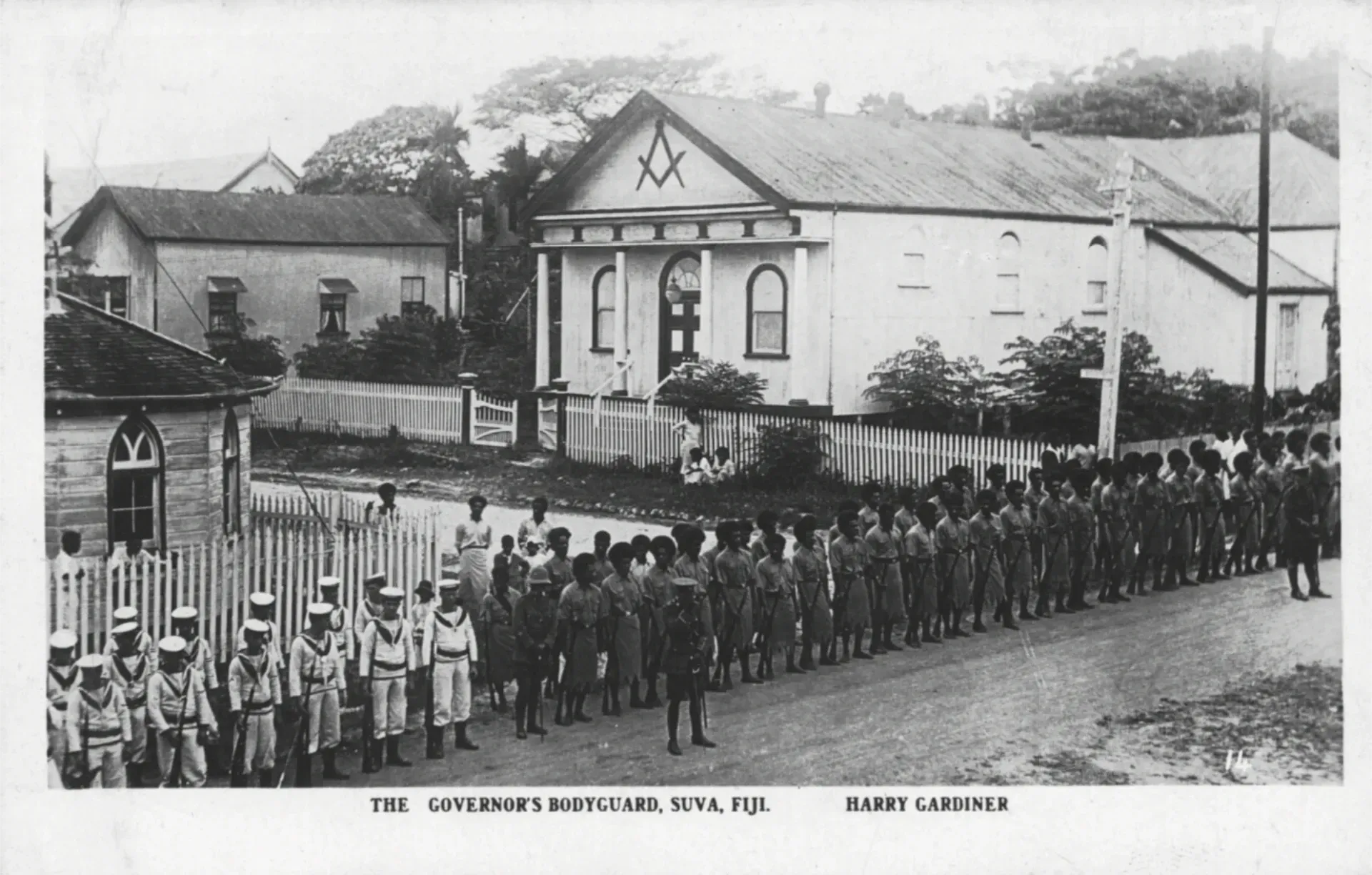
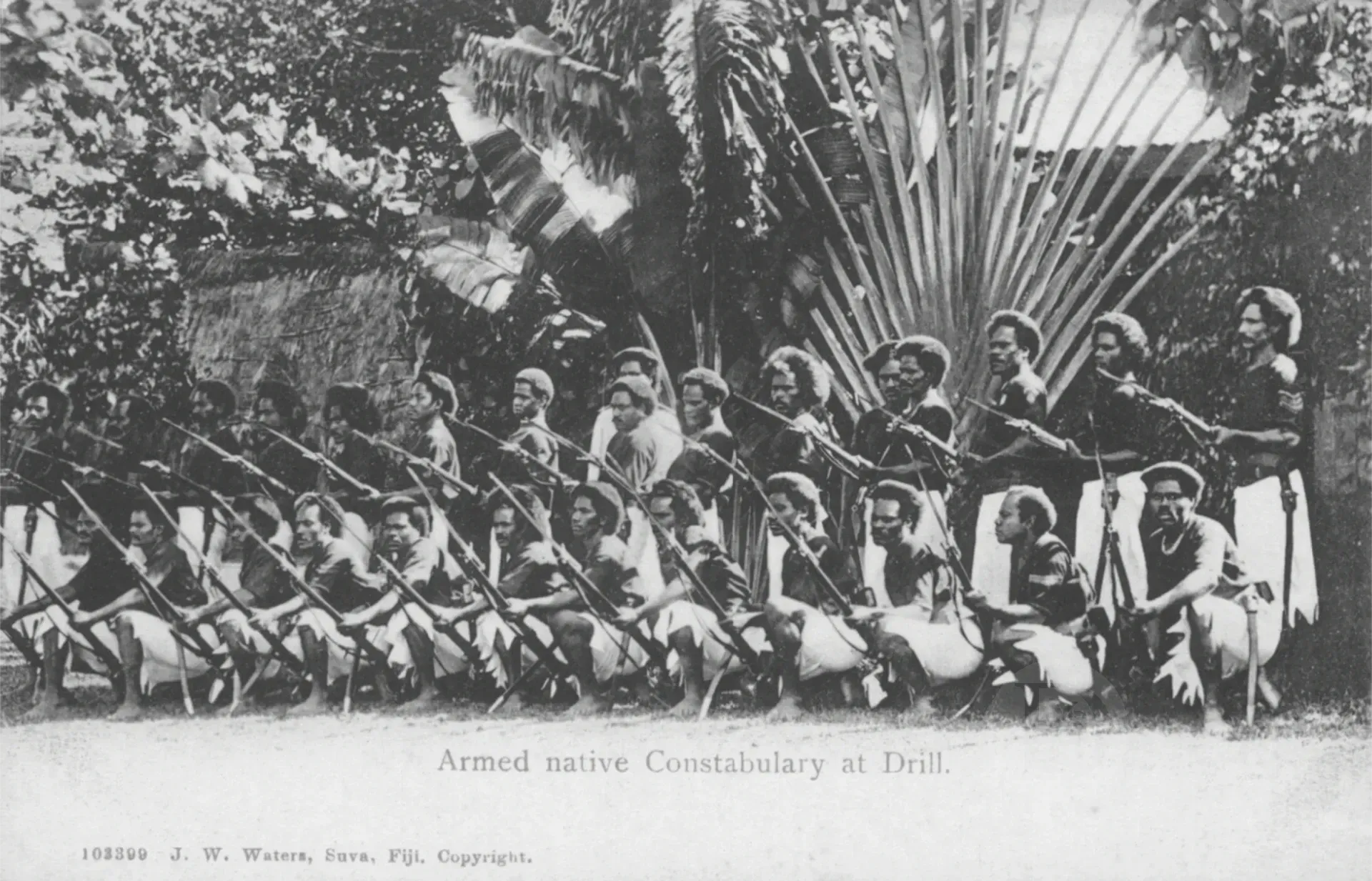
In colonial times this was known as Government House and was the home of the Governor of Fiji. Originally the guard would have been a soldier of the Armed Native Constabulary, ANC. The ANC was replaced by the Royal Fiji Military Force (RFMF), which is now known as the Republic of Fiji Military Forces.
Fijian soldiers have earned respect and admiration from all those who have served alongside them. In World War One the Fijian army was not called upon but some individuals joined overseas contingents in order to fight. One of the most notable was Ratu Sukuna, later a prominent Fijian statesman. He joined the French Foreign Legion and was awarded the Medaille Militaire for bravery.
In World War Two, the RFMF officially joined the war, and fought in the Solomon Islands. Strong links between Britain and Fiji means many Fijians have served, and continue to serve, in the British Armed Forces, including their SAS, and some Fijians have received the Victoria Cross in recognition of their valour. They have also served in the New Zealand and Australian armed forces, and in their SAS regiments.
The RFMF is possibly best well known for its peacekeeping duties. In 1978, at the invitation of the United Nations, Fiji contributed to the peacekeeping force in South Lebanon; they were there for 24 years. In 1982 they deployed to the Sinai along with other UN projects around the world. Perhaps no higher recognition of their skill and temperament can be afforded to them than to observe that in some of the highest risk areas of UN representation, Fijian soldiers provide security to UN personnel.
It is an appropriate and proud mantle for the citizens of Fiji to wear, as they play their part bringing peace and security to troubled people and places around the world.
Throughout its memorable history one thing remains constant; that is ‘guard duty’ at the residence of the head of the nation. It is a time-honoured tradition and has even made its way into song, or more appropriately ‘meke’. Meke is the Fijian equivalent of song, especially important in an oral society for remembering and describing activities, history, events and traditions. In the early 1900s the Armed Native Constabulary had their own single verse mekethat went as follows:
I clean my rifle every day
and at Government House mount guard,
I watch all night until the day,
Oh! The work is hard.
Pictures courtesy of
Elsie Stephenson Collection, Fiji Museum, and Caines Jannif.