For partnership and business-related enquiries, please get in touch.
Why is Fiji’s sky so blue?
Have you ever wondered why we have spectacularly coloured sunsets and sunrises? Where did the blue sky of the day go? Where does it come from? And no it is not because the sea is blue and somehow reflected back up to the sky. The sky is not a mirror. Read on and you’ll find out why the sky is so blue, orange, gold, red…
Fiji is an archipelago made up of hundreds of islands and islets. There are so many smaller islands and islets it is hard to arrive at an exact count but according to the Encyclopedia Britannica as of 2018, “The archipelago consists of some 300 islands and 540 islets scattered over about 1,000,000 square miles or 3,000,000 square km. Of the 300 islands, about 100 are inhabited.”
For guests and residents Fiji’s observable climate certainly fits its tropical location. It is always warm, or hot, no matter the time of year, with coastal temperatures falling somewhere in the range of eighteen to thirty-two degrees Celsius throughout the year.
Amongst other attractions, Fiji is famous for its lovely southern hemisphere mid-winter climate. It is unsurprising really; as close neighbours New Zealand and Australia feel the bite of winter cold Fiji is enjoying its most pleasant time of the year. Dry warm heat and a settled weather pattern make for a perfect setting for a mid winter get away.
At this time of year crisp clear energetic dawns welcome early risers for days of action and adventure. For more sedate activities, otherwise known as good old-fashioned rest and relaxation, the sun is not too strong, and a planned couple of sedate hours by the pool can easily turn into a full day’s activity.
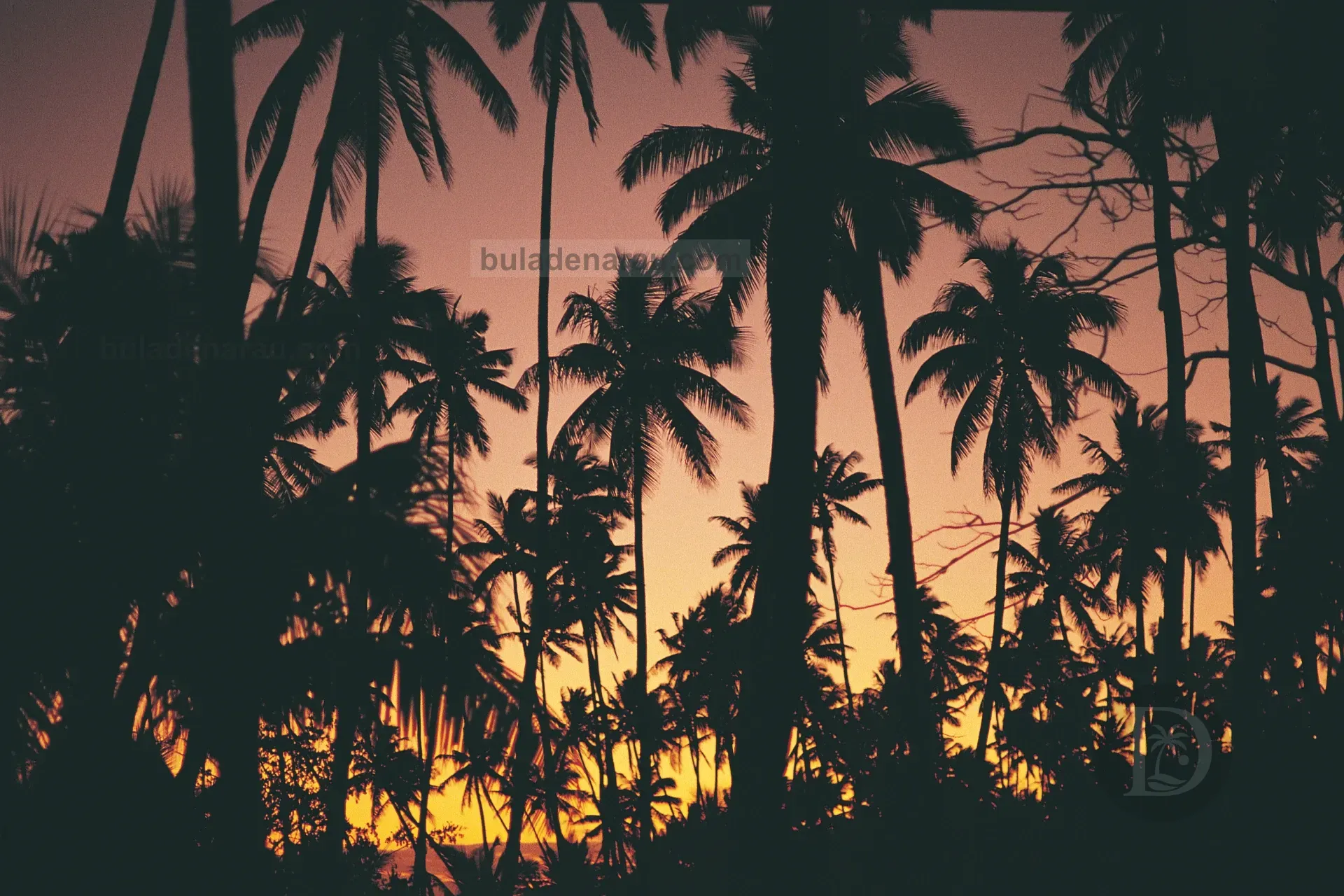
Whatever you do during the day, try closing it out sitting at one of Denarau’s many beachside restaurants or bars. Looking out over the water, lapping gently on the beach, as the evening begins, is one of the most magical times of day and is the place to be to enjoy some spectacular sunsets.
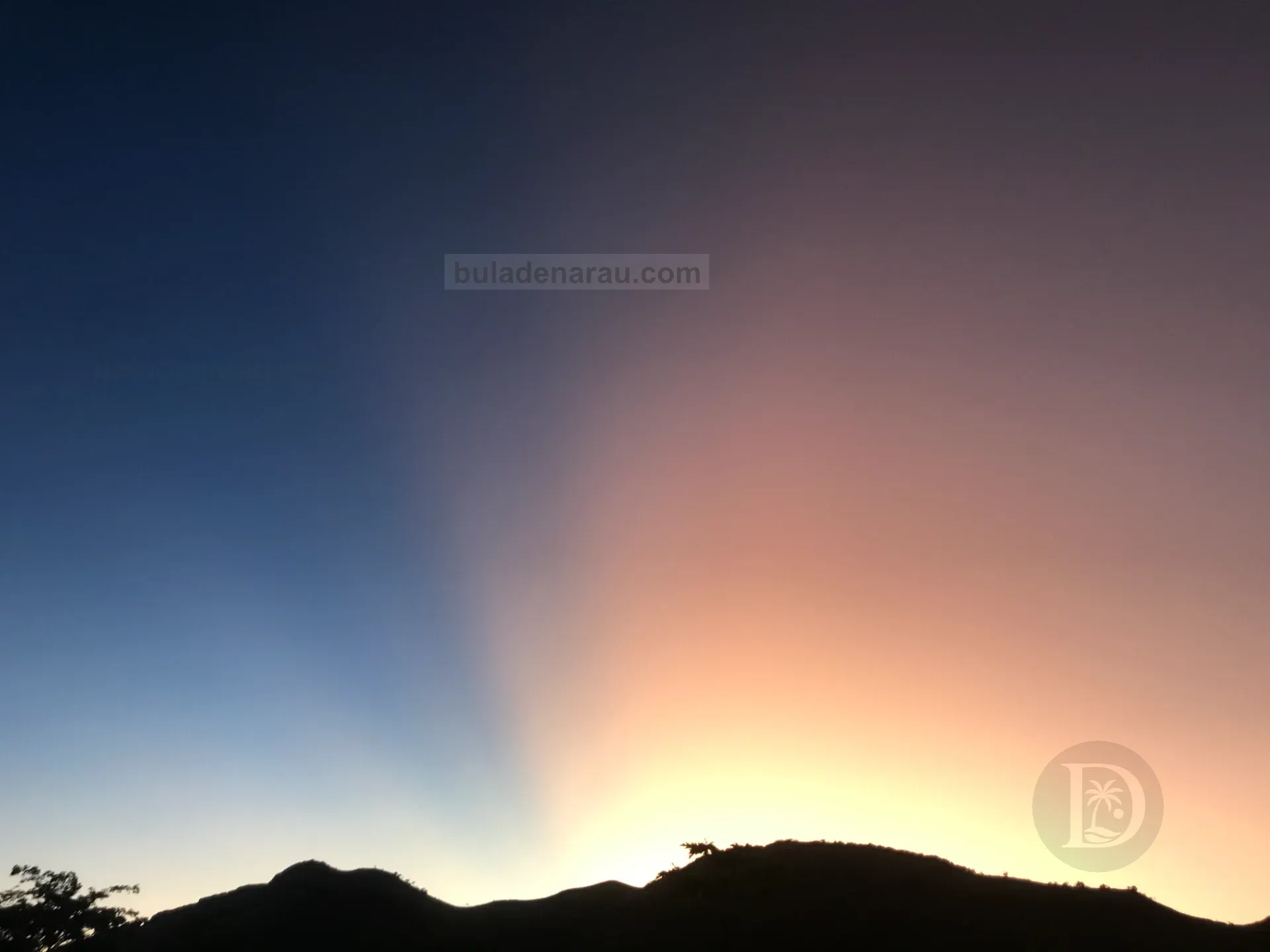
Early risers who enjoy a morning stroll, or a cup of coffee in the right location, get to delight in the break of day as the sun creeps up and over the mountains to the east. And no one has to tell those who have already experienced a spectacular dawn while being on the water how special and full of promise that is.
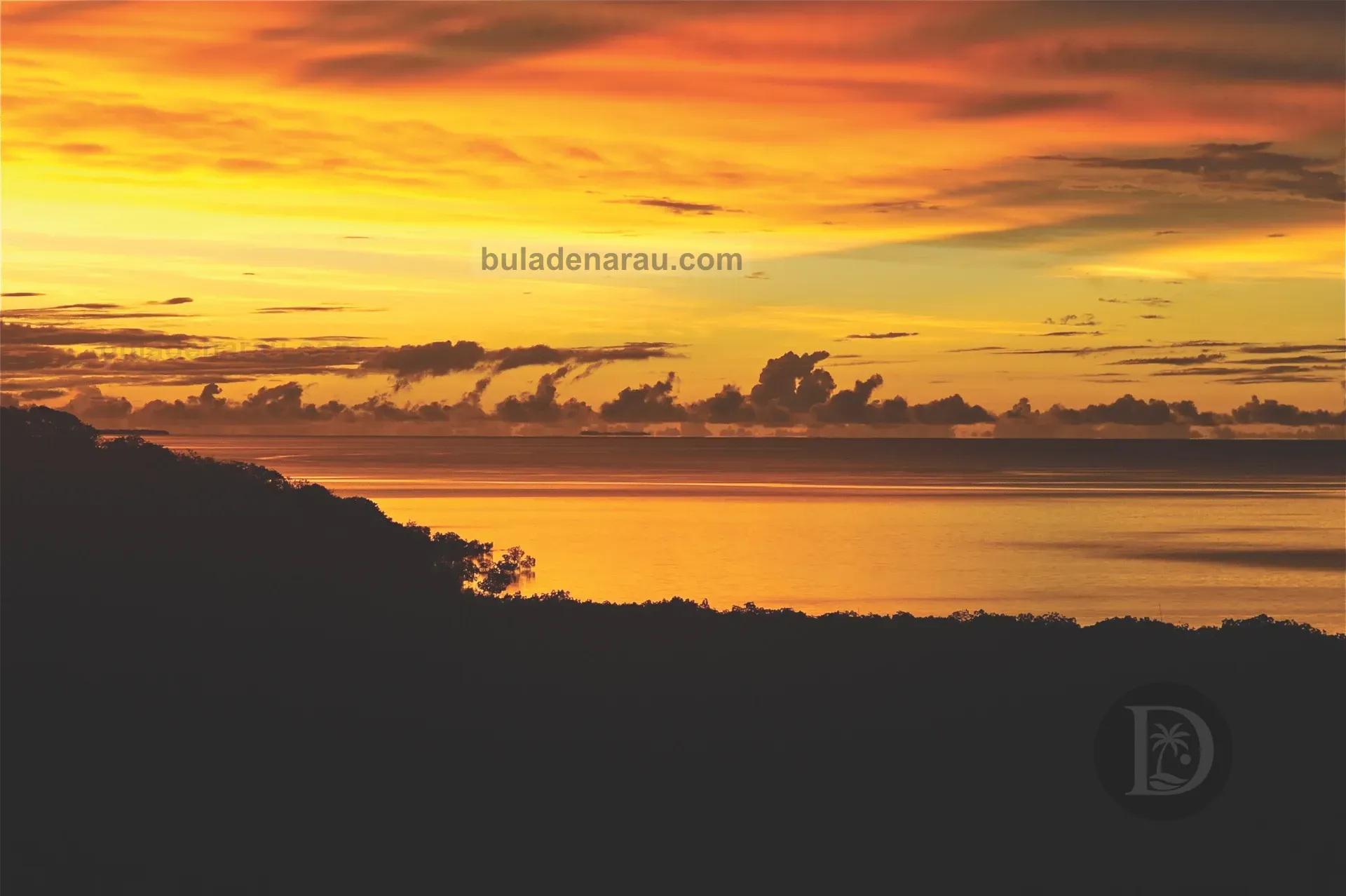
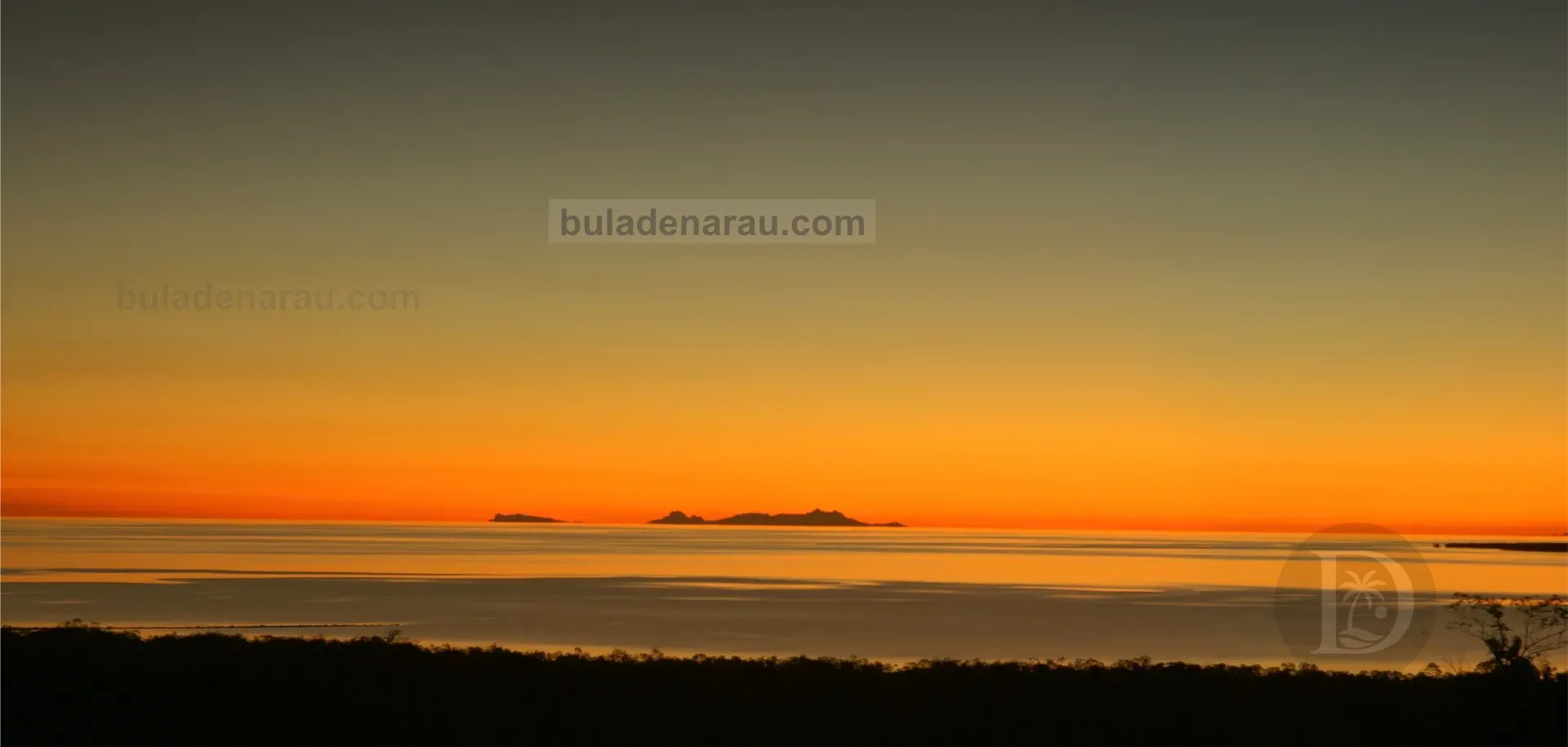
The air in winter is dry and that affects the look of Fiji’s remarkable sunrises and sunsets. Dry air means, for want of a better expression, clear air. You can see further on these days. For example islands far away can be seen more clearly. The sunsets are usually crisp and clean as a yellow sun sets in an orange sky. Exceptions at this time of year do occur, for example periods of wind out to sea can whip up spray adding a haze to the air. Or major weather events somewhere else in the world can sometimes result in a blood red sun dipping below the horizon.
The dry season or winter begins around May. The weather pattern is dominated by southeast trade winds. These winds, and the moisture they bring, land upon the windward side of Viti Levu, whereupon they wrap around the island and climb to the top of the mountain ranges that divide its eastern and western halves. By the time the ‘trades’ have reached the eastern top of the ranges they have largely run out of puff and let loose all the rain they are going to release.
The net effect is that the eastern side of Viti Levu is the windier and wetter side of the island and the western side; the side Denarau is on, the calmer, dry side.
Around November the trade winds decline, winds start to become light and variable and the wet season begins. The dry season was cooler and drier. The wet season is hotter and more humid, especially in the afternoons and evenings. It is the time for summer thunder and lightning storms, sometimes even tropical cyclones.
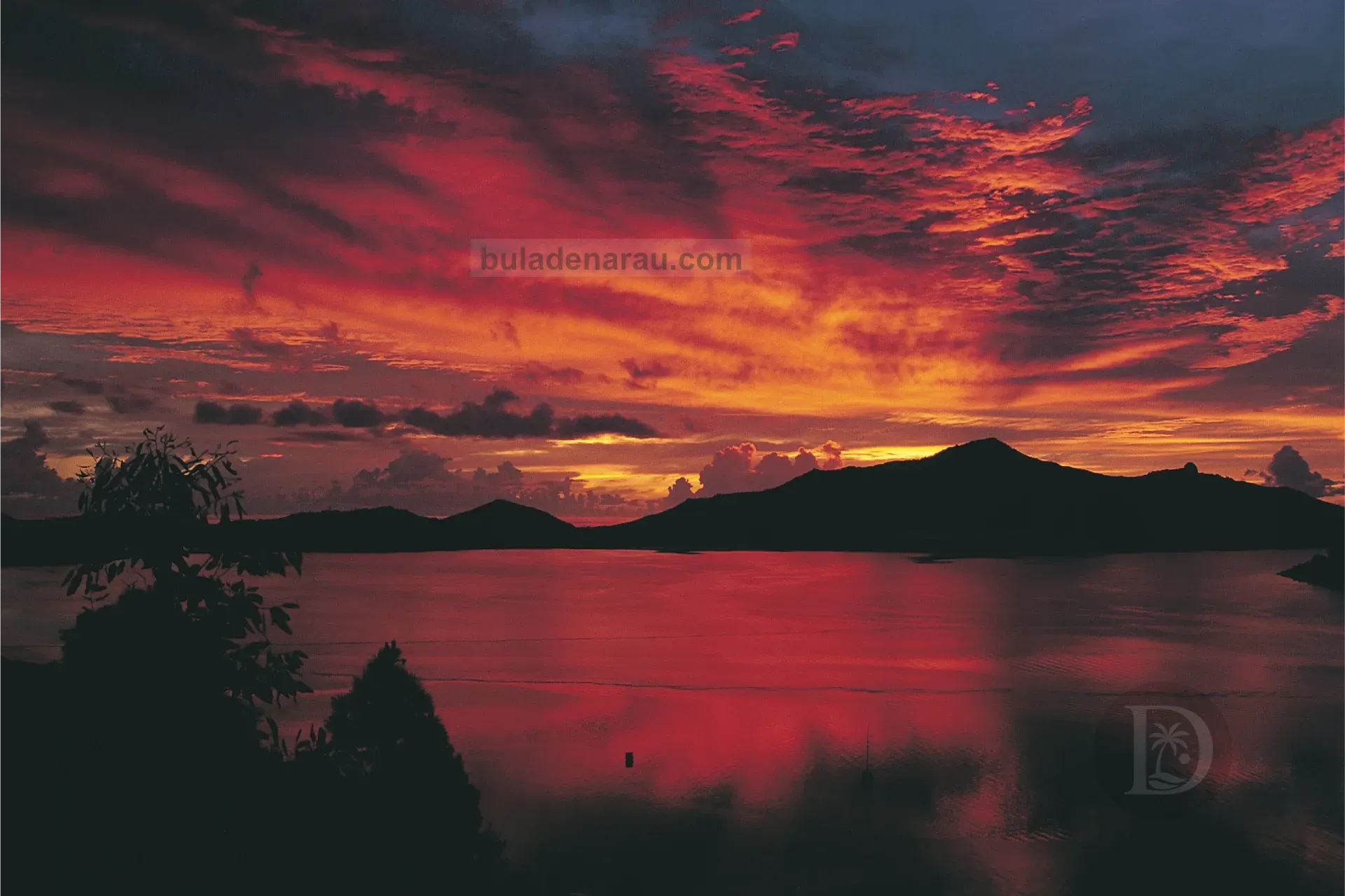
The increased moisture in the air adds haziness to the air, think, ‘those lazy hazy days of summer’. Island and mountain landmarks that stood out so clearly and crisply in the winter start to become less well defined or cannot be seen at all. There is a new softness to the light. Combined with more variable weather these conditions can bring about changing sunset colours. Now is when summer low-pressure systems are popping up all around Fiji’s neighbourhood, and dazzling sunsets of reds, mauves and purples that can take your breath away, are sometimes to be seen.
It is now the time of hotter longer days. In the early afternoon beautiful towering white thunderheads begin to appear; ready to deliver refreshing afternoon and evening showers, often in a sudden warm deluge. Start of the season rains are very welcome in the west of Viti Levu after months of dry weather, leading many locals to enjoy a traditional ‘rain bath’. Sometimes these afternoon deluges are accompanied by nature’s own fireworks shows as thunder and lightning rent the sky asunder. The colours of the landscape begin to change as typical tropical lushness abounds.
Don’t be fooled by the technical fact that Fiji has only two seasons dry and wet, winter and summer. There is nuance to the light throughout the year and to the ambience of every moment of every day. All you have to do is take a breath, slow down, relax and observe.
Have you ever wondered why we have spectacularly coloured sunsets and sunrises? Where did the blue sky of the day go? Where does it come from? And no it is not because the sea is blue and somehow reflected back up to the sky. The sky is not a mirror.
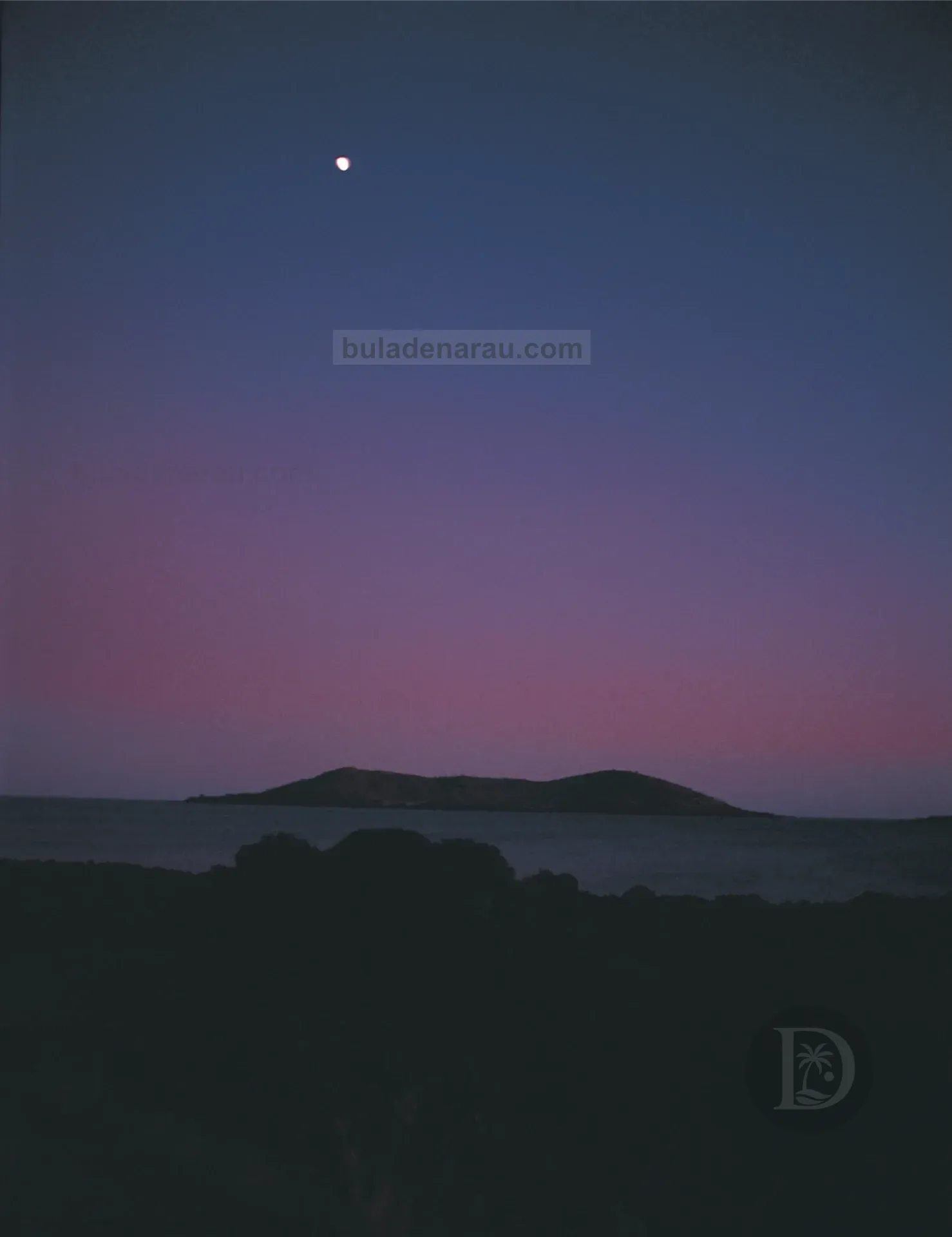
At the beginning and end of the day the sun is low on the horizon and at the furthest distance from our eyes. Its light has to pass through more particle-filled air to get to our eyes. As the light passes through this air more blue light wavelengths are scattered out of our sight, leaving more red, yellow and orange light to reach our eyes. Hence we get our wonderful sunrise and sunset colours.
During the day the effect is opposite. The sun is overhead, the distance is closer, and there are fewer particles to contend with. More of the dominant blue wavelength light makes it through crowding out the reds and oranges. That is why, on clear days, we get our brilliant blue skies and that is why the sky is blue. It also helps that in Fiji we have no smog or pollution issues and so apart from clouds enjoy clear skies all year round!